
It looks like we’re headed towards a preview of the climate Apocalypse

David Wallace-Wells, 6 May 2026. We’re about to find out how prepared we are for climate change. New York Times.
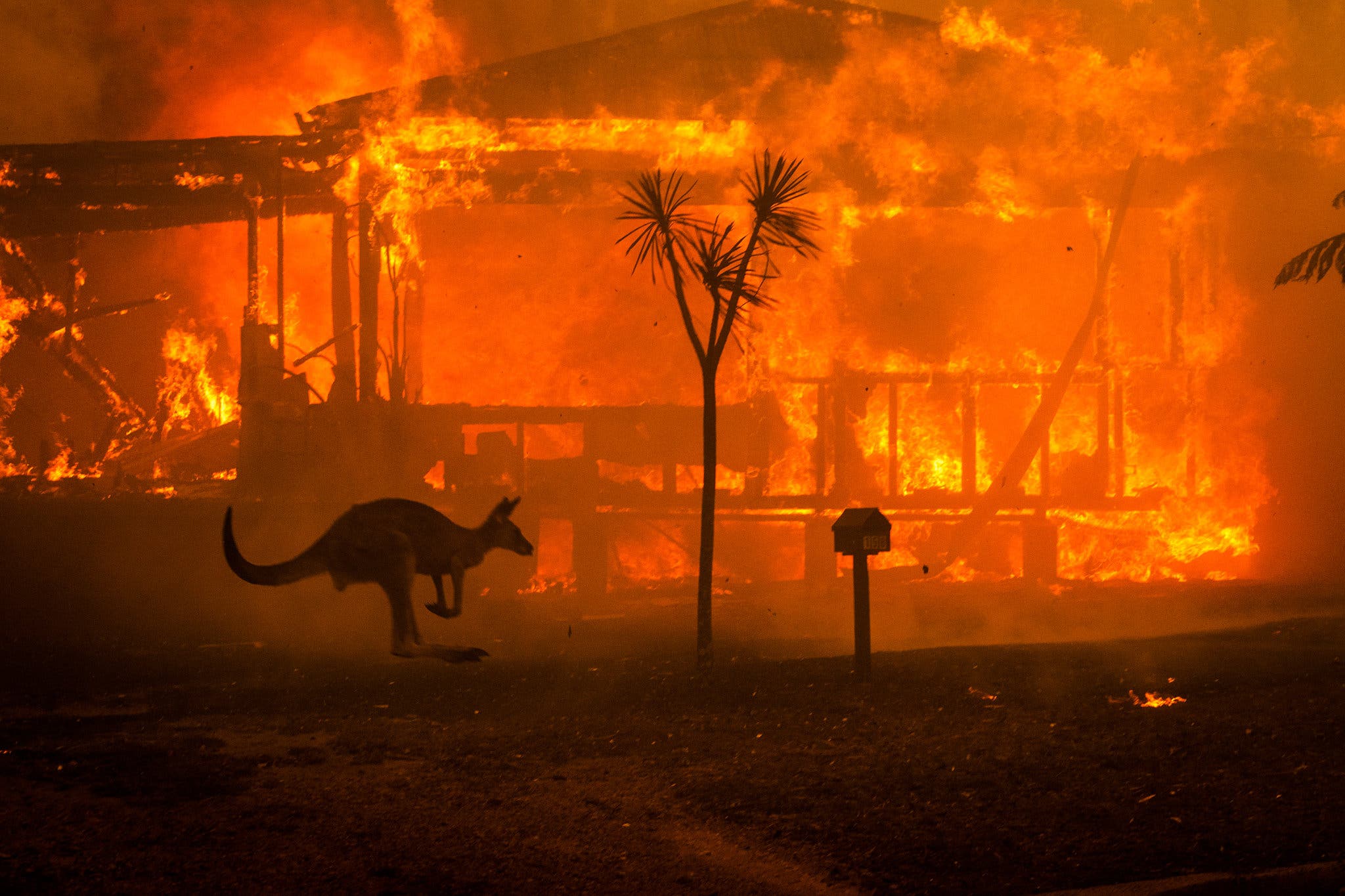
A climate monster is growing right now in the Pacific Ocean, perhaps the most fearsome El Niño since before scientists even began modeling them. They now know the pattern quite well: A marine heat-wave in the Pacific Ocean scrambles global weather and produces in some places more intense droughts and in others more intense rainfall and flooding; disruptions to hurricane patterns and monsoon seasons, which can cause widespread crop failures; and much more punishing heat.
dAVID WALLACE-WELLS (6 mAY 2026) IN tHE nEW yORK tIMES oPINION
The El Niño building right now, and expected to crest around the end of next year, arrives on top of all our global warming. And it appears stupendously intense — almost certainly stronger than the “Super” El Niño of 2015-16, and perhaps the most intense since the epochal El Niño of 1877. The global consequences of that climatic event were so devastating that the environmental historian Mike Davis called them “Late Victorian Holocausts.”
…
How much will burn in the 18 months to come? It is still too early to say with confidence, since though the models are flashing red, we are still early enough in the season that scientists tend to be cautious in their projections. But some are already calling it a “Super Duper El Niño,” and others a “Godzilla El Niño,” and underlying warming has been accelerating in recent years, disconcertingly, raising the possibility that even a brief spike will push the planet into genuinely uncharted territory temperature-wise. In fact, it’s almost certain that this El Niño will make 2027 the hottest year on record by some margin, and there is a chance, the climate scientist James Hansen has suggested, that global average temperatures would jump to 1.7 degrees above the preindustrial average next year.
Scientists tend to talk about warming thresholds in terms of long-term averages rather than single-year bursts, but a monster El Niño will give us at least a brief preview of a hotter and more chaotic world — a 2027 like we might’ve expected to see in 2035, and which not that long ago didn’t seem likely before 2050. “Prepare for bedlam,” the environmental writer Bill McKibben wrote earlier this year in anticipation.
… Follow the link below to read the complete article shared from:
Columnists and almost all of the institutional and academic scientists don’t dare think about or tell you that Earth’s Climate System is one of the first models for a particularly nasty class of complex dynamical systems where feedbacks are nonlinear and sometimes chaotic. These systems exhibit semi-stable cyclical patterns as long as the variations don’t cross any invisible thresholds that cause the system to ‘flip’ to quite different patterns of variation. In our climate system, modeling has identified several temperature-related variables with thresholds that significantly increase the amount of heat entering the system (and therefore the system’s temperature).
Given that the impending “Godzilla” El Niño is likely to raise global temperatures to values that haven’t been seen for centuries, when baseline temperatures were a degree or more cooler than today’s baseline. I would not be surprised if this takes us over the edge of the cliff to fall into what will be the steaming cauldron of Earth’s Hothouse Hell, which humans and most other complex life on Earth won’t be able to survive.
My only hope for our long-term survival is that our already explosively evolving AI technology will evolve fast enough to reengineer the Climate System so it can cool to the point where it flips back to the comfortable regime that we evolved in.
Our present Federal and State Governments have amply demonstrated that they are working hard to make fossil fuel special interests even wealthier than they already are.
If we are to have any hope of long-term survival, we must replace the existing party hacks and special interest puppets with people who understand and care more for their children and their communities than filling their pockets with oily tokens of appreciation from their super-wealthy masters.
VoteClimateOne explains how you, your family, and your friends can help. If we can change our governments, they may be able to deploy enough action to at least slow our fall into the cauldron for long enough for superintelligence to ramp up enough knowledge and power to actually stop the fall and give us wings to get back to a habitable Earth.
