
Eureka
Below is a mock up of a Traffic Light Voting Guide for Footscray. The Eureka guide for voters will not be published until after the ballot draw on Tuesday November 10th.
Below is a mock up of a Traffic Light Voting Guide for the Victorian Upper House in the WESTERN METROPOLITAN REGION. The WESTERN VICTORIA REGION guide for voters in Eureka will not be published until after the ballot draw on Tuesday November 10th.
Voting Traffic Light in the 2026 Victorian State Election
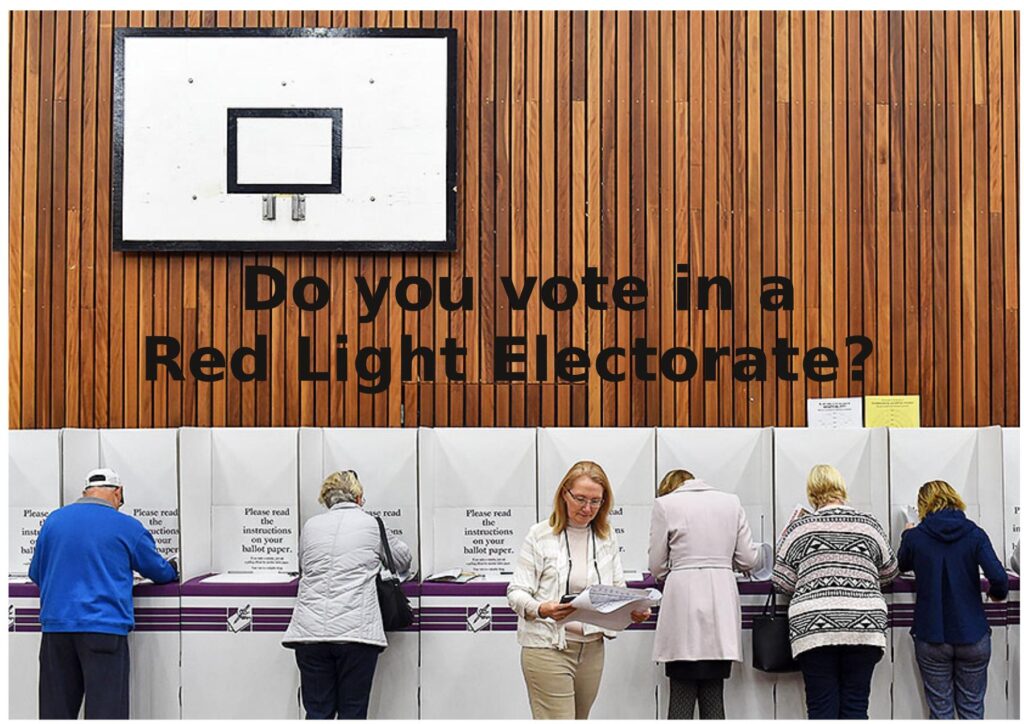
You will receive two ballot papers to vote for your preferred candidates in the Victorian House of Assembly and the Victorian Legislative Council .
To vote Traffic Light, vote for all the Green Light candidates or parties first, then if there are any Orange Light ones number them next. Number the red light candidates last.
Red light candidates are threat to achieving a fair future for us all not just in relation to Climate Rescue, but also a range of social issues most of us are concerned about. The order you number the Red Light candidates will have a significant effect on creating a good outcome at this election. We describe this advice as Strategic Preferencing. Strategic Preferencing will turbo charge the effectiveness of your vote in Red Light electorates.
Strategic Preferencing in Eureka
Eureka is not a Red Light electorate but we strongly advise you preference the One Nation candidate last and the Libs second last. You have three Green Light candidates to vote for before the Red Light candidates.
Strategic Preferencing in the Western Victoria Region
Fortunately you have an Outstanding Green Light candidate to vote for in Western Region.
Whether you vote below, or above the line, number One Nation or their candidates last. The divisiveness promoted by this party will tear us apart. Your vote can help to exclude them from minority government and preserve our capacity to restore social cohesion.
To maximise the effectiveness of your Upper House vote you will need to fill in all the boxes either above the line or below the line.
Outstanding Green Light Candidates

Aleta Moriarty is an Outstanding Green Light candidate standing in Western Region
Why I’m Running
I BELIEVE WE
CAN DO BETTER.
For a long time, I believed I could help create change through research, advocacy, journalism and human rights work. But after years of being active in this community, more and more people encouraged me to step forward.
I have listened to people who feel tired of being promised change and then let down. Across Western Victoria, people are concerned about growing inequality, from housing to education, health, wages and opportunity. People who are worried that our political system is increasingly shaped by entrenched power, vested interests and lobby groups, rather than the needs of ordinary communities.
They are worried about polarisation, populism and a broader democratic decline, where too often the rules no longer seem to apply equally. And they are tired of regional communities being treated as an afterthought, with lower investment, poorer infrastructure, worse education outcomes and fewer opportunities.
I share those concerns. But I also believe a better future is possible. I can see a fairer, kinder and more hopeful Victoria, one where communities are listened to, public services are properly funded, one where people matter, and the next generation has a genuine chance to thrive.
I am not motivated by power or politics for its own sake. I am motivated by change: stronger communities, greater opportunity, and a future people can believe in again.
At some point, I realised I could no longer be a bystander. Western Victoria deserves better. The next generation deserves better.
Vote Climate One Assessment
On your first question: if I’m elected to the next Victorian Parliament, I will support real action on issues relating to the ecological and climate emergency. That’s not new for me, it’s the reason I’ve spent most of my career in sustainability work.
On the second one, yes I would reflect the 3rrr in my assessments and decision making. I take an evidence based approach and would draw on the best available evidence in doing this.
Green Light Candidates
Sam McColl Greens Candidate

TBA
TBA
Sam McColl Greens Candidate

I am a local renter, community volunteer and frontline worker passionate about housing, health and climate justice for regional Victoria. I have put my hand up for this election because I believe meaningful change happens when everyday people step forward and take part in shaping their future.
Our community in Eureka is ready for change – we are dealing with rising living costs, housing pressure and limited access to services. We care deeply about the places we share and I will be a representative for Eureka who listens, includes people in decisions and helps build our collective voice.
Let’s build a welcoming, hopeful and community driven campaign in Eureka. Where volunteers and supporters feel proud of the movement they are part of and excited about the change we can create together.
Together we can build our movement in regional Victoria and ensure people know the power the Greens hold to push for better decisions and outcomes for all of us.
Climate Change Policy
All of our state policy principles and aims should be read alongside our relevant federal policy principles and aims, as well as our state campaigns and federal campaigns.
Principles
- Human-induced climate change poses one of the greatest threats to our world in human history and requires urgent local, national and global action.
- We are already experiencing dangerous impacts of climate change; urgent, deep, and broad action is required to avoid catastrophic impacts.
- The amount of greenhouse gases already in the atmosphere necessitates urgent emission reduction and drawdown of greenhouse gases as well as prompt adaptation to climate change.
- Early action to reduce greenhouse emissions is cheaper and fairer than delayed action.
- Governments must ensure that organisations responsible for pollution pay for the costs of mitigating climate change and adapting to its impacts.
- Climate change policy should be based on the best available science.
- Climate change policy should inform and frame all other policies.
- Victoria must take responsibility for the greenhouse gas emissions resulting from the goods and resources it consumes and exports.
- Victoria is one of the world’s largest per-capita emitters of greenhouse gases with a large percentage due to the burning of brown coal.
- The lack of effective global (or Australian) climate action must not prevent Victoria from taking immediate and comprehensive measures.
- Offset schemes must be carefully controlled to avoid them undermining emissions reduction efforts or being used for greenwashing or fraud.
- Climate action should prioritise proven solutions such as large-scale reforestation over unproven or harmful technologies that prolong fossil fuel use.
- Climate change adaptation and mitigation measures should not discriminate or treat anyone unfairly on any basis including gender, age, race, ethnicity, vulnerability, religion, disability, sexual orientation or membership of a minority group.
Aims
Mitigation
- To achieve net zero or negative total greenhouse gas emissions across all areas of human activity – including via the removal of greenhouse gases already in the atmosphere, in a way that is environmentally responsible and socially fair.
- Development and implementation of a detailed plan to end Victoria’s reliance on fossil fuels by shifting to, and beyond, a zero greenhouse gas emission economy.
- Position Victoria – through appropriate investment in technological innovation – to benefit from the new jobs, skills, technologies and markets available in a zero greenhouse gas emission economy.
- Provide transitional support for all regions, businesses and communities adversely affected by measures that reduce climate change.
- Support place-based adaptation and mitigation initiatives which engage the community in identifying local challenges and co-designing solutions.
- Regulation of the phasing out of existing coal-fired power stations and the banning of new fossil-fuel based power stations.
- A ban on the exploration and development of new fossil fuel resources including but not limited to coal seam gas and other forms of unconventional gas.
- Develop complementary mitigation measures in collaboration with other governments where possible.
- Support for elevating sustainability requirements for buildings and construction.
- Where practical, support nature-based responses to climate change, such as increasing canopy cover, and planting mangroves to reduce storm damage to coastal areas.
- Assistance to the agriculture and forestry sectors to reduce emissions from ruminant livestock production and land clearing and other sources.
- Maximise effective and sustainable carbon farming, bio-sequestration and other drawdown methods.
- Implement low-cost, high-impact emissions reductions in Victoria’s stationary energy sector, and reduce emissions across other sectors including transport, industrial processes, agriculture and forestry.
Adaptation
- Government support for adaptive actions to protect the environment and key public assets, and to manage major public risks.
- The implementation, through public and private action, of Victoria’s climate change adaptation action plan, and ongoing review with community and expert involvement.
- Assisting the agriculture sector to adjust to reduced water availability and to make itself more energy self-sufficient.
- Ensuring that planning regulations allow for expected impacts of climate change such as rising sea levels, storm surges and other extreme weather events.
- Implement adaptation measures that take account of those groups disproportionately impacted by climate change and resulting disasters and emergencies.
Further reading
- Climate change and energy (federal Greens policy)
- No more coal and gas (state campaign)