Albert Park
Below is a mock up of a Traffic Light Voting Guide for Footscray. The Albert Park guide for voters will not be published until after the ballot draw on Tuesday November 10th.
Below is a mock up of a Traffic Light Voting Guide for the Victorian Upper House in the WESTERN METROPOLITAN REGION. The SOUTHERN METROPOLITAN REGION guide for voters in Albert Park will not be published until after the ballot draw on Tuesday November 10th.
Voting Traffic Light in the 2026 Victorian State Election
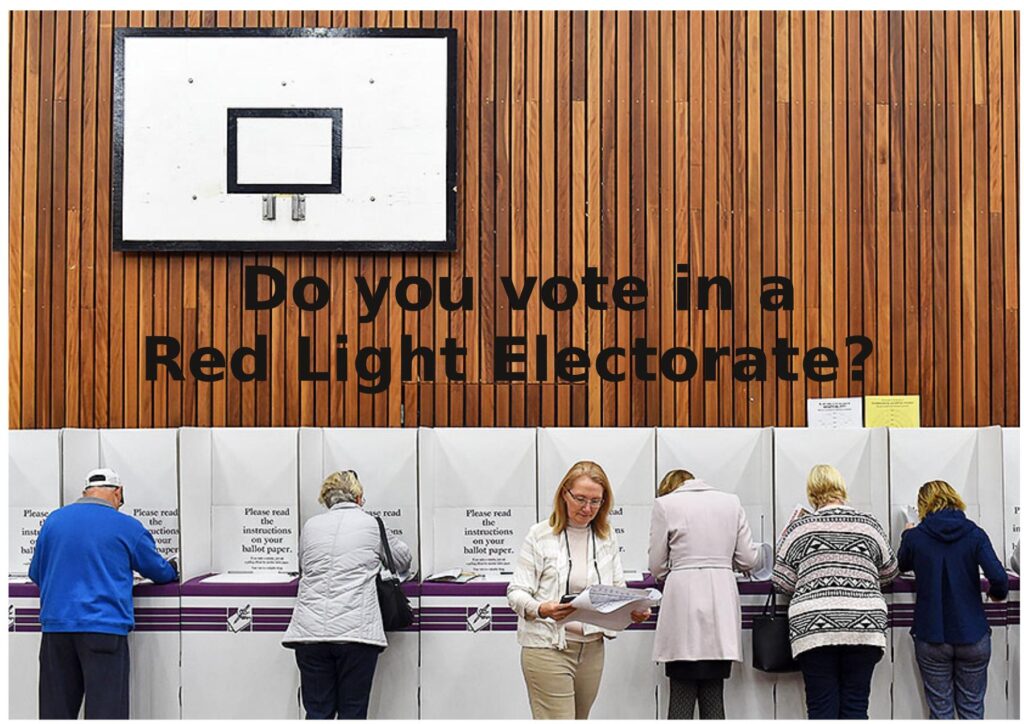
You will receive two ballot papers to vote for your preferred candidates in the Victorian House of Assembly and the Victorian Legislative Council .
To vote Traffic Light, vote for all the Green Light candidates or parties first, then the Orange Light ones. Number the red light candidates last.
Red light candidates are threat to achieving a fair future for us all not just in relation to Climate Rescue, but also a range of social issues most of us are concerned about. The order you number the Red Light candidates will have a significant effect on creating a good outcome at this election. We describe this advice as Strategic Preferencing. Strategic Preferencing combined with your Traffic Light Voting Guide will turbo charge the effectiveness of your vote in Red Light electorates.
Strategic Preferencing in Albert Park District (How to turbo-charge your vote!)
Albert Park is a Red Light electorate held by Labor. We strongly advise to you preference the Labor candidate last. You have three other Green Light candidates to vote for. Fortunately one those three is an Outstanding Green Light candidate and a very worthy independent.
Strategic Preferencing in the Southern Metropolitan Region
Whether you vote below, or above the line, number One Nation or their candidates stone motherless last. The divisiveness promoted by this party will tear us apart. Your vote can help to exclude them from minority government and preserve our capacity to restore social cohesion. They have the unhinged capacity to take a wrecking ball to the good influence of the Legislative Council.
To do this effectively you will need to fill in all the boxes either above the line or below the line.
Outstanding Green Light Candidates
Community independent Georgie Dragwidge has been assessed by the Traffic light Voting Team as an Outstanding Green Light Candidate

Green Light Candidates




Sonya Semmens Greens Candidate for Albert Park
I’ve spent my professional life helping others. I was born and raised in Dandenong to a mum who was a nurse, and a Dad who was an architect-turned teacher.
Now, I live bayside with my big beautiful blended family of four kids, and a golden retriever named Magnus. I understand the demands of modern life, and know that if you want to get something done, ask a busy mum.
I’ve spent my life advocating for those in need, here and around the world, including work to help people facing domestic violence, health crises and communities facing the climate crisis.
I’m a renter, and someone who understands the challenges of facing insecure housing. When I moved to Albert Park, I found a place to call home and now I’m determined to ensure no one experiences homelessness in a country as wealthy as Australia.
I love this community, and will spend hours listening to the stories of the people who live here. I believe in fairness, ensuring everyone gets a go, and understand that life’s real successes only come with hard work.
I’ve seen the power of community, and believe in the power of politics to improve people’s lives for the better.
Principles
- Human-induced climate change poses one of the greatest threats to our world in human history and requires urgent local, national and global action.
- We are already experiencing dangerous impacts of climate change; urgent, deep, and broad action is required to avoid catastrophic impacts.
- The amount of greenhouse gases already in the atmosphere necessitates urgent emission reduction and drawdown of greenhouse gases as well as prompt adaptation to climate change.
- Early action to reduce greenhouse emissions is cheaper and fairer than delayed action.
- Governments must ensure that organisations responsible for pollution pay for the costs of mitigating climate change and adapting to its impacts.
- Climate change policy should be based on the best available science.
- Climate change policy should inform and frame all other policies.
- Victoria must take responsibility for the greenhouse gas emissions resulting from the goods and resources it consumes and exports.
- Victoria is one of the world’s largest per-capita emitters of greenhouse gases with a large percentage due to the burning of brown coal.
- The lack of effective global (or Australian) climate action must not prevent Victoria from taking immediate and comprehensive measures.
- Offset schemes must be carefully controlled to avoid them undermining emissions reduction efforts or being used for greenwashing or fraud.
- Climate action should prioritise proven solutions such as large-scale reforestation over unproven or harmful technologies that prolong fossil fuel use.
- Climate change adaptation and mitigation measures should not discriminate or treat anyone unfairly on any basis including gender, age, race, ethnicity, vulnerability, religion, disability, sexual orientation or membership of a minority group.
Aims
Mitigation
- To achieve net zero or negative total greenhouse gas emissions across all areas of human activity – including via the removal of greenhouse gases already in the atmosphere, in a way that is environmentally responsible and socially fair.
- Development and implementation of a detailed plan to end Victoria’s reliance on fossil fuels by shifting to, and beyond, a zero greenhouse gas emission economy.
- Position Victoria – through appropriate investment in technological innovation – to benefit from the new jobs, skills, technologies and markets available in a zero greenhouse gas emission economy.
- Provide transitional support for all regions, businesses and communities adversely affected by measures that reduce climate change.
- Support place-based adaptation and mitigation initiatives which engage the community in identifying local challenges and co-designing solutions.
- Regulation of the phasing out of existing coal-fired power stations and the banning of new fossil-fuel based power stations.
- A ban on the exploration and development of new fossil fuel resources including but not limited to coal seam gas and other forms of unconventional gas.
- Develop complementary mitigation measures in collaboration with other governments where possible.
- Support for elevating sustainability requirements for buildings and construction.
- Where practical, support nature-based responses to climate change, such as increasing canopy cover, and planting mangroves to reduce storm damage to coastal areas.
- Assistance to the agriculture and forestry sectors to reduce emissions from ruminant livestock production and land clearing and other sources.
- Maximise effective and sustainable carbon farming, bio-sequestration and other drawdown methods.
- Implement low-cost, high-impact emissions reductions in Victoria’s stationary energy sector, and reduce emissions across other sectors including transport, industrial processes, agriculture and forestry.
Adaptation
- Government support for adaptive actions to protect the environment and key public assets, and to manage major public risks.
- The implementation, through public and private action, of Victoria’s climate change adaptation action plan, and ongoing review with community and expert involvement.
- Assisting the agriculture sector to adjust to reduced water availability and to make itself more energy self-sufficient.
- Ensuring that planning regulations allow for expected impacts of climate change such as rising sea levels, storm surges and other extreme weather events.
- Implement adaptation measures that take account of those groups disproportionately impacted by climate change and resulting disasters and emergencies.
Further reading
- Climate change and energy (federal Greens policy)
- No more coal and gas (state campaign)
Colleen Boldger Socialist Candidate
Real Climate Action
- Use the public ownership and democratic control of power industries to plan a shift to 100% renewable energy within 5-10 years through public investment and emission reduction targets
- End all fossil fuel subsidies
- Phase out fossil fuels; no new coal or gas projects, including Adani; ban fracking and unconventional gas mining
- Guaranteed jobs with no loss in pay for workers in fossil fuel industries
- Asylum for climate refugees and those displaced by climate change
- Ban the logging of old-growth forests and carry out an urgent program of reforestation, regenerative farming and biodiversity protection
- Employ Indigenous rangers to lead the urgent program of reforestation, cultural burning, biodiversity protection and regenerative farming projects
- Enforce the rehabilitation of mine sites by companies
- Institute a national heat health strategy
- No nuclear energy, nuclear weapons, uranium mining and radioactive waste dumps
Bettina Terry for a Fair and Sustainable Australia

Bettina lives and works within the boundaries of the Southern Metropolitan Region. She holds a Bachelor of Commerce and a Master of Urban Horticulture from the University of Melbourne.
As a small business owner, Bettina is aware of the complexity of issues facing all of us who live in Melbourne. She has developed strong interpersonal and negotiating skills and actively listens to and appreciates the diversity of people’s stories.
Bettina aims for standards of excellence in transparency of government and to remove the influence of property developers in determining our natural and built environments. She is standing for election to the Upper House because she is very concerned about our state including over-development and the way the views of local residents on planning issues are systematically ignored.
Bettina believes that the disappearance of Melbourne’s heritage and green space is something we must stop, because we have seen the loss of front yards, back yards and fear our city is slowly but surely being turned into a high-rise concrete jungle. She believes all the research about climate change and the urban heat island effect tells us we need to keep all the trees and open space we can, for both our physical and mental health.
Bettina has learned from the IBAC inquiry into state and local governments and believes that we need MPs who will stand up for residents against the cosy deals of the State Government and both the property developer lobby and big unions.
SAP Environment Policy Objective
Recognise that a healthy natural environment is the foundation upon which all human wellbeing and prosperity is built, and so prioritise environmental sustainability to better protect, manage and restore Australia’s fragile and unique natural environment.
Policy Actions (Federal & State)
To support this objective, Sustainable Australia Party will:
General
- Enshrine into Australian law the fundamental human right of a healthy natural environment for its citizens and prioritise this in all policy and development decisions
“Australia is one of only 15 nations (a list that also includes Canada and the United States) that does not recognise the human right to a healthy environment at the federal level.” The Conversation
- Establish an independent National Sustainability Commission to plan and report on national environmental standards, as well as better balance economic development with environmental protection
- Establish a federal Environment Protection Agency to act as independent environmental watchdog, with powers to apply the ‘precautionary principle’(1) to projects and developments where there is a serious environmental risk
- Properly resource all government departments to address the environmental management and monitoring aspects of multidisciplinary projects
- Operate Australia’s economy within the principles of ‘ecological economics’ (also see Economy policy)
- Significantly reduce Australia’s waste production, and increase its recycling and energy recovery through a circular economy (also see Waste policy)
- Widespread urban, rural, marine and waterway animal habitat protection, including avoiding habitats of all threatened, vulnerable and endangered native species in housing, mining, agriculture, forestry, energy, etc developments (also see Animals & Biodiversity policy)
- Recognise that industries such as renewable energy and electric motor vehicles also have major environmental impacts and do not provide a solution to techno-fix business-as-usual economic (consumption) growth
- Establish a national ‘job guarantee’ program, initially focusing on the environment (also see Job Guarantee policy)
- Invest more in environmental education and the protection, maintenance and ecological restoration of the natural environment
- End broadscale land clearing and initiate a nationwide ecological restoration and rewilding program to rehabilitate degraded lands
- Properly include the traditional knowledge of Aboriginal and Torres Strait Islander Australians’ in environmental research and decision-making
- Protect Australia from invasive species by adopting the Invasive Species Council’s six-point action plan
- Recognise that human impact (I) on the environment is a function of three factors: population (P), affluence (A) (also known as consumption per person) and technology (T), being the ‘IPAT’ formula
- Slow population growth then stabilise Australia’s population size as soon as practicable (also see Population & immigration policy)
“But population growth, combined with an increase in consumption, is now seen as the main driver of change in the Earth system.” The Conversation
- Assist farmers to transition to scientifically verified regenerative agriculture practices (also see Regional Australia policies)
- Encourage food and drink choices that benefit the environment, including plant-based options
Climate change
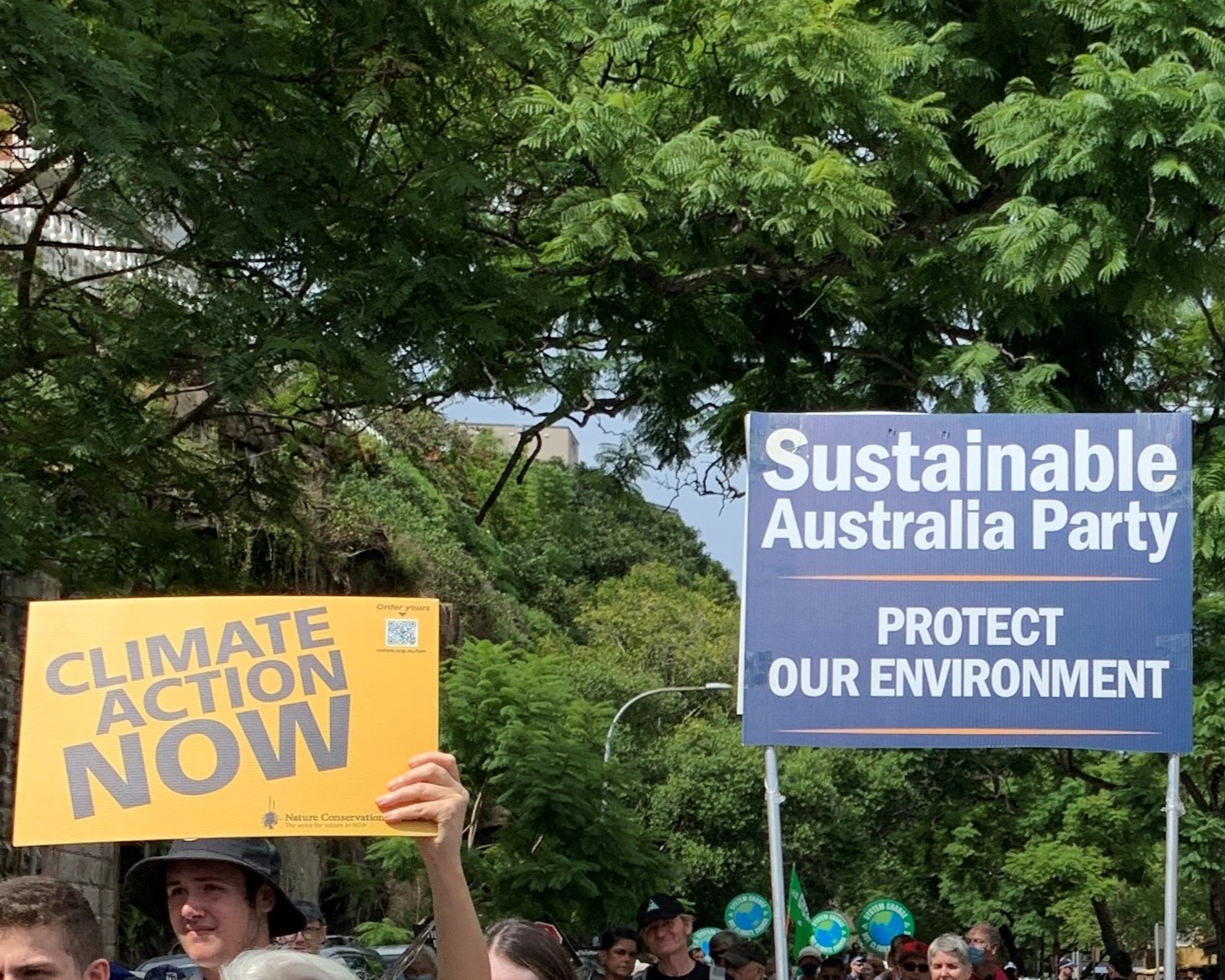
“The viability of our societies depends on leaders from government, business and civil society uniting behind policies, actions and investments that will limit temperature rise to 1.5 degrees Celsius.” Australian Broadcasting Corporation
“The world’s leading climate scientists have warned that the prospect of limiting global warming to 1.5C will be out of reach within 12 years at current rates of greenhouse gas emissions, in a report that finds it is now “unequivocal’’ that human activity is heating the planet.” The Australian [$]
Background – Climate change policies
SAP understands that as a global community we are losing the fight against climate change; the Australian government has the wrong policies; and Australia acting alone is pointless and counter-productive.
- Act on climate change and contribute globally to staying below 1.5 degrees global temperature rise compared to pre-industrial levels (2)
- Support international agreements to lower greenhouse gas emissions including a target of net zero emissions by 2035, ensuring that all high emitting countries meet the same or similar climate goals
- Reduce emissions by at least 75 per cent below 2005 levels by 2030, ensuring that all high emitting countries meet the same or similar climate goals
- Recognise that to achieve these ambitious targets and make them economically fair and environmentally meaningful, Australia must:
- Act to slow population growth then stabilise Australia’s population size (and related resource consumption) as soon as practicable (also see below)
- Work to urgently achieve a new global agreement that ensures all high emitting countries including economic competitors like China, USA and India meet the same or similar climate goals (also see Trade policy)
- Adopt a globally consistent carbon pricing mechanism that does not unfairly penalise Australian industries against their equivalent foreign competitor
- Place tariffs or bans on imports where any relevant carbon pollution has not been priced into the goods and services
- Slow population growth then stabilise Australia’s population size as soon as practicable (also see Population & Immigration policy)(3)
“The federal government’s State of the Environment 2016 report (prepared by a group of independent experts) predicts that population growth and economic development will be the main drivers of environmental problems such as land-use change, habitat destruction, invasive species, and climate change.” The Conversation
“Population growth had cancelled out three quarters of the global efforts to reduce carbon emissions in recent years.” PM
The greatest impact individuals can have in fighting climate change is to have one fewer child…” The Guardian
“Population growth contributes to all the pressures described in this report. Each person added to our population increases demand on natural resources to provide food, shelter and materials for living.” State of the Environment Report 2021
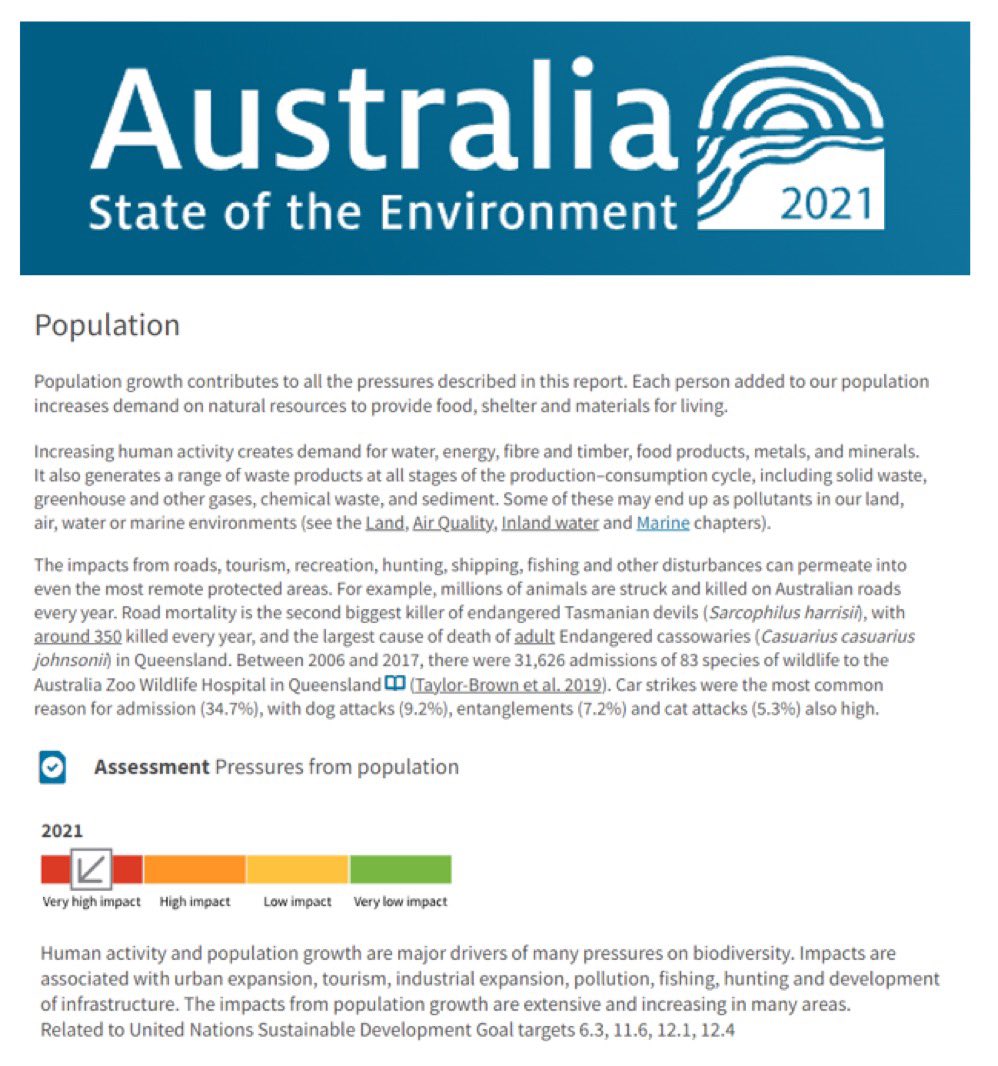
The Victorian Government’s Victorian Greenhouse Gas Emissions Report 2018, is further shocking evidence (unreported in the mainstream media) of how government-engineered rapid population growth is wiping out our efforts to reduce per capita (and therefore total) emissions.
- Fund and subsidise research and development into renewable energy technologies and energy efficiency initiatives
- Adopt a renewable energy target (RET) in line with our commitment on zero net emissions
- Implement a ban on all new coal mines in Australia
- Impose a moratorium on all new fracking, including for coal seam gas (also see Energy policy)
- Phase out fossil fuel subsidies
Daniel O’Neill Animal Justice Party