
Benambra
Below is a mock up of a Traffic Light Voting Guide for Footscray. The Benambra guide for voters will not be published until after the ballot draw on Tuesday November 10th.
Below is a mock up of a Traffic Light Voting Guide for the Victorian Upper House in the WESTERN METROPOLITAN REGION. The NOTHERN VICTORIA REGION guide for voters in Benambra will not be published until after the ballot draw on Tuesday November 10th.
Voting Traffic Light in the 2026 Victorian State Election
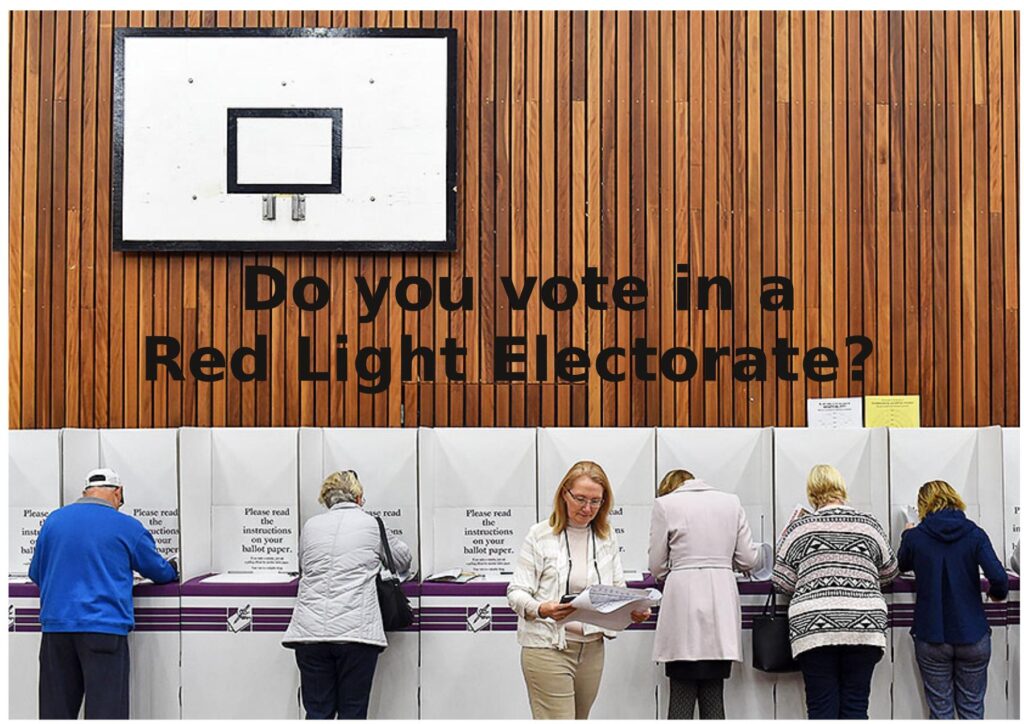
You will receive two ballot papers to vote for your preferred candidates in the Victorian House of Assembly and the Victorian Legislative Council .
To vote Traffic Light, vote for all the Green Light candidates or parties first, then the Orange Light ones. Number the red light candidates last.
Red light candidates are threat to achieving a fair future for us all not just in relation to Climate Rescue, but also a range of social issues most of us are concerned about. The order you number the Red Light candidates will have a significant effect on creating a good outcome at this election. We describe this advice as Strategic Preferencing. Strategic Preferencing combined with your Traffic Light Voting Guide will turbo charge the effectiveness of your vote in Red Light electorates.
Strategic Preferencing in the Benambra District (How to turbo-charge your vote!)
Benambra is a Red Light electorate held by the Liberal Party. We strongly advise to you preference the Liberal candidate last. We have not completed our assessments for Benambra yet. Nevertheless we expect that you will have three Green Light candidates or parties to vote for followed by one Orange Light candidate.
Strategic Preferencing in the Southern Metropolitan Region
Whether you vote below, or above the line, number One Nation or their candidates stone motherless last. The divisiveness promoted by this party will tear us apart. Your vote can help to exclude them from minority government and preserve our capacity to restore social cohesion. They have the unhinged madness to take a wrecking ball to the good influence of the Legislative Council.
To do this effectively you will need to fill in all the boxes either above the line or below the line.
Outstanding Green Light Candidates
Green Light Candidates
Graham Parton Greens Candidate

Mike Fuery Animal Justice

Dr Paul Read SAP Northern Region

Graham Parton Greens Candidate

Hi, I’m Graham
After a career in human resources and environmental management across a number of sectors, I’ve chosen to dedicate my retirement to my community. I am currently writing biographies of several local residents, work as a tour guide at the Old Beechworth Gaol, and enjoy making improvements to my low-energy home.
I’m running because Benambra deserves a representative who listens, acts with compassion, and plans for the future. Climate change is already affecting our farmers, communities, and environment, and we need leadership that takes these challenges seriously. As a Greens candidate, I’ll always put people before corporate interests, reject donations from wealthy individuals and big industries, and work to strengthen healthcare, protect biodiversity, and build resilient regional communities
Climate Change Policy
All of our state policy principles and aims should be read alongside our relevant federal policy principles and aims, as well as our state campaigns and federal campaigns.
Principles
- Human-induced climate change poses one of the greatest threats to our world in human history and requires urgent local, national and global action.
- We are already experiencing dangerous impacts of climate change; urgent, deep, and broad action is required to avoid catastrophic impacts.
- The amount of greenhouse gases already in the atmosphere necessitates urgent emission reduction and drawdown of greenhouse gases as well as prompt adaptation to climate change.
- Early action to reduce greenhouse emissions is cheaper and fairer than delayed action.
- Governments must ensure that organisations responsible for pollution pay for the costs of mitigating climate change and adapting to its impacts.
- Climate change policy should be based on the best available science.
- Climate change policy should inform and frame all other policies.
- Victoria must take responsibility for the greenhouse gas emissions resulting from the goods and resources it consumes and exports.
- Victoria is one of the world’s largest per-capita emitters of greenhouse gases with a large percentage due to the burning of brown coal.
- The lack of effective global (or Australian) climate action must not prevent Victoria from taking immediate and comprehensive measures.
- Offset schemes must be carefully controlled to avoid them undermining emissions reduction efforts or being used for greenwashing or fraud.
- Climate action should prioritise proven solutions such as large-scale reforestation over unproven or harmful technologies that prolong fossil fuel use.
- Climate change adaptation and mitigation measures should not discriminate or treat anyone unfairly on any basis including gender, age, race, ethnicity, vulnerability, religion, disability, sexual orientation or membership of a minority group.
Aims
Mitigation
- To achieve net zero or negative total greenhouse gas emissions across all areas of human activity – including via the removal of greenhouse gases already in the atmosphere, in a way that is environmentally responsible and socially fair.
- Development and implementation of a detailed plan to end Victoria’s reliance on fossil fuels by shifting to, and beyond, a zero greenhouse gas emission economy.
- Position Victoria – through appropriate investment in technological innovation – to benefit from the new jobs, skills, technologies and markets available in a zero greenhouse gas emission economy.
- Provide transitional support for all regions, businesses and communities adversely affected by measures that reduce climate change.
- Support place-based adaptation and mitigation initiatives which engage the community in identifying local challenges and co-designing solutions.
- Regulation of the phasing out of existing coal-fired power stations and the banning of new fossil-fuel based power stations.
- A ban on the exploration and development of new fossil fuel resources including but not limited to coal seam gas and other forms of unconventional gas.
- Develop complementary mitigation measures in collaboration with other governments where possible.
- Support for elevating sustainability requirements for buildings and construction.
- Where practical, support nature-based responses to climate change, such as increasing canopy cover, and planting mangroves to reduce storm damage to coastal areas.
- Assistance to the agriculture and forestry sectors to reduce emissions from ruminant livestock production and land clearing and other sources.
- Maximise effective and sustainable carbon farming, bio-sequestration and other drawdown methods.
- Implement low-cost, high-impact emissions reductions in Victoria’s stationary energy sector, and reduce emissions across other sectors including transport, industrial processes, agriculture and forestry.
Adaptation
- Government support for adaptive actions to protect the environment and key public assets, and to manage major public risks.
- The implementation, through public and private action, of Victoria’s climate change adaptation action plan, and ongoing review with community and expert involvement.
- Assisting the agriculture sector to adjust to reduced water availability and to make itself more energy self-sufficient.
- Ensuring that planning regulations allow for expected impacts of climate change such as rising sea levels, storm surges and other extreme weather events.
- Implement adaptation measures that take account of those groups disproportionately impacted by climate change and resulting disasters and emergencies.
Further reading
- Climate change and energy (federal Greens policy)
- No more coal and gas (state campaign)
Greens State policies

Mike Fuery is proudly standing as your Animal Justice Party candidate for Benambra. In 2023 Mike retired as a career paramedic after 40 years, having served his current community in Wodonga, based on Duduroa Country, since 1995.
The Animal Justice Party (AJP) is the only political party with policies that comprehensively take into account all sources of emissions, including the impact of animal agriculture and land clearing on the global climate, and the need to urgently transition to a plant-based diet in order to address the climate crisis.
The AJP will take urgent action to address the climate emergency. In addition to phasing out fossil fuels, we will transition from animal agriculture towards more sustainable plant-based farming, and transform other climate-threatening industries and practices. This is essential not only to reduce harmful emissions, but also to protect nature, and human and other animal life.
Key Objectives
- Declare a climate emergency and biodiversity emergency at every level of government as the first step towards systemic change and climate justice.
- Rapidly transition from animal agriculture to plant-based agriculture and promote plant-based diets.
- Protect, regenerate, expand, rewild and enhance all ecological systems including forests, grasslands, freshwater and marine habitats, in part by reserving at least 50% of the planet for nature (see our Policies on Human Population, Land Clearing and Marine Animals).
- Develop water management policies that are responsive to climate change and that prioritise animals, the environment and people over commercial interests (see our Water Management Policy).
- Develop and fund comprehensive plans and actions to assist all animal species and vulnerable human populations to adapt to a changing climate.
- Rapidly phase out fossil fuels and transition to clean energy infrastructure (see our Energy Policy).
- Commit to ambitious emission reduction targets which do not encourage dead end ‘solutions’, such as natural gas (see our latest Election Platform).
- Remove subsidies from the fossil fuel and animal agriculture industries in the interim and redirect funding into clean energy solutions and sustainable plant-based agriculture.
- Shift away from road transport toward more environmentally-friendly modes, including rail and mass transit, together with walking and cycling (see our Land Transport Policy).
- Reimagine urban design to be climate-friendly and climate-resilient, and incentivise research and development into net zero carbon building materials and practices.
The AJP wants to see Australia’s emissions plummet but cautions against interim measures which may risk entrenching the fossil fuel and animal agriculture industries. For example, switching from coal to gas and offshoring emission intensive industries has provided short-term ‘good news’ for domestic audiences but may do more harm than good in the long run. Targets in the fossil fuel industry must mean transitioning to clean energy; not investing in trying to make fossil fuels ‘cleaner’. Likewise, targets in animal agriculture must mean transitioning towards sustainable plant-based agriculture; not ‘greenwashing’ suggestions like feeding cows seaweed.
Traffic Light Voting Assessment
Animal Justice Party has signed up to the Climate Rescue Accord, the 3Rs and the Green Transition
Dr Paul Read standing in the Northern Victorian Region for Sustainable Australia Party
Based in Tatura, Dr Paul Read is a university professor, researcher, and internationally recognised expert in sustainability, climate and bushfires. Holding a PhD in Sustainability and Psychology, Paul brings extensive academic rigour and real-world expertise to the Victorian election.
Throughout his career, Paul has contributed to major research institutions including Monash University, Harvard Medical School and the Melbourne Sustainable Society Institute. He also co-directed the Australian Centre for Bushfire Arson Research. Paul’s expertise has made him a prominent voice across national and global media outlets, including the BBC and The New York Times.
Paul is a fierce advocate for fair treatment of farming communities and emergency services, as well as fair pay and job security for all. Dedicated to community rights, he is concerned at both the way farming and regional communities are being railroaded by big corporations, and the way people are increasingly economically exploited and under-served by governments.
Paul combines a deep commitment to regional community resilience with evidence-based policy. He is passionate about real solutions for housing, health, education, climate change, and environmental conservation, ensuring a fair and sustainable future for all Australians.
Environment Policy | Sustainable Australia Party
In short:
Recognise that a healthy natural environment is the foundation upon which all human wellbeing and prosperity is built, and so prioritise environmental sustainability to better protect, manage and restore Australia’s fragile and unique natural environment
- Enshrine into Australian law the fundamental human right of a healthy natural environment
- Significantly reduce Australia’s waste production
- Act on climate change and contribute to staying below 1.5 degrees global temperature rise compared to pre-industrial levels