
Caulfield
Below is a mock up of a Traffic Light Voting Guide for Footscray. The Caulfield guide for voters will not be published until after the ballot draw on Tuesday November 10th.
Below is a mock up of a Traffic Light Voting Guide for the Victorian Upper House in the WESTON METROPOLITAN REGION. The actual guide for voters will not be published until after the ballot draw on Tuesday November 10th.
Voting Traffic Light in the 2026 Victorian State Election
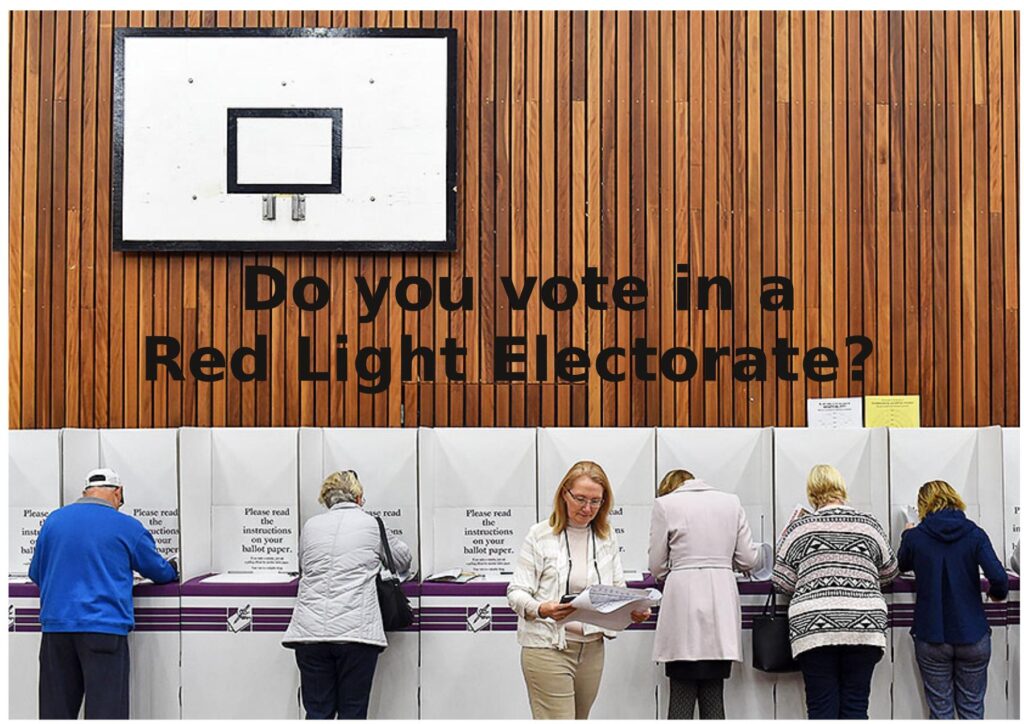
You will receive two ballot papers to vote for your preferred candidates in the Victorian House of Assembly and the Victorian Legislative Council .
To vote Traffic Light, vote for all the Green Light candidates or parties first, then the Orange Light ones. Number the red light candidates last.
Red light candidates are threat to achieving a fair future for us all not just in relation to Climate Rescue, but also a range of social issues most of us are concerned about. The order you number the Red Light candidates will have a significant effect on creating a good outcome at this election. We describe this advice as Strategic Preferencing. Strategic Preferencing combined with your Traffic Light Voting Guide will turbo charge the effectiveness of your vote in Red Light electorates.
Strategic Preferencing in the Caulfield District (How to turbo-charge your vote!)
Caulfield is not a Red Light electorate but, bear in mind, we have not, as yet, completed our assessments of the candidates and parties. Nevertheless we anticipate you will have at least three Green Light candidates to vote for before the rest of the pack in your House Assembly ballot.
Strategic Preferencing in the Southern Metropolitan Region
Your Legislative Council ballot vote could be pivotal to the election of the fourth of fifth representative.
Whether you vote below, or above the line, number One Nation or their candidates stone motherless last. The divisiveness promoted by this party will tear us apart. Your vote can help to exclude them from minority government and preserve our capacity to restore social cohesion. They have an unhinged madness which will take a wrecking ball to the good influence of the Legislative Council on Government decision making.
To make certain that there is no chance that your ballot will be exhausted before the fifth candidate is decided we suggest you fill in all the boxes either above the line or below the line.
We repeat… number One Nation or their candidates last!
Outstanding Green Light Candidates
Community independent Melissa Lowe has been assessed by the Traffic light Voting Team as an Outstanding Green Light Candidate. Melissa is standing in all eleven elctorates for the Southern Metropolitan Region for the Victorian Legislative Council

Why the upper house matters
It’s meant to double-check government’s laws before they pass, a safeguard against one party having free rein. Melissa Lowe our Community Independent is the watchdog it’s been missing.
Climate and clean energy
What this means for you: lower bills, reliable power and a safer climate for your kids.
I will use my vote and committee work to:
- Strengthen Victoria’s legislated targets, aiming to reach net zero well before 2045. I will push for yearly milestones, public reporting and independent advice so we can track progress and meet our targets.
- Speed up renewable energy generation, transmission and storage, with transparent planning, fair benefits for host communities and published reliability checks.
- Ensure no household is left paying more or going cold as we move away from gas. I will support funding for electrification and efficient appliances, prioritising low-income households, renters and apartment owners.
- Oppose new coal and gas extraction and end fossil fuel subsidies. Before approving a new gas pipeline or import terminal, require the government to show that reducing gas demand through efficiency, electrification and storage would not be cheaper.
- Make rooftop solar and batteries accessible to everyone, including renters, apartment residents and people in heritage homes, where red tape can be a greater barrier than cost.
- Defend the end of native forest logging, restore habitat and water catchments, and support workers and communities through a fair transition.
- Prepare for heat, floods and fires with more tree canopy, cooler and more resilient housing, and properly funded emergency services.
Traffic Light Voting Assessment
Melissa has signed up to the Climate Rescue Accord, the 3Rs and the Green Transition
Green Light Candidates
Angel Dolejsi Greens Candidate

Malak Ababneh Vic Socialists
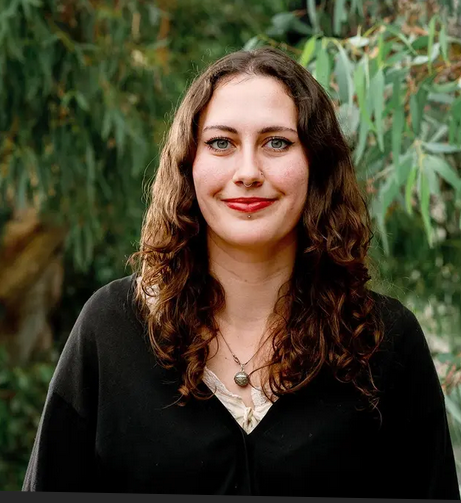
TBA
Angel Dolejsi Greens Candidate

I’m a National Operations Manager who is tired of watching politics manage a rigged system instead of fighting for people. Corporate influence is damaging our democracy and our local community are the ones feeling the impacts.
Our diverse electorate is made up of renters, mortgage holders, young professionals, students, families, migrants, older residents, and small business owners. Many of us are under enormous pressure from rising housing costs, insecure work, and public services stretched to breaking point, and this won’t change until we’re represented by someone who isn’t under the thumb of the corporations who profit from the crisis.
I’m ready to run a campaign for change in Caulfield that’s visible, accessible, and unafraid to challenge the status quo that’s not delivering for you.
Climate Change Policy
All of our state policy principles and aims should be read alongside our relevant federal policy principles and aims, as well as our state campaigns and federal campaigns.
Principles
- Human-induced climate change poses one of the greatest threats to our world in human history and requires urgent local, national and global action.
- We are already experiencing dangerous impacts of climate change; urgent, deep, and broad action is required to avoid catastrophic impacts.
- The amount of greenhouse gases already in the atmosphere necessitates urgent emission reduction and drawdown of greenhouse gases as well as prompt adaptation to climate change.
- Early action to reduce greenhouse emissions is cheaper and fairer than delayed action.
- Governments must ensure that organisations responsible for pollution pay for the costs of mitigating climate change and adapting to its impacts.
- Climate change policy should be based on the best available science.
- Climate change policy should inform and frame all other policies.
- Victoria must take responsibility for the greenhouse gas emissions resulting from the goods and resources it consumes and exports.
- Victoria is one of the world’s largest per-capita emitters of greenhouse gases with a large percentage due to the burning of brown coal.
- The lack of effective global (or Australian) climate action must not prevent Victoria from taking immediate and comprehensive measures.
- Offset schemes must be carefully controlled to avoid them undermining emissions reduction efforts or being used for greenwashing or fraud.
- Climate action should prioritise proven solutions such as large-scale reforestation over unproven or harmful technologies that prolong fossil fuel use.
- Climate change adaptation and mitigation measures should not discriminate or treat anyone unfairly on any basis including gender, age, race, ethnicity, vulnerability, religion, disability, sexual orientation or membership of a minority group.
Aims
Mitigation
- To achieve net zero or negative total greenhouse gas emissions across all areas of human activity – including via the removal of greenhouse gases already in the atmosphere, in a way that is environmentally responsible and socially fair.
- Development and implementation of a detailed plan to end Victoria’s reliance on fossil fuels by shifting to, and beyond, a zero greenhouse gas emission economy.
- Position Victoria – through appropriate investment in technological innovation – to benefit from the new jobs, skills, technologies and markets available in a zero greenhouse gas emission economy.
- Provide transitional support for all regions, businesses and communities adversely affected by measures that reduce climate change.
- Support place-based adaptation and mitigation initiatives which engage the community in identifying local challenges and co-designing solutions.
- Regulation of the phasing out of existing coal-fired power stations and the banning of new fossil-fuel based power stations.
- A ban on the exploration and development of new fossil fuel resources including but not limited to coal seam gas and other forms of unconventional gas.
- Develop complementary mitigation measures in collaboration with other governments where possible.
- Support for elevating sustainability requirements for buildings and construction.
- Where practical, support nature-based responses to climate change, such as increasing canopy cover, and planting mangroves to reduce storm damage to coastal areas.
- Assistance to the agriculture and forestry sectors to reduce emissions from ruminant livestock production and land clearing and other sources.
- Maximise effective and sustainable carbon farming, bio-sequestration and other drawdown methods.
- Implement low-cost, high-impact emissions reductions in Victoria’s stationary energy sector, and reduce emissions across other sectors including transport, industrial processes, agriculture and forestry.
Adaptation
- Government support for adaptive actions to protect the environment and key public assets, and to manage major public risks.
- The implementation, through public and private action, of Victoria’s climate change adaptation action plan, and ongoing review with community and expert involvement.
- Assisting the agriculture sector to adjust to reduced water availability and to make itself more energy self-sufficient.
- Ensuring that planning regulations allow for expected impacts of climate change such as rising sea levels, storm surges and other extreme weather events.
- Implement adaptation measures that take account of those groups disproportionately impacted by climate change and resulting disasters and emergencies.
Further reading
- Climate change and energy (federal Greens policy)
- No more coal and gas (state campaign)
Greens State policies
Malak Ababneh Victorian Socialists
Hi, I’m Malak. I’m running in this year’s state election as the candidate for Caulfield with Victorian Socialists because I believe we urgently need a left-wing response to the growth of inequality, racism and militarism in Australia.
I believe the root of all these issues is capitalism, a system that subordinates all else to the drive for profit and thrives on oppression and scapegoating to justify the inequality it produces. Socialist politics is the alternative to this. I want to fight to rebuild a fighting socialist movement in Australia which puts people before profit and mobilises the power of working-class people to fight for a more just world.
I’ve lived, worked and studied in south east Melbourne my whole life. I have a background in healthcare and am currently a history student at Monash University. I grew up in a single-parent working-class family and saw from a young age how the system is rigged against workers and ordinary people trying to stay afloat. This galvanised my resolve to fight for economic justice for workers.
The richest 48 people in Australia now control as much wealth as the poorest 11 million. This growing inequality is the result of political choices made by the major parties. Here in Victoria, Labor has presided over this historic transfer of wealth and the Allan government has responded by cutting social services and knocking down public housing.
I want to fight instead to put this wealth into fully funding our hospitals, schools and communities, expanding public housing, ensuring dignified and fair wages and reversing declining living standards.
I think anyone with a left-wing bone in their body, should be alarmed by the rise of One Nation. Pauline Hanson, Australia’s Trump, is now the preferred prime minister. Australia’s richest woman and far-right mining magnate, Gina Rinehart, has been pouring money into her campaign so that Hanson can popularise her anti-worker, anti-immigrant and anti-left agenda.
A confident, anti-capitalist fight back is required to combat the normalisation of her politics and vile racism. As part of Victorian Socialists, I have been involved in organising anti-fascist and anti-Hanson demonstrations and events, but the movement must be bigger. We need as many people as possible who are outraged by Hanson’s racism to join the fight.
As well as organising against the far right, I’ve been a community activist for years – involved in campaigns for climate action, refugee rights, women’s rights and justice for Palestine. I helped organise the Gaza Solidarity Encampment at my university to fight to cut ties with weapons companies and the US Department of War.
Addressing climate change and protecting our environment
The climate emergency is a dire threat to our natural environment and the liveability of our cities. Victoria’s Climate Science Report 2024 projects hotter summers, more frequent and severe bushfire weather, reduced water availability, rising sea levels, and intensified short-duration flooding. Victoria’s greenhouse gas emissions were 84.2 million tonnes of CO2-equivalent in 2023 with around 90 percent of those emissions coming from burning fossil fuels, and electricity generation alone accounting for 46 percent. The Allan government’s targets fall well short of what climate science requires of wealthy developed states to limit warming to 1.5°C. In 2025, the Allan government opened up a new offshore gas exploration program, a pivotal policy shift after years of more restrictive measures, and locking in fossil fuel development that will generate emissions for decades and is incompatible with any credible path to net zero.
Victorian Socialists acknowledge that climate change is an existential risk with the potential to impact all other aspects of our policy platform and believe the climate emergency demands a response that matches the scale of the threat. The cost of the transition must fall on those who created the crisis and have profited from it.
What we think
- Climate change is a direct product of the capitalist world economy, which turns everything in the natural environment into a resource exploitable for private profits.
- Market mechanisms such as carbon trading, offsets, and voluntary targets have had decades to work and have failed. Climate change cannot be addressed without a comprehensive, planned restructuring of the economy away from fossil fuel dependence.
- The concentration of greenhouse gases already in the atmosphere means that net-zero emissions will not be sufficient to curtail dangerous warming. Net-negative emissions — actively drawing down atmospheric carbon — will be required.
- Nuclear power is neither clean nor renewable.
- The effects of climate change are disproportionately felt by people on low incomes; their lives and livelihoods need to be protected not only from changes to the climate, but during the transition to a new economy.
- The economic burden of dealing with climate change must fall solely on those who have profited from destroying the environment: the ultra-rich and the big polluters.
- The renewable transition, if publicly owned and democratically controlled, is an opportunity to rebuild Victoria’s manufacturing capacity, create skilled and secure employment, and revitalise regions that have borne the costs of the fossil fuel economy for generations.
- Policy should be focused on mitigation of the crisis rather than adaptation.
We’ll fight to
Emissions targets
- Reduce emissions by 75 percent below 2005 levels by 2030, achieve a zero-carbon economy by 2035 and a permanent net-negative emissions economy by 2040.
Fossil fuel phase-out
- Accelerate the closure of all remaining coal-fired power generation, with Loy Yang A to close no later than 2030 rather than its current scheduled date of 2035, with guaranteed jobs, income support and community investment for all affected workers and regions.
- Reverse the Allan government’s 2025 offshore gas exploration program, prohibit the development of all new fossil fuel projects — onshore and offshore.
- Make environmental approval for any new resource development contingent on full greenhouse gas emission neutrality.
- Stop the establishment of a nuclear power industry in the state.
Sustainability
- No new data centres. Data centres have detrimental environmental footprints, disproportionately high water and electricity demands, and no community benefits to the areas they are placed.
- Require existing data centres to meet mandatory standards on water consumption, energy use and renewable energy sourcing, with binding targets and enforceable penalties for non-compliance.
- End all planned waste to energy schemes and ban the creation of future waste incinerators.
Renewable transition
- Urgently construct solar and wind farms and upgrade the power grid with battery storage to enable the quick transition of Victorian homes and businesses to an all-electric, post-gas energy system.
- Establish a renewables manufacturing industry (solar photovoltaic, lithium-ion battery and electric vehicles), with guaranteed secure jobs and retraining for workers from the fossil fuel industry.
- Electrify Victoria’s transport system and commit to 100 percent electric new car sales by 2035, establish a comprehensive fast-charging network across the state including regional and rural areas, electrify the public bus fleet, and end all subsidies and concessions for fossil-fuel vehicles.
Nature and carbon stores
- Protect, restore and expand Victoria’s natural carbon stores — defending and extending the end of native forest logging introduced in January 2024, establishing large-scale programs of reforestation, restoring native grasslands and wetlands, and protecting blue carbon ecosystems in coastal and estuarine areas.
Adaptation
- Fund research into adaptation strategies to protect biodiversity, water resources and agricultural yields.
- Develop a comprehensive urban heat adaptation strategy — including mandatory tree canopy targets, green roofs and walls, shading requirements in new developments, cool corridors in areas of high heat stress, and publicly funded cooling centres accessible to vulnerable communities.
- Require all new public buildings and public housing to be built to standards that protect residents from extreme heat without reliance on air conditioning, and fund retrofitting of existing public housing stock to the same standard.
- Develop a managed retreat framework for communities facing unacceptable risk from rising sea levels, flooding and fire, with full financial support for affected working-class residents, no forced relocations without genuine community consent, and particular attention to renters and low-income households with no capacity to relocate.