
Kew
If you print the Kew Traffic light Voting guide (scroll down) you can fill it in at home and take it with you when you head off to vote. Alternatively you can follow the guide by using the image on your phone as a prompt.
To view or print the Kew Traffic Light Voting Guide click on the print icon in the top RH corner of the pdf file below.
If you print the SOUTHERN METROPOLITAN REGION guide (scroll down) you can also fill it in at home and take it with when you head off to vote. Alternatively you can follow the guide by using the image on your phone as a prompt.
To view or print your Region Traffic Light Voting Guide click on the print icon in the top RH corner of the pdf file below.
Voting Traffic Light in the 2026 Victorian State Election
You will receive two ballot papers to vote for your preferred candidates in the Victorian House of Assembly and the Victorian Legislative Council .
To vote Traffic Light, vote for all the Green Light candidates or parties first. Number the red light candidates last.
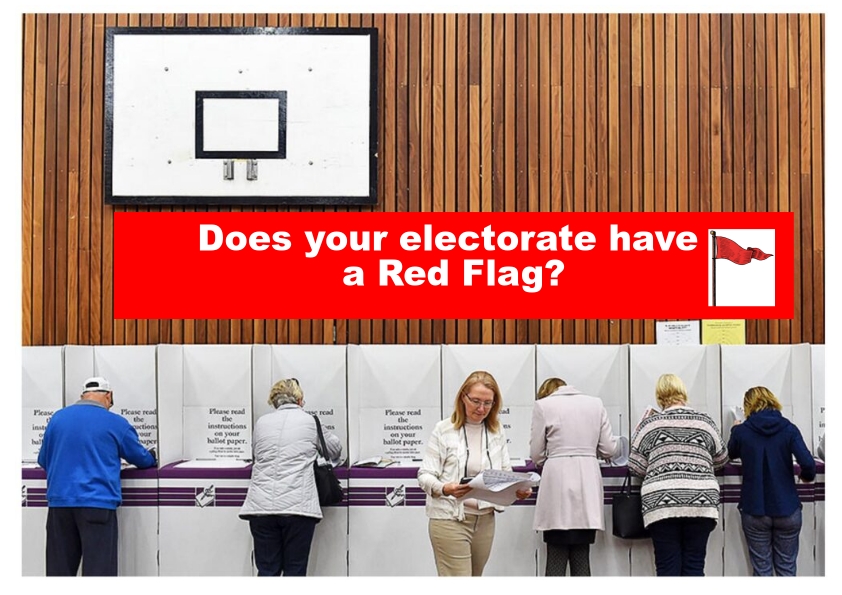
Yes Kew is a Red Flag Electorate. Beware of blindly following party How to Vote Cards!

The dominance of either major party in our state parliament jeopardises the achievement of a fair future for us all, not just in relation to Climate Rescue, but also a range of social issues most of us are concerned about.
Kew is a Red Flag Electorate held by the Liberals.
Traffic Light Voting Help Line>>>>>>> 0427 580 803
If you find this number is busy please text your number through to us and we will ring you back.
Labor voters ….Beware of blindly following your party’s How to Vote Card! Preference the Green Light candidates before you preference the Labor candidate.
Liberal voters…Beware of blindly following your party’s How to Vote Cards! Preference the Green Light candidates before you preference the Liberal candidate.
Both of the major parties are power hungry! If push comes to shove, they will actually work together against the interests of ordinary Australians. They can do amazing preference back flips to satisfy their addiction to unfettered rule, and their capture by the influence of big donors. For the common good of all Victorians, we are asking Liberal and Labor voters to put their tribalism aside in Red Flag Electorates. Rank Labor and liberal candidates below the Green Light candidates.
The ACT is probably the most progressive legislature in Australia. This was not achieved through majority government. The substantial achievements were crafted by a minority government arrangement between Labor and the Greens.
Using strategic preferencing in the Southern Metropolitan Region is also important to protect the role of the Legislative Council as a genuine House of Review.
Whether you vote below, or above the line, number One Nation or their candidates last. The divisiveness promoted by this party will tear us apart. Your vote can help to exclude them from minority government and preserve our capacity to restore social cohesion. They have the unhinged capacity to take a wrecking ball to the good influence of the Legislative Council. Number each of the major parties second and third last.
To do this effectively fill in all the boxes either above the line or below the line.
Traffic Light Voting Help Line>>>>>>> 0427 580 803
If you find this number is busy please text your number through to us and we will ring you back.
Outstanding Green Light Candidates
Community independent Melissa Lowe has been assessed by the Traffic light Voting Team as an Outstanding Green Light Candidate. Melissa is standing in all eleven elctorates for the Southern Metropolitan Region for the Victorian Legislative Council
Why the upper house matters
It’s meant to double-check government’s laws before they pass, a safeguard against one party having free rein. Melissa Lowe our Community Independent is the watchdog it’s been missing.
Climate and clean energy
What this means for you: lower bills, reliable power and a safer climate for your kids.
I will use my vote and committee work to:
- Strengthen Victoria’s legislated targets, aiming to reach net zero well before 2045. I will push for yearly milestones, public reporting and independent advice so we can track progress and meet our targets.
- Speed up renewable energy generation, transmission and storage, with transparent planning, fair benefits for host communities and published reliability checks.
- Ensure no household is left paying more or going cold as we move away from gas. I will support funding for electrification and efficient appliances, prioritising low-income households, renters and apartment owners.
- Oppose new coal and gas extraction and end fossil fuel subsidies. Before approving a new gas pipeline or import terminal, require the government to show that reducing gas demand through efficiency, electrification and storage would not be cheaper.
- Make rooftop solar and batteries accessible to everyone, including renters, apartment residents and people in heritage homes, where red tape can be a greater barrier than cost.
- Defend the end of native forest logging, restore habitat and water catchments, and support workers and communities through a fair transition.
- Prepare for heat, floods and fires with more tree canopy, cooler and more resilient housing, and properly funded emergency services.
Traffic Light Voting Assessment
Melissa has signed up to the Climate Rescue Accord, the 3Rs and the Green Transition
Green Light Candidates
Sophie Torney Community Independent
Jackie Carter Greens Candidate
Samantha Lincolne Victorian Socialists
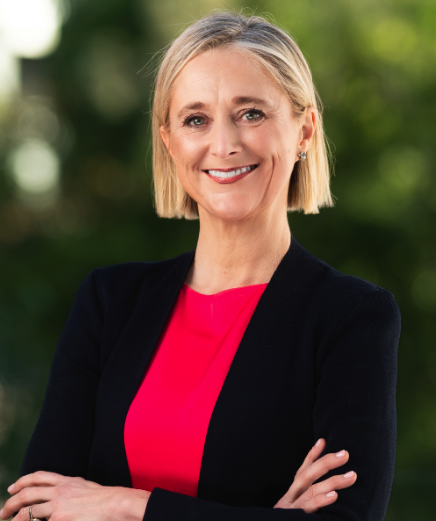

Sophie Torney Community Independent
About Sophie
Over the course of my career, I have built businesses, worked in technology, served the community, and taken on leadership roles in public life. I’m standing for Kew because I want to bring that broad commercial, and public service experience to state parliament — to deliver practical solutions, transparent leadership and strong representation for the community I have proudly called home for 27 years.
Slogans do not deliver for a community — action does. It requires the judgment to collaborate constructively with parliamentary colleagues on all sides of the aisle where that advances the community’s interests, and the resolve to fight hard where Kew is not getting a fair outcome. Kew deserves a representative who understands that both matter.
In 2024, I was elected to Boroondara Council as Councillor for Studley Ward and was subsequently appointed to serve a term as Mayor of Boroondara. Working collaboratively with fellow councillors and council, I have helped strengthen transparency, accountability and community consultation, while contributing to important outcomes for our community – including delivering major climate action investment, expanding electric vehicle charging infrastructure when Boroondara was lagging behind comparable councils, installing heat pumps rather than gas at the new Kew Recreation Centre, and helping save the historic Kew Library from demolition, preserving a valued local asset and saving ratepayers millions. Reflecting my commitment to open government, I also made my entire mayoral diary public — the first Mayor in Boroondara to do so.
As an Executive Member of Electrify Boroondara, I have worked with others in a community-led alliance focused on accelerating the transition to a cleaner energy future. I also previously served as Convenor of the Electrify Boroondara Expo, an annual event that helps residents explore energy efficiency, electrification and practical ways to reduce household emissions and energy bills. In just a short time, it has become one of the largest events of its kind in Australia.
In 2023, I joined the board of the Accountability Round Table, a non-partisan organisation that brings together former judges, senior public servants, lawyers and civic leaders to advocate for stronger integrity, transparency and ethical standards in public life. In 2025, I was appointed Chair of the Accountability Round Table.
I am also deeply committed to environmental protection, and have worked with ecologists, conservationists, and the Lighter Footprints Forest Working Group to help protect Victoria’s native forests.
I bring to public life something increasingly rare in politics: deep private-sector experience across technology, business and entrepreneurship. I began my career in information technology at National Westminster Bank in the UK, before working as a software programmer and project manager in medium and large organisations. After completing an MBA at the University of Melbourne in 2001, I went on to found start-up companies, build and run businesses, and work across the financial, technology and literary sectors — experience that has shaped my practical, outcomes-focused approach to leadership.
For 27 years, Kew has been the centre of my family’s life and my community service. It is where my husband Tony and I have raised our three children, and where I have built strong local ties through years of volunteering and leadership — from serving as a committee member and President of the MLC Parents’ Association, to managing junior football teams and clubs, to leading volunteer efforts supporting organisations including Boroondara Community Outreach, You Matter, McAuley Community Services for Women, Share the Dignity, The Big Group Hug and the Melbourne Indigenous Transition School.
Kew deserves a representative with the experience to deliver, the integrity to lead, and the judgment to know when to work constructively and when to stand firm. I bring the real-world experience, practical perspective and deep commitment to service to do exactly that. I love this community and want the very best for Kew — not just for today, but for the future we build together.
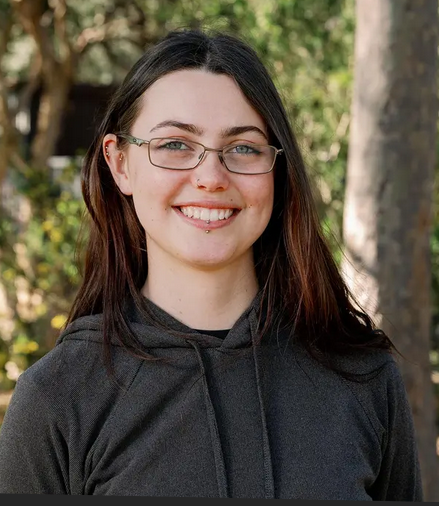
Jackie Carter Greens Candidate
Hi, I’m Jackie
I was born right here in Kew, at St George’s hospital, since then I’ve lived in Perth, regional WA, and regional Victoria – but have now called Kew home for over 15 years. I’ve built a life for myself in our community and have worked for over 20 years as an IT professional in the pharmaceutical sector. I didn’t come up through the ranks of an MP’s electorate office or politics in university, I didn’t even go to university. I didn’t come from a political family, but as I progressed through adulthood I realised that the state of the world was getting worse, our supposed leaders weren’t acting, and no one was coming to save us.
We have massive challenges facing us; climate emergency, housing and cost of living crises, widening wealth inequality, erosion of public services and trust – but for all of those challenges, we also have so many of the solutions, but our politicians lack the will to implement them. I won’t.
Politics is grim right now, and that’s by design. The more those in power keep us focused on fighting each other, the less they’re accountable to us. It doesn’t have to be that way.
Climate Change Policy
All of our state policy principles and aims should be read alongside our relevant federal policy principles and aims, as well as our state campaigns and federal campaigns.
Principles
- Human-induced climate change poses one of the greatest threats to our world in human history and requires urgent local, national and global action.
- We are already experiencing dangerous impacts of climate change; urgent, deep, and broad action is required to avoid catastrophic impacts.
- The amount of greenhouse gases already in the atmosphere necessitates urgent emission reduction and drawdown of greenhouse gases as well as prompt adaptation to climate change.
- Early action to reduce greenhouse emissions is cheaper and fairer than delayed action.
- Governments must ensure that organisations responsible for pollution pay for the costs of mitigating climate change and adapting to its impacts.
- Climate change policy should be based on the best available science.
- Climate change policy should inform and frame all other policies.
- Victoria must take responsibility for the greenhouse gas emissions resulting from the goods and resources it consumes and exports.
- Victoria is one of the world’s largest per-capita emitters of greenhouse gases with a large percentage due to the burning of brown coal.
- The lack of effective global (or Australian) climate action must not prevent Victoria from taking immediate and comprehensive measures.
- Offset schemes must be carefully controlled to avoid them undermining emissions reduction efforts or being used for greenwashing or fraud.
- Climate action should prioritise proven solutions such as large-scale reforestation over unproven or harmful technologies that prolong fossil fuel use.
- Climate change adaptation and mitigation measures should not discriminate or treat anyone unfairly on any basis including gender, age, race, ethnicity, vulnerability, religion, disability, sexual orientation or membership of a minority group.
Aims
Mitigation
- To achieve net zero or negative total greenhouse gas emissions across all areas of human activity – including via the removal of greenhouse gases already in the atmosphere, in a way that is environmentally responsible and socially fair.
- Development and implementation of a detailed plan to end Victoria’s reliance on fossil fuels by shifting to, and beyond, a zero greenhouse gas emission economy.
- Position Victoria – through appropriate investment in technological innovation – to benefit from the new jobs, skills, technologies and markets available in a zero greenhouse gas emission economy.
- Provide transitional support for all regions, businesses and communities adversely affected by measures that reduce climate change.
- Support place-based adaptation and mitigation initiatives which engage the community in identifying local challenges and co-designing solutions.
- Regulation of the phasing out of existing coal-fired power stations and the banning of new fossil-fuel based power stations.
- A ban on the exploration and development of new fossil fuel resources including but not limited to coal seam gas and other forms of unconventional gas.
- Develop complementary mitigation measures in collaboration with other governments where possible.
- Support for elevating sustainability requirements for buildings and construction.
- Where practical, support nature-based responses to climate change, such as increasing canopy cover, and planting mangroves to reduce storm damage to coastal areas.
- Assistance to the agriculture and forestry sectors to reduce emissions from ruminant livestock production and land clearing and other sources.
- Maximise effective and sustainable carbon farming, bio-sequestration and other drawdown methods.
- Implement low-cost, high-impact emissions reductions in Victoria’s stationary energy sector, and reduce emissions across other sectors including transport, industrial processes, agriculture and forestry.
Adaptation
- Government support for adaptive actions to protect the environment and key public assets, and to manage major public risks.
- The implementation, through public and private action, of Victoria’s climate change adaptation action plan, and ongoing review with community and expert involvement.
- Assisting the agriculture sector to adjust to reduced water availability and to make itself more energy self-sufficient.
- Ensuring that planning regulations allow for expected impacts of climate change such as rising sea levels, storm surges and other extreme weather events.
- Implement adaptation measures that take account of those groups disproportionately impacted by climate change and resulting disasters and emergencies.
Further reading
- Climate change and energy (federal Greens policy)
- No more coal and gas (state campaign)
Greens state policies
Samantha Lincolne Victorian Socialists
Hi, I’m Sam. I’m running in this year’s state election as the Victorian Socialists candidate for Kew because too many politicians exist above society, separated from the consequences of the decisions they make on behalf of working-class people.
Many people in our community are struggling with rising costs and declining housing affordability. Meanwhile the major parties continue to prioritise the interests of the their rich and powerful corporate backers.
The Liberals are no alternative to the failures of the Labor Party. They plan to cut thousands of public sector jobs – continuing their record as a party that pits itself against working-class people in order to better serve big business. And they’ll continue the privatisation agenda that has resulted in increasing costs and poorer services in many areas of our economy.
The housing crisis did not appear out of nowhere. It is the direct result of years of governments putting the interests of landlords and property developers ahead of those just seeking to meet their need for housing. And instead of taking responsibility for the crisis they helped create, the Liberals propose only to double-down on the failed ‘profit-first’ approach that got us into this crisis in the first place.
The changes we need won’t be delivered by politicians dedicated to protecting the status quo. Real change has always come from ordinary people organising collectively to fight for their own future.
I have witnessed this in my own history of community organising and activism as a member of my student union and campaigns in my workplace. I have helped organise campaigns for free education, public housing, against racism and the far right and against my university’s ties to war and militarism.
I am running to challenge the entire system of capitalism that puts profit before human need and to fight for a world where workers have genuine democratic control over society, instead of power remaining in the hands of wealthy capitalists and politicians.
I am running to challenge the entire system of capitalism that puts profit before human need and to fight for a world where workers have genuine democratic control over society, instead of power remaining in the hands of wealthy capitalists and politicians.