
Northcote
Below is a mock up of a Traffic Light Voting Guide for Footscray. The Northcote guide for voters will not be published until after the ballot draw on Tuesday November 10th.
Below is a mock up of a Traffic Light Voting Guide for the Victorian Upper House in the NORTHERN METROPOLITAN REGION. The actual guide for voters will not be published until after the ballot draw on Tuesday November 10th.
Voting Traffic Light in the 2026 Victorian State Election
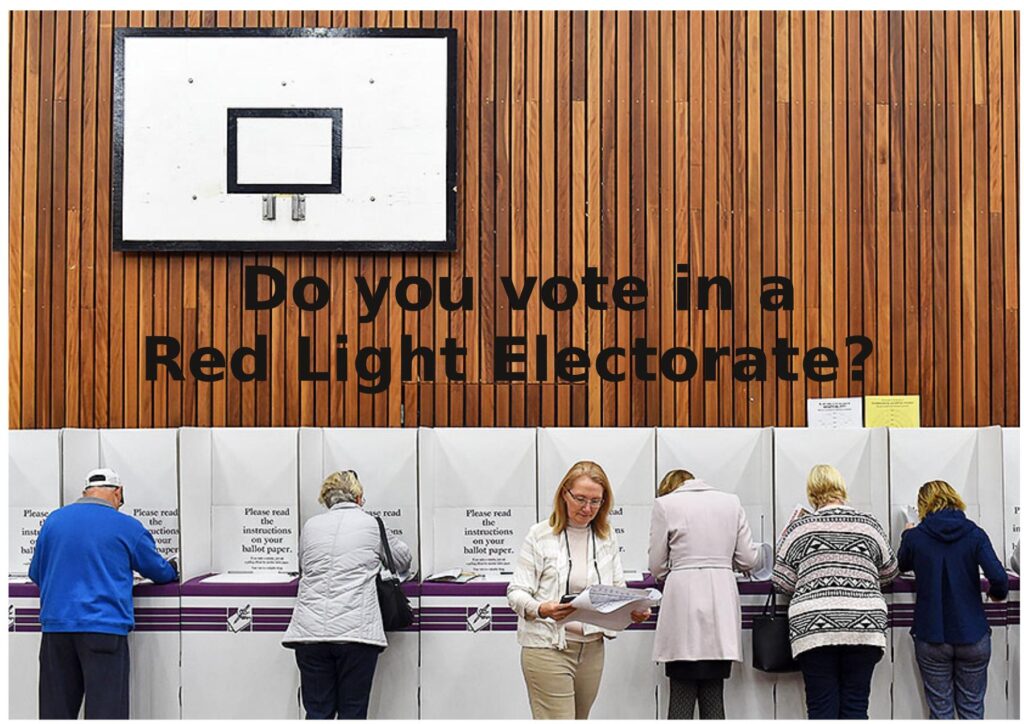
You will receive two ballot papers to vote for your preferred candidates in the Victorian House of Assembly and the Victorian Legislative Council .
To vote Traffic Light, vote for all the Green Light candidates or parties first, then the Orange Light ones. Number the red light candidates last.
Red light candidates are threat to achieving a fair future for us all not just in relation to Climate Rescue, but also a range of social issues most of us are concerned about. The order you number the Red Light candidates will have a significant effect on creating a good outcome at this election. We describe this advice as Strategic Preferencing. Strategic Preferencing combined with your Traffic Light Voting Guide will turbo charge the effectiveness of your vote in Red Light electorates.
Strategic Preferencing in the Northcote District (How to turbo-charge your vote!)
Northcote is a Red Light electorate You are strongly urged to vote Labor last. Nevertheless we anticipate you will have at least three Green Light candidates to vote for before the rest of the pack in your House Assembly ballot.
Strategic Preferencing in the Northern Metropolitan Region
Your Legislative Council ballot vote could be pivotal to the election of the fourth of fifth representative.
Whether you vote below, or above the line, number One Nation or their candidates stone motherless last. The divisiveness promoted by this party will tear us apart. Your vote can help to exclude them from minority government and preserve our capacity to restore social cohesion. They have an unhinged madness which will take a wrecking ball to the good influence of the Legislative Council on Government decision making.
To make certain that there is no chance that your ballot will be exhausted before the fifth candidate is decided we suggest you fill in all the boxes either above the line or below the line.
We repeat… number One Nation or their candidates last!
Green Light Candidates
Campbell Gome Greens Candidate

Kath Larkin Vic Socialists
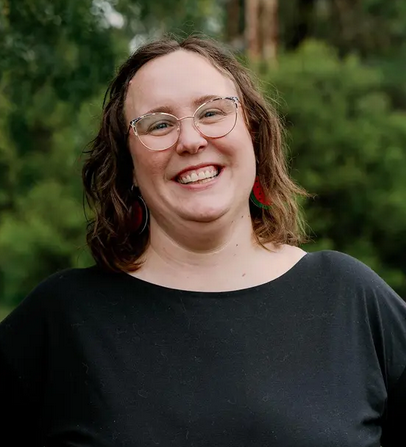
Bert Jessup SAP Northern Metro

Campbell Gome Greens Candidate

I’ve lived in Northcote for nearly thirty years, raising my family, teaching in our public schools, and campaigning for justice. In that time, I’ve seen our community both grow and flourish, and come up against the weight of rising inequality, a worsening housing crisis, and a rapidly closing window for effective climate action.
Climate change is the defining challenge of our time, and Northcote deserves a representative who will fight to end new coal and gas projects.
I believe we can secure affordable housing, protect renters, give first home buyers a better chance of owning a home, and ensure our community remains a place where people from all walks of life can thrive.
The people of Northcote want climate action, we want more affordable housing, and we want to reverse Labor’s $2.4 billion school cuts.
As a local and teacher, I’m going to take this fight up to Labor and into our Parliament.
Climate Change Policy
All of our state policy principles and aims should be read alongside our relevant federal policy principles and aims, as well as our state campaigns and federal campaigns.
Principles
- Human-induced climate change poses one of the greatest threats to our world in human history and requires urgent local, national and global action.
- We are already experiencing dangerous impacts of climate change; urgent, deep, and broad action is required to avoid catastrophic impacts.
- The amount of greenhouse gases already in the atmosphere necessitates urgent emission reduction and drawdown of greenhouse gases as well as prompt adaptation to climate change.
- Early action to reduce greenhouse emissions is cheaper and fairer than delayed action.
- Governments must ensure that organisations responsible for pollution pay for the costs of mitigating climate change and adapting to its impacts.
- Climate change policy should be based on the best available science.
- Climate change policy should inform and frame all other policies.
- Victoria must take responsibility for the greenhouse gas emissions resulting from the goods and resources it consumes and exports.
- Victoria is one of the world’s largest per-capita emitters of greenhouse gases with a large percentage due to the burning of brown coal.
- The lack of effective global (or Australian) climate action must not prevent Victoria from taking immediate and comprehensive measures.
- Offset schemes must be carefully controlled to avoid them undermining emissions reduction efforts or being used for greenwashing or fraud.
- Climate action should prioritise proven solutions such as large-scale reforestation over unproven or harmful technologies that prolong fossil fuel use.
- Climate change adaptation and mitigation measures should not discriminate or treat anyone unfairly on any basis including gender, age, race, ethnicity, vulnerability, religion, disability, sexual orientation or membership of a minority group.
Aims
Mitigation
- To achieve net zero or negative total greenhouse gas emissions across all areas of human activity – including via the removal of greenhouse gases already in the atmosphere, in a way that is environmentally responsible and socially fair.
- Development and implementation of a detailed plan to end Victoria’s reliance on fossil fuels by shifting to, and beyond, a zero greenhouse gas emission economy.
- Position Victoria – through appropriate investment in technological innovation – to benefit from the new jobs, skills, technologies and markets available in a zero greenhouse gas emission economy.
- Provide transitional support for all regions, businesses and communities adversely affected by measures that reduce climate change.
- Support place-based adaptation and mitigation initiatives which engage the community in identifying local challenges and co-designing solutions.
- Regulation of the phasing out of existing coal-fired power stations and the banning of new fossil-fuel based power stations.
- A ban on the exploration and development of new fossil fuel resources including but not limited to coal seam gas and other forms of unconventional gas.
- Develop complementary mitigation measures in collaboration with other governments where possible.
- Support for elevating sustainability requirements for buildings and construction.
- Where practical, support nature-based responses to climate change, such as increasing canopy cover, and planting mangroves to reduce storm damage to coastal areas.
- Assistance to the agriculture and forestry sectors to reduce emissions from ruminant livestock production and land clearing and other sources.
- Maximise effective and sustainable carbon farming, bio-sequestration and other drawdown methods.
- Implement low-cost, high-impact emissions reductions in Victoria’s stationary energy sector, and reduce emissions across other sectors including transport, industrial processes, agriculture and forestry.
Adaptation
- Government support for adaptive actions to protect the environment and key public assets, and to manage major public risks.
- The implementation, through public and private action, of Victoria’s climate change adaptation action plan, and ongoing review with community and expert involvement.
- Assisting the agriculture sector to adjust to reduced water availability and to make itself more energy self-sufficient.
- Ensuring that planning regulations allow for expected impacts of climate change such as rising sea levels, storm surges and other extreme weather events.
- Implement adaptation measures that take account of those groups disproportionately impacted by climate change and resulting disasters and emergencies.
Further reading
- Climate change and energy (federal Greens policy)
- No more coal and gas (state campaign)
Greens state policies
Kath Larkin Victorian Socialists
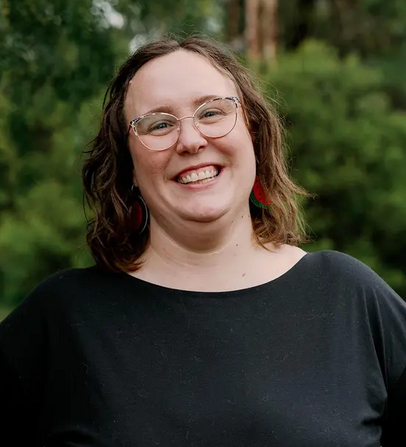
Hi, I’m Kath. I’m a Northcote local, renter, and trade unionist. I’m running as the Victorian Socialists candidate for Northcote in this year’s state election because our community deserves more than politics as usual.
I grew up in Northcote. I went to school here, have been nurtured in our precious green spaces like the Merri Creek and Darebin parklands and got my first job in the area. Like many renters, I’ve bounced around over the years and know first-hand the stress and insecurity of trying to keep a roof over your head while rents sky rocket and affordable housing disappears.
For almost a decade I worked on the railways, where I became the first female Rail, Tram and Bus Union delegate at Flinders Street Station. There, alongside fellow unionised workers, I organised rank-and-file action to improve wages and conditions, including the first strike on the Victorian railways in 17 years.
Over many years I’ve been involved in campaigning for marriage equality, LGBTIQ+ rights, women’s rights and equal pay, as well as welfare and healthcare. I’ve been active in Palestine solidarity and anti-war campaigns, and in organising locally to stand against fascists and the far right when they’ve tried to mobilise in our area.
Watching the the international rise of the far right, led by figures like Donald Trump, and here in Australia the growth of One Nation, it’s clear we urgently need to go beyond rightward moving centrists governments who have failed to stem that tide.
I’ve also stood with the community in local campaigns, such as defending Preston Market, because I believe community spaces should serve people, not developers.
I’m not running because I think one person can fix everything, I’m running to put up a fight. To protect and extend our green spaces, to build public housing, freeze rents and reverse the privatisation which has seen the cost of essential services and utilities soar.
Politics as usual hasn’t delivered for working-class people, stemmed climate destruction or stopped the growth of the far right. We need something different, rooted in collective action and standing with our communities, not big business, built on solidarity rather than profit.
Addressing climate change and protecting our environment
The climate emergency is a dire threat to our natural environment and the liveability of our cities. Victoria’s Climate Science Report 2024 projects hotter summers, more frequent and severe bushfire weather, reduced water availability, rising sea levels, and intensified short-duration flooding. Victoria’s greenhouse gas emissions were 84.2 million tonnes of CO2-equivalent in 2023 with around 90 percent of those emissions coming from burning fossil fuels, and electricity generation alone accounting for 46 percent. The Allan government’s targets fall well short of what climate science requires of wealthy developed states to limit warming to 1.5°C. In 2025, the Allan government opened up a new offshore gas exploration program, a pivotal policy shift after years of more restrictive measures, and locking in fossil fuel development that will generate emissions for decades and is incompatible with any credible path to net zero.
Victorian Socialists acknowledge that climate change is an existential risk with the potential to impact all other aspects of our policy platform and believe the climate emergency demands a response that matches the scale of the threat. The cost of the transition must fall on those who created the crisis and have profited from it.
What we think
- Climate change is a direct product of the capitalist world economy, which turns everything in the natural environment into a resource exploitable for private profits.
- Market mechanisms such as carbon trading, offsets, and voluntary targets have had decades to work and have failed. Climate change cannot be addressed without a comprehensive, planned restructuring of the economy away from fossil fuel dependence.
- The concentration of greenhouse gases already in the atmosphere means that net-zero emissions will not be sufficient to curtail dangerous warming. Net-negative emissions — actively drawing down atmospheric carbon — will be required.
- Nuclear power is neither clean nor renewable.
- The effects of climate change are disproportionately felt by people on low incomes; their lives and livelihoods need to be protected not only from changes to the climate, but during the transition to a new economy.
- The economic burden of dealing with climate change must fall solely on those who have profited from destroying the environment: the ultra-rich and the big polluters.
- The renewable transition, if publicly owned and democratically controlled, is an opportunity to rebuild Victoria’s manufacturing capacity, create skilled and secure employment, and revitalise regions that have borne the costs of the fossil fuel economy for generations.
- Policy should be focused on mitigation of the crisis rather than adaptation.
We’ll fight to
Emissions targets
- Reduce emissions by 75 percent below 2005 levels by 2030, achieve a zero-carbon economy by 2035 and a permanent net-negative emissions economy by 2040.
Fossil fuel phase-out
- Accelerate the closure of all remaining coal-fired power generation, with Loy Yang A to close no later than 2030 rather than its current scheduled date of 2035, with guaranteed jobs, income support and community investment for all affected workers and regions.
- Reverse the Allan government’s 2025 offshore gas exploration program, prohibit the development of all new fossil fuel projects — onshore and offshore.
- Make environmental approval for any new resource development contingent on full greenhouse gas emission neutrality.
- Stop the establishment of a nuclear power industry in the state.
Sustainability
- No new data centres. Data centres have detrimental environmental footprints, disproportionately high water and electricity demands, and no community benefits to the areas they are placed.
- Require existing data centres to meet mandatory standards on water consumption, energy use and renewable energy sourcing, with binding targets and enforceable penalties for non-compliance.
- End all planned waste to energy schemes and ban the creation of future waste incinerators.
Renewable transition
- Urgently construct solar and wind farms and upgrade the power grid with battery storage to enable the quick transition of Victorian homes and businesses to an all-electric, post-gas energy system.
- Establish a renewables manufacturing industry (solar photovoltaic, lithium-ion battery and electric vehicles), with guaranteed secure jobs and retraining for workers from the fossil fuel industry.
- Electrify Victoria’s transport system and commit to 100 percent electric new car sales by 2035, establish a comprehensive fast-charging network across the state including regional and rural areas, electrify the public bus fleet, and end all subsidies and concessions for fossil-fuel vehicles.
Nature and carbon stores
- Protect, restore and expand Victoria’s natural carbon stores — defending and extending the end of native forest logging introduced in January 2024, establishing large-scale programs of reforestation, restoring native grasslands and wetlands, and protecting blue carbon ecosystems in coastal and estuarine areas.
Adaptation
- Fund research into adaptation strategies to protect biodiversity, water resources and agricultural yields.
- Develop a comprehensive urban heat adaptation strategy — including mandatory tree canopy targets, green roofs and walls, shading requirements in new developments, cool corridors in areas of high heat stress, and publicly funded cooling centres accessible to vulnerable communities.
- Require all new public buildings and public housing to be built to standards that protect residents from extreme heat without reliance on air conditioning, and fund retrofitting of existing public housing stock to the same standard.
- Develop a managed retreat framework for communities facing unacceptable risk from rising sea levels, flooding and fire, with full financial support for affected working-class residents, no forced relocations without genuine community consent, and particular attention to renters and low-income households with no capacity to relocate.
Bert Jessup standing in the Northern Metropolitan Region for the Sustainable Australia Party
Bert Jessup was born in Footscray and lives in Travancore with his wife, having raised three now-adult children. He has dedicated himself to a lifetime of community service including positions as mayor of the City of Footscray, president of Friends of the Maribyrnong Valley and president of the Lions Club of Footscray.
Bert is passionate about affordable social housing, particularly for ageing women, as well as better public transport, resource recycling and native flora and fauna ecosystem protection.
With a BA and an MBA, Bert has been a successful small business owner (automotive services), a senior executive (insurance and health sectors), a contracting project manager and an HR consultant.
Environment Policy | Sustainable Australia Party
In short:
Recognise that a healthy natural environment is the foundation upon which all human wellbeing and prosperity is built, and so prioritise environmental sustainability to better protect, manage and restore Australia’s fragile and unique natural environment
- Enshrine into Australian law the fundamental human right of a healthy natural environment
- Significantly reduce Australia’s waste production
- Act on climate change and contribute to staying below 1.5 degrees global temperature rise compared to pre-industrial levels