
Tarneit
Below is a mock up of a Traffic Light Voting Guide for Footscray. The Tarneit guide for voters will not be published until after the ballot draw on Tuesday November 10th.
Below is a mock up of a Traffic Light Voting Guide for the Victorian Upper House in the WESTERN METROPOLITAN REGION. The actual guide for voters will not be published until after the ballot draw on Tuesday November 10th.
Voting Traffic Light in the 2026 Victorian State Election
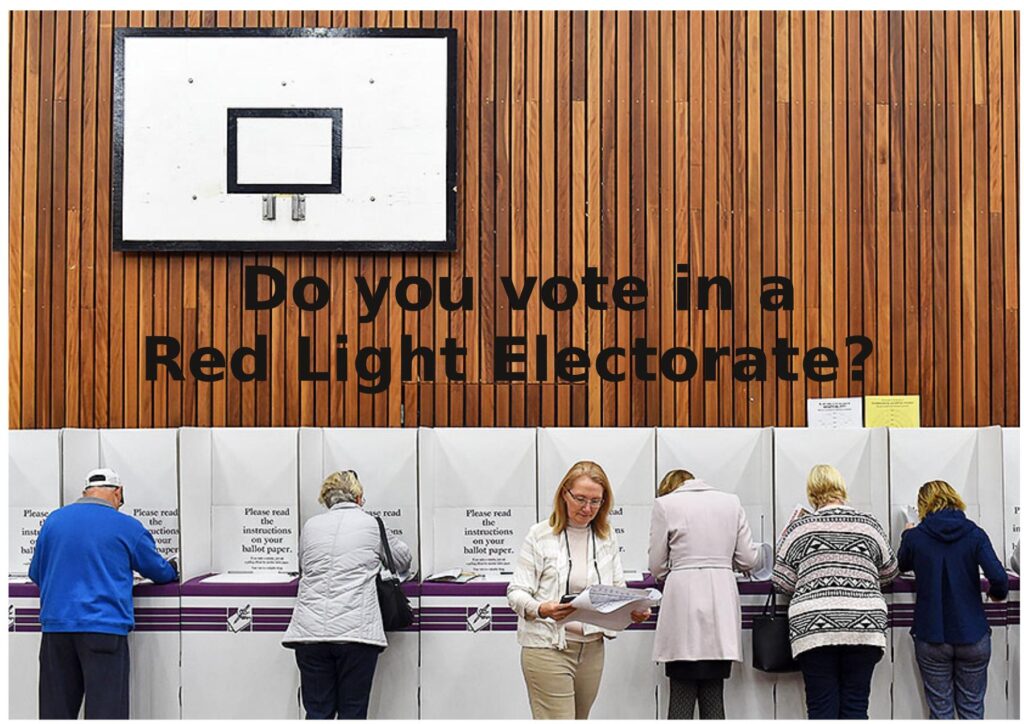
You will receive two ballot papers to vote for your preferred candidates in the Victorian House of Assembly and the Victorian Legislative Council .
To vote Traffic Light, vote for all the Green Light candidates or parties first, then the Orange Light ones. Number the red light candidates last.
Red light candidates are threat to achieving a fair future for us all not just in relation to Climate Rescue, but also a range of social issues most of us are concerned about. The order you number the Red Light candidates will have a significant effect on creating a good outcome at this election. We describe this advice as Strategic Preferencing. Strategic Preferencing combined with your Traffic Light Voting Guide will turbo charge the effectiveness of your vote in Red Light electorates.
Strategic Preferencing in the Tarneit District (How to turbo-charge your vote!)
Tarneit is not a Red Light electorate but we advise you to preference One Nation Last. Nevertheless we anticipate you will have at least three Green Light candidates to vote for before the rest of the pack in your House Assembly ballot.
Strategic Preferencing in the Western Metropolitan Region
Your Legislative Council ballot vote could be pivotal to the election of the fourth of fifth representative.
Whether you vote below, or above the line, number One Nation or their candidates last. The divisiveness promoted by this party will tear us apart. Your vote can help to exclude them from minority government and preserve our capacity to restore social cohesion. They have an unhinged capacity to take a wrecking ball to the good influence of the Legislative Council on Government decision making.
To make certain that there is no chance that your ballot will be exhausted before the fifth candidate is decided we suggest you fill in all the boxes either above the line or below the line.
We repeat… number One Nation or their candidates last!
Green Light Candidates
Maurita Rahn Animal Justice Party

Rifai A Raheem Greens Candidate

Lean Van Keulen Victorian Socialists
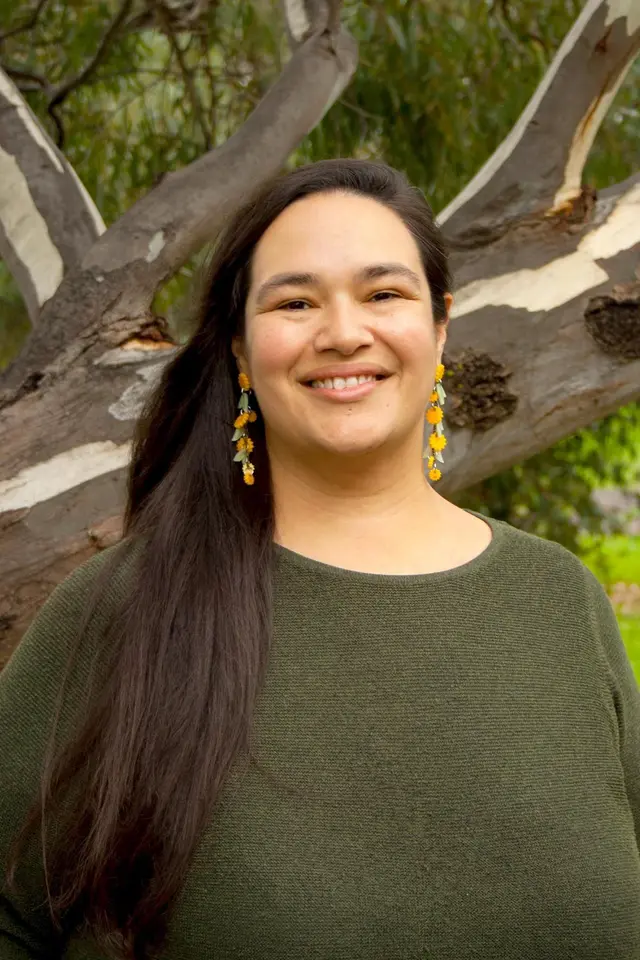
Maurita Rahn Animal Justice Party Candidate
Maurita Rahn is standing as the Animal Justice Party candidate for Tarneit because she wants to see a change in the way animals are treated in Victoria. She believes society should move towards recognising animals as individuals, rather than treating them as products.
A local of the Tarneit area for more than 23 years, Maurita also has a background in procurement, working within the corrections system and health industries. In her spare time, she assists the Victorian Dog Rescue and other Wildlife groups.
The Climate Emergency
The Animal Justice Party (AJP) is the only political party with policies that comprehensively take into account all sources of emissions, including the impact of animal agriculture and land clearing on the global climate, and the need to urgently transition to a plant-based diet in order to address the climate crisis.
The AJP will take urgent action to address the climate emergency. In addition to phasing out fossil fuels, we will transition from animal agriculture towards more sustainable plant-based farming, and transform other climate-threatening industries and practices. This is essential not only to reduce harmful emissions, but also to protect nature, and human and other animal life.
Key Objectives
- Declare a climate emergency and biodiversity emergency at every level of government as the first step towards systemic change and climate justice.
- Rapidly transition from animal agriculture to plant-based agriculture and promote plant-based diets.
- Protect, regenerate, expand, rewild and enhance all ecological systems including forests, grasslands, freshwater and marine habitats, in part by reserving at least 50% of the planet for nature (see our Policies on Human Population, Land Clearing and Marine Animals).
- Develop water management policies that are responsive to climate change and that prioritise animals, the environment and people over commercial interests (see our Water Management Policy).
- Develop and fund comprehensive plans and actions to assist all animal species and vulnerable human populations to adapt to a changing climate.
- Rapidly phase out fossil fuels and transition to clean energy infrastructure (see our Energy Policy).
- Commit to ambitious emission reduction targets which do not encourage dead end ‘solutions’, such as natural gas (see our latest Election Platform).
- Remove subsidies from the fossil fuel and animal agriculture industries in the interim and redirect funding into clean energy solutions and sustainable plant-based agriculture.
- Shift away from road transport toward more environmentally-friendly modes, including rail and mass transit, together with walking and cycling (see our Land Transport Policy).
- Reimagine urban design to be climate-friendly and climate-resilient, and incentivise research and development into net zero carbon building materials and practices.
Traffic Light Voting Assessment
Animal Justice Party has signed up to the Climate Rescue Accord, the 3Rs and the Green Transition
Rifai A Raheem Greens Candidate

Rifai A Raheem is a dedicated community advocate with over 30 years of volunteer service, including 17 years living in Tarneit district with his wife and children. Deeply committed to social equity and inclusion. He had led major grassroots projects such as the Melbourne Grand Mosque and the WIC Early Learning Centre in Tarneit, a $10 million initiative mainly funded by the community.
As a long-time unionist, Rifai has personally recruited over 1,600 members and organised numerous campaigns to improve conditions for workers in the tertiary education sector. His strong presence is widely recognised in the West, particularly through his work at Victoria University.
With academic qualifications in Agricultural Science and Entrepreneurship, Rifai brings practical expertise to addressing local challenges, empowering communities, and protecting the environment.
Rifai’s grassroots leadership and deep local ties make him a strong, trusted voice for Tarneit.
Tarneit and the West Deserve Better Public Transport
Join the campaign for Better Public Transport for Tarneit.
Residents in Tarneit and across Melbourne’s west are facing a growing public transport crisis. As one of the fastest-growing regions in the state, our community is expanding rapidly, but the transport infrastructure simply hasn’t kept up.
Improving public transport requires long-term planning, but there are immediate steps that can and must be taken now. The most urgent and practical first step is increasing the frequency and reliability of local bus services.
Tarneit Hospital and Better Healthcare Facilities
Support the campaign for Tarneit Hospital.
Tarneit is one of the fastest-growing suburbs in Wyndham, yet its health infrastructure has not kept pace with its population boom. This imbalance is becoming increasingly difficult for residents, families, and frontline health services.
We need to reduce pressure on existing hospitals, improve emergency response times, and ensure equitable access to healthcare for a rapidly growing community.
More education opportunities
Sign the petition for More University and TAFE Campuses in the West.
Tarneit and Melbourne’s western suburbs are among the fastest-growing regions in Australia, yet investment in higher education has not kept pace. The lack of local universities and adequate TAFE facilities is creating real barriers for young people and holding the region back.
Investment in these facilities is not just about education, it’s about economic development, social equity, and community empowerment. When young people can study locally, they are more likely to work locally, contribute to their communities, and help build a stronger regional economy.
Climate Change Policy
All of our state policy principles and aims should be read alongside our relevant federal policy principles and aims, as well as our state campaigns and federal campaigns.
Principles
- Human-induced climate change poses one of the greatest threats to our world in human history and requires urgent local, national and global action.
- We are already experiencing dangerous impacts of climate change; urgent, deep, and broad action is required to avoid catastrophic impacts.
- The amount of greenhouse gases already in the atmosphere necessitates urgent emission reduction and drawdown of greenhouse gases as well as prompt adaptation to climate change.
- Early action to reduce greenhouse emissions is cheaper and fairer than delayed action.
- Governments must ensure that organisations responsible for pollution pay for the costs of mitigating climate change and adapting to its impacts.
- Climate change policy should be based on the best available science.
- Climate change policy should inform and frame all other policies.
- Victoria must take responsibility for the greenhouse gas emissions resulting from the goods and resources it consumes and exports.
- Victoria is one of the world’s largest per-capita emitters of greenhouse gases with a large percentage due to the burning of brown coal.
- The lack of effective global (or Australian) climate action must not prevent Victoria from taking immediate and comprehensive measures.
- Offset schemes must be carefully controlled to avoid them undermining emissions reduction efforts or being used for greenwashing or fraud.
- Climate action should prioritise proven solutions such as large-scale reforestation over unproven or harmful technologies that prolong fossil fuel use.
- Climate change adaptation and mitigation measures should not discriminate or treat anyone unfairly on any basis including gender, age, race, ethnicity, vulnerability, religion, disability, sexual orientation or membership of a minority group.
Aims
Mitigation
- To achieve net zero or negative total greenhouse gas emissions across all areas of human activity – including via the removal of greenhouse gases already in the atmosphere, in a way that is environmentally responsible and socially fair.
- Development and implementation of a detailed plan to end Victoria’s reliance on fossil fuels by shifting to, and beyond, a zero greenhouse gas emission economy.
- Position Victoria – through appropriate investment in technological innovation – to benefit from the new jobs, skills, technologies and markets available in a zero greenhouse gas emission economy.
- Provide transitional support for all regions, businesses and communities adversely affected by measures that reduce climate change.
- Support place-based adaptation and mitigation initiatives which engage the community in identifying local challenges and co-designing solutions.
- Regulation of the phasing out of existing coal-fired power stations and the banning of new fossil-fuel based power stations.
- A ban on the exploration and development of new fossil fuel resources including but not limited to coal seam gas and other forms of unconventional gas.
- Develop complementary mitigation measures in collaboration with other governments where possible.
- Support for elevating sustainability requirements for buildings and construction.
- Where practical, support nature-based responses to climate change, such as increasing canopy cover, and planting mangroves to reduce storm damage to coastal areas.
- Assistance to the agriculture and forestry sectors to reduce emissions from ruminant livestock production and land clearing and other sources.
- Maximise effective and sustainable carbon farming, bio-sequestration and other drawdown methods.
- Implement low-cost, high-impact emissions reductions in Victoria’s stationary energy sector, and reduce emissions across other sectors including transport, industrial processes, agriculture and forestry.
Adaptation
- Government support for adaptive actions to protect the environment and key public assets, and to manage major public risks.
- The implementation, through public and private action, of Victoria’s climate change adaptation action plan, and ongoing review with community and expert involvement.
- Assisting the agriculture sector to adjust to reduced water availability and to make itself more energy self-sufficient.
- Ensuring that planning regulations allow for expected impacts of climate change such as rising sea levels, storm surges and other extreme weather events.
- Implement adaptation measures that take account of those groups disproportionately impacted by climate change and resulting disasters and emergencies.
Further reading
- Climate change and energy (federal Greens policy)
- No more coal and gas (state campaign)
Greens state policies
Leah Van Keulen Victorian Socialists Candidate
Hi, I’m Leah. I’m running as a candidate for Tarneit with Victorian Socialists because I believe working-class people are exploited by the existing system, and that we have the power to change things for the better. I have lived in the western suburbs of Melbourne my entire life, and now reside in Werribee.
Over nine years as a teacher in the west, I’ve seen too many families doing it tough. I’ve watched parents make hard sacrifices just to put food on the table, keep the lights on or take their child to see a dentist.
No parent in this country should have to choose between paying the bills and feeding their family. I see it in our public schools too, the lowest funded in the country, because working-class kids have never been a priority for the people in power.
Addressing climate change and protecting our environment
The climate emergency is a dire threat to our natural environment and the liveability of our cities. Victoria’s Climate Science Report 2024 projects hotter summers, more frequent and severe bushfire weather, reduced water availability, rising sea levels, and intensified short-duration flooding. Victoria’s greenhouse gas emissions were 84.2 million tonnes of CO2-equivalent in 2023 with around 90 percent of those emissions coming from burning fossil fuels, and electricity generation alone accounting for 46 percent. The Allan government’s targets fall well short of what climate science requires of wealthy developed states to limit warming to 1.5°C. In 2025, the Allan government opened up a new offshore gas exploration program, a pivotal policy shift after years of more restrictive measures, and locking in fossil fuel development that will generate emissions for decades and is incompatible with any credible path to net zero.
Victorian Socialists acknowledge that climate change is an existential risk with the potential to impact all other aspects of our policy platform and believe the climate emergency demands a response that matches the scale of the threat. The cost of the transition must fall on those who created the crisis and have profited from it.
What we think
- Climate change is a direct product of the capitalist world economy, which turns everything in the natural environment into a resource exploitable for private profits.
- Market mechanisms such as carbon trading, offsets, and voluntary targets have had decades to work and have failed. Climate change cannot be addressed without a comprehensive, planned restructuring of the economy away from fossil fuel dependence.
- The concentration of greenhouse gases already in the atmosphere means that net-zero emissions will not be sufficient to curtail dangerous warming. Net-negative emissions — actively drawing down atmospheric carbon — will be required.
- Nuclear power is neither clean nor renewable.
- The effects of climate change are disproportionately felt by people on low incomes; their lives and livelihoods need to be protected not only from changes to the climate, but during the transition to a new economy.
- The economic burden of dealing with climate change must fall solely on those who have profited from destroying the environment: the ultra-rich and the big polluters.
- The renewable transition, if publicly owned and democratically controlled, is an opportunity to rebuild Victoria’s manufacturing capacity, create skilled and secure employment, and revitalise regions that have borne the costs of the fossil fuel economy for generations.
- Policy should be focused on mitigation of the crisis rather than adaptation.
We’ll fight to
Emissions targets
- Reduce emissions by 75 percent below 2005 levels by 2030, achieve a zero-carbon economy by 2035 and a permanent net-negative emissions economy by 2040.
Fossil fuel phase-out
- Accelerate the closure of all remaining coal-fired power generation, with Loy Yang A to close no later than 2030 rather than its current scheduled date of 2035, with guaranteed jobs, income support and community investment for all affected workers and regions.
- Reverse the Allan government’s 2025 offshore gas exploration program, prohibit the development of all new fossil fuel projects — onshore and offshore.
- Make environmental approval for any new resource development contingent on full greenhouse gas emission neutrality.
- Stop the establishment of a nuclear power industry in the state.
Sustainability
- No new data centres. Data centres have detrimental environmental footprints, disproportionately high water and electricity demands, and no community benefits to the areas they are placed.
- Require existing data centres to meet mandatory standards on water consumption, energy use and renewable energy sourcing, with binding targets and enforceable penalties for non-compliance.
- End all planned waste to energy schemes and ban the creation of future waste incinerators.
Renewable transition
- Urgently construct solar and wind farms and upgrade the power grid with battery storage to enable the quick transition of Victorian homes and businesses to an all-electric, post-gas energy system.
- Establish a renewables manufacturing industry (solar photovoltaic, lithium-ion battery and electric vehicles), with guaranteed secure jobs and retraining for workers from the fossil fuel industry.
- Electrify Victoria’s transport system and commit to 100 percent electric new car sales by 2035, establish a comprehensive fast-charging network across the state including regional and rural areas, electrify the public bus fleet, and end all subsidies and concessions for fossil-fuel vehicles.
Nature and carbon stores
- Protect, restore and expand Victoria’s natural carbon stores — defending and extending the end of native forest logging introduced in January 2024, establishing large-scale programs of reforestation, restoring native grasslands and wetlands, and protecting blue carbon ecosystems in coastal and estuarine areas.
Adaptation
- Fund research into adaptation strategies to protect biodiversity, water resources and agricultural yields.
- Develop a comprehensive urban heat adaptation strategy — including mandatory tree canopy targets, green roofs and walls, shading requirements in new developments, cool corridors in areas of high heat stress, and publicly funded cooling centres accessible to vulnerable communities.
- Require all new public buildings and public housing to be built to standards that protect residents from extreme heat without reliance on air conditioning, and fund retrofitting of existing public housing stock to the same standard.
- Develop a managed retreat framework for communities facing unacceptable risk from rising sea levels, flooding and fire, with full financial support for affected working-class residents, no forced relocations without genuine community consent, and particular attention to renters and low-income households with no capacity to relocate.