Kooyong: Testing importance of climate action to voters

Another affluent Liberal heartland seat will test the importance of climate action and ethics to conservative, thinking voters
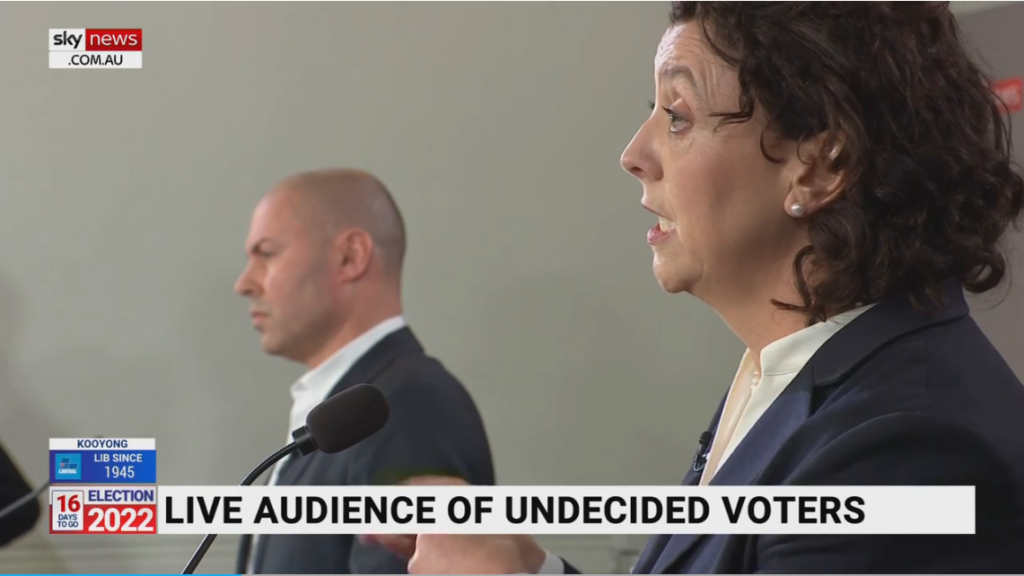
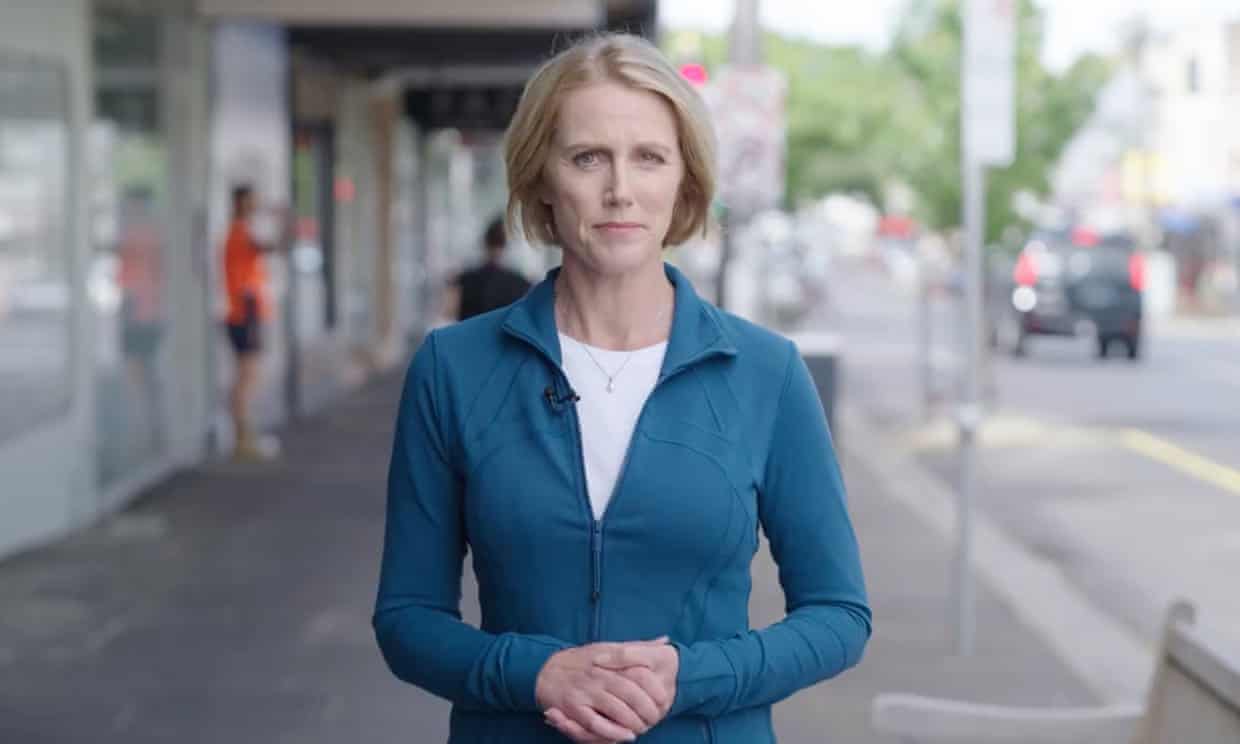
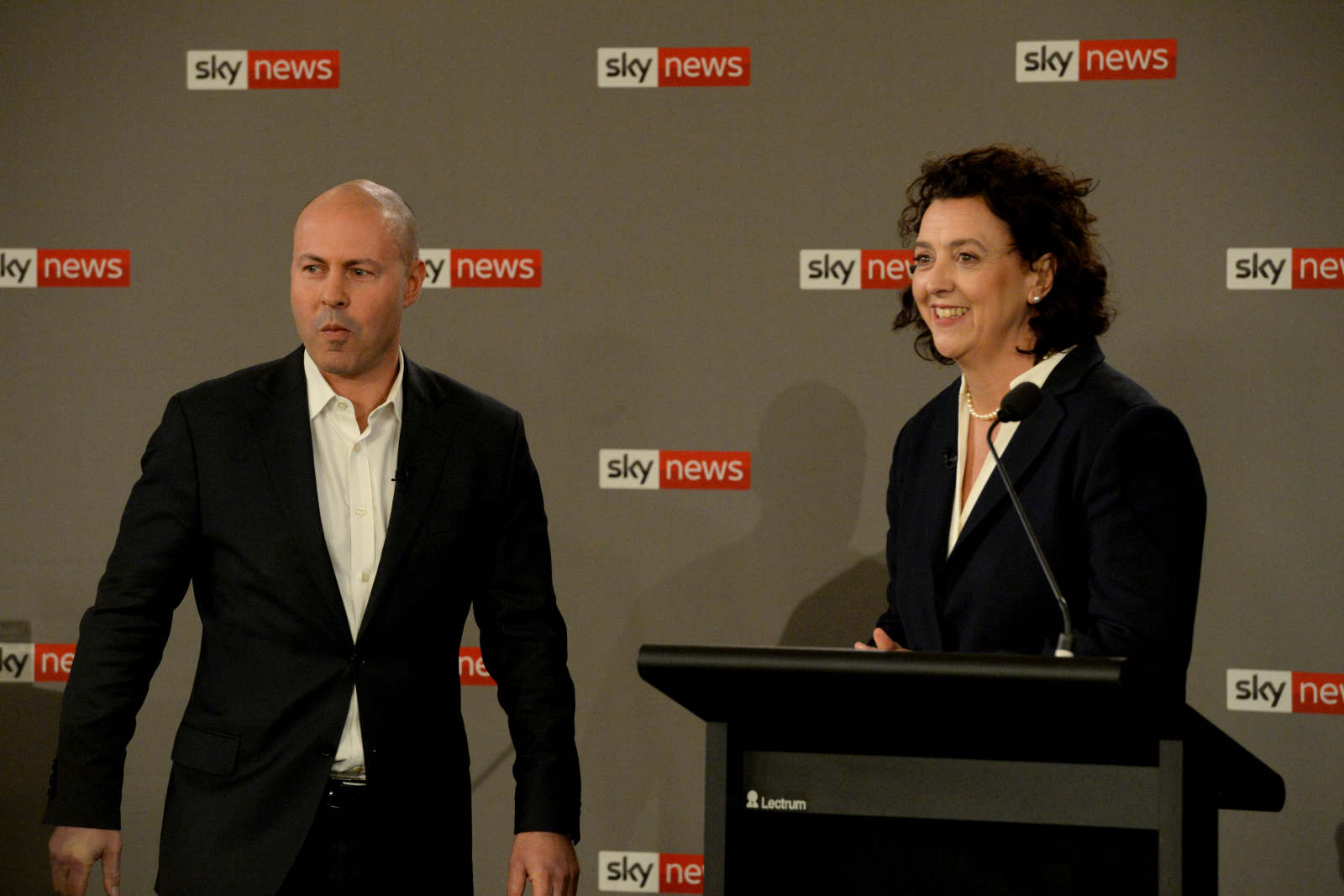
Grab from Sky News video, 5/05/2022 – A ‘positive thing’ if independents are able to influence government in a hung parliament: ‘teal’ independent Dr Monique Ryan and Liberal Treasurer Josh Frydenberg addressing the question, ‘Why would a hung Parliament be a bad thing’?

Among a field of 11 candidates running in Kooyong, including the ‘born to rule’ incumbent Liberal Treasurer Josh Frydenberg who would be next PM after Scott Morrison, it seems likely that no one candidate will have a clear, majority. Preference flows will then decide the election.

However, it seems almost certain that the election will boil down to a choice between two radically different concepts of government. One side is represented by Josh Frydenberg and the LNP COALition who believe they are the natural rulers and certain seats belong to them “by right” and should not be at risk. The other side is represented by relatively apolitical independent thinkers and doers like Dr Monique Ryan, who are driven by their concerns about the future to work for voters in their electorates troubled by the climate emergency and Parliamentary ethics.

I have argued in other articles in this series that this election will be decided by the balance between these two kinds of voters.

Usually the most common types of voters are relatively apathetic and complacent ‘believers’ who are happy to follow without much thought whatever dogmas they have been taught to believe by the spin merchants of their rusted on tribal political parties. Because such believers often don’t actually think about their beliefs, they are easily roused to action and anger by charismatic leaders feeding and playing to these beliefs. Such voters are often found in good numbers on both the far right (e.g., as in Trumpist America) and far left of politics (e.g., as in authoritarian Russia and China) as well as various of dogma in between.

The other kind of voters are not so easily classified. These are largely self-motivated people who pay attention to reality and make their individual decisions in life based on evidence from that reality. They are often not particular visible politically because they are too busy running their own lives to spend a lot of time telling other people how they should live theirs. However, such independents can rise to importance in crises when novel solutions are required to solve critical problems.

Why Kooyong?

Kooyong has a high proportion of well educated and relatively affluent people used to making a living based on their own initiatives. Many have family backgrounds including Holocaust survivors and ‘refugees’ from various other repressive social origins who migrated to Australia looking for a better life. The early Liberal Party strongly supported individual advancement and development under people such as Menzies — founding PM of the Liberal Party from Kooyong; Malcolm Fraser — another PM who famously resigned from the Party in 2010 over the progressive hardening of policy; and Ian Mcphee — from the neighboring Goldstein electorate and Immigration Minister under Fraser and in the shadow cabinet under Hawke). Self motivated thinkers with immigrant backgrounds naturally affiliated strongly with the ideals of these Liberal leaders.

Drys vs Wets

Under Howard and subsequent Liberal leaders such as Tony Abbott and especially Scott Morrison, the humanist ‘wets’ were crowded out of Parliament by the economically rational ‘dries’ who focused almost wholly on the costs of everything as per Josh Frydenberg, rather than the values concerning their constituents. This radically changed the nature of the Liberal policy in most ways except for the party name…. Although Frydenberg’s application of dry economic policy might have offended the values of many this did not affect bottom lines and could be overlooked. What I think has not been overlooked are his offenses in other areas such as immigration, social welfare, the aged, the environment, and overall ethics of his fellow Parliamentarians.

It is the smell of the smoke from bushfires and other escalating environmental disasters, particularly, that has caused many voters to wake up, pay serious attention to the growing environmental evidence that we are sliding down the road into an existential climate emergency, and think seriously which issues really matter where the future of their families are concerned. In other words, to understand that if we fail to stop and reverse global warming, none of the other election issues really matter in the face of probable societal collapse and possible mass extinction of our species.

Vote Climate One’s assessment of the candidates

As explained on our website under the Traffic Light Voting head we are not associated with any political party and are focused on the single issue of replacing Parliamentary puppets representing fossil fuel and related special interests.

Led by Scotty from Marketing and the LNP COALition, these puppets are largely working to protect fossil fuel production and industries from being shut down to stop further greenhouse gas emissions. We seek to replace them with thoughtful Greens and ‘teal’ independents who are publicly committed to put action on the climate emergency at the tops of their Parliamentary agendas if elected. We designate these as ‘green light’ candidates. These should be preferenced first on your ballot paper.

Red light candidates that should be preferenced last on your ballot include all members of the LNP COALition because of their party discipline — even though a few of them would be climate realists if given a free vote. This also applies to Clive Palmer’s United Australia, Pauline Hanson’s One Nation and many of the other ego driven minor parties spruiking for the fossil fuel industry.

The Australian Labor Party is designated with an orange light because (1) we consider their climate policy is weak because of their close associations with special interest patrons and industrial unions in the fossil fuel industry; but on the other hand, (2) they are far more likely to vote with the green lights than any of the red lights are in a hung Parliament. In other words preference the orange lights between the green lights and the red lights.

Vote Climate one has given three of the candidates the green light:

  1. Greens – Piers Mitchem: labor lawyer and anti-nuclear campaigner and an otherwise small profile. However, in prior elections the Greens have campaigned strongly in Kooyong, and in 2019 outpolled Labor to come second with high profile human rights lawyer, Julian Burnside, who received more than 20% of the total vote. Mitchem has a smaller profile, but Frydenberg seems to be a lot more on the nose than he was in 2019. Not insignificantly Mitchem is also supported by a strong and well organized local branch.
  2. Animal Justice – Rachel Nehmer: works in the travel industry and ran for Animal Justice in the 2019 election so has some continuity in the electorate and a strong policy on animal and human rights and the climate emergency, but otherwise with a small profile.
  3. Teal independent – Dr Monique Ryan: local girl, trained in top universities in the world, Monique resigned from her prestigious job as Director of the Neurology Department at Royal Melbourne Institute of technology to contest the election because she was concerned about the impact of the growing climate catastrophe on her family. Thanks to Climate 200 and many local donors her campaign is very well funded.

Dr Ryan clearly fits the mold of the seriously independent teal candidate that I have seen in other electorates with strong candidates, expressing the difference between the rationalist thinking teals and other independents drive by dogmatic beliefs or a lust for power.

I’m running for Kooyong because I’m worried that my children might not have the opportunities I’ve had, because our environment and economy might be blighted by the effect of man-made climate change. I can no longer look away from the incipient disaster of rising sea levels, warming of the land and loss of our flora and fauna. 

This government has had close to a decade to respond to the climate emergency and do what the Kooyong community wants – take real and immediate action on climate change for the sake of our children, our continent and the globe. If they won’t do that, then it’s time for others to step up and act where they won’t.

https://www.moniqueryan.com.au/about

The only orange light candidate is ● Labor’s Dr. Peter Lynch who is also a medical doctor (physician and geriatrician) with a strong platform on climate action. This is apparently the first time he has run for a parliamentary seat. Unfortunately, as a member of the Labor Party he is tied to the party, its dogmas, and its strong links to the fossil fuel industry through its association with unions representing workers in the industry and with FF industry patrons, Like the liberals they are supporting continuation of coal mining, fracking and other major natural gas development projects. If he was running as an independent, he would be a reasonable fit to be called a teal. Running for Labor he is a credible orange light candidate — certainly a better choice ad far as climate action is concerned than any of the red light crowd.

There are seven red light candidates:

  • Independent, Will Anderson seemingly a ‘ghost’ candidate lacking any trace on the internet.
  • Australian Values Party, David Connolly is a technology trade delegate to China with no obvious political experience. Australian Values is a pro business party running Senate candidates in 5 states with a weak climate policy promoting the use of offsets.
  • Pauline Hanson’s One Nation, Josh Coyne seems to be one of may ghost candidates for One Nation perhaps serving to draw some votes away from Josh Frydenberg.
  • Derryn Hinch’s Justice Party, Michele Dale also seems to be a ghost with no trace except her listing as a candidate.
  • (Clive Palmer’s United Australia Party, Scott Andrew Hardiman is a career public servant also with years of experience in customer service and securities industries. Thanks to Palmer and Craig Kelly’s promotion of fossil fuels and denials of science, UAP is amongst the very reddest of the red lights.
  • Liberal Democratic Party, Alexandra Thom is a worker in the manufacturing industry “running: to empower everyone to make their own choices and set their own goals. She says she will oppose legislative efforts that are increasingly divisive and restrict people’s freedoms. She sees efforts to decentralise education and promote freedom of speech as critical to this end. Liberal Democrats are unambiguously opposed to curbs on the fossil fuel industry: “No net-zero emissions target. This target is an absurd extension of climate alarmist ideology that will have grave effects on living standards for all Australians if it is pursued.
  • And finally, there is the Liberal Party’s present Treasurer and PM in waiting, Josh Frydenberg. Not only is he growing increasingly unpopular in Kooyong, but the other 6 right wingers will siphon away at least some preferences from right wing voters who have become dissatisfied with Frydenberg in particular.

In this mess, it is unlikely that any candidate will gain a majority to win on first preferences. I have no doubt that Frydenberg will gain the majority of red light votes, but by no means all given that far-right ‘believers’ are likely to preference more absolutist minor parties (e.g., One Nation, UAP, or LDP) before Frydenberg. Where green light votes are concerned the bulk will be split between the Green’s Mitchem and teal Ryan will be more even, but given the strength & logic of Ryan’s campaign so far she will be the most preferred candidate here. Given Labor’s constant vilification of the Greens, Ryan is also likely to get Labor’s second preference rather Mitchem.

To me, this looks like a landslide election going towards Dr Ryan. Already in the 2019 election Frydenberg required preferences to get over the 50% line, but even then only UAP voters gave Frydenberg a majority of their second preferences. Voters for all other candidates preferred the Green, Julian Burnside, before Frydenberg. This year Frydenberg seems to be starting even farther behind a clear majority, with most second preferences flowing towards Dr Ryan who seems to be well respected by almost everyone and no obvious liabilities — other than perhaps the fear that voting for an independent is a vote for chaotic government. (My next major article will detail my reasons for thinking this fear is a furphy put out by fossil fuel puppet politicians fearful of losing their jobs to climate rationalists – for now see: ● Explainer: what happens if the 2022 election results in a hung parliament?; ● Will a hung parliament lead to ‘chaos’? What a Gillard v Morrison comparison reveals.)

The trend in Kooyong started in the 2019 election when ex Lib independent Oliver Yates gained 9% of vote based on climate credentials. However, the Greens with their environmental credentials, best addressed the protest vote with Julian Burnside as a high profile human rights candidate.

Treasurer Josh Frydenberg won 58.2 per cent of the primary vote in Kooyong at the 2016 election.(ABC News: Nick Haggarty)

by Richard Willingham, 31/01/2019 in ABC News

Should Josh Frydenberg be worried about losing Kooyong to independent Oliver Yates?

The former head of the Clean Energy Finance Corporation has quit the Liberal Party and is running as an independent against Treasurer Josh Frydenberg at this year’s federal election.

A former Liberal Party member and son of former federal Liberal MP William Yates, Oliver Yates said the party’s attitude to climate change is reckless.

His challenge in Kooyong, which covers some of Melbourne’s most affluent eastern suburbs, will be focused on climate change

Read the complete article….

Kooyong – Federal Election 2019
by Anthony Green, 08/06/2019 on ABC News

Julian Burnside

The Greens (VIC)

Burnside is one of Victoria’s leading commercial law barristers, but is best known for his high profile work on human rights and refugee case. He has acted in high profile cases such as for the Maritime Union of Australia during the 1998 waterfront dispute, and against the Australian government during the 2001 Tampa affair. He famously cross examined John Laws and Alan Jones in the Australian Broadcasting Authority’s inquiry into the ‘ca

sh for comment’. In 2004 Burnside was awarded the Human Rights Law Award by the Human Rights and Equal Opportunity Commission and has been given numerous other awards.

Burnside gained 21.2% of first preferences compared to Frydenberg’s 49.4%. After distribution of remaining preferences Frydenberg on the marginal 55.7%.

I anticipate that Frydenberg will lose even more support from Kooyong’s largely centrist, humanitarian, self-motivated and thinking doers who are not automatically tied to any party’s political dogmas. Frydenberg, as as a born-to rule Treasure and PM in waiting who seems to focus totally on the economy, knowing the cost of everything but the value of nothing, as well as being a mouth-piece for Scotty from Marketing’s humbug, misrepresentation, and lies about climate and energy, Frydenberg is becoming even less attractive to the community of thinkers and doers. Even if Frydenberg is a genius with the economy, most thinking voters will understand that the economy is meaningless to a world that is collapsing socially as the planet continues to warm and become progressively uninhabitable by more people year on year.

By contrast, Ryan represents what is best in the electorate and ticks all the boxes.
by Chip Le Grand, 05/05/2022 in The Age

The treasurer v the doctor: Debate crystallises the Kooyong conundrum

Such is the confidence with which Ryan is laying siege to what was, not that long ago, considered a forever Liberal seat, she was prepared to swap policy barbs with the treasurer about Australia’s economy, relations with China and even tax reform.

Yet, … it was a woman in the audience who cut to the heart of this increasingly rancorous campaign with surgical precision.

“I see highly skilled professionals,” said Vanessa Daly, a Brazilian-born swim teacher and new Australian citizen preparing to vote in her first Australian election. “Dr Monique, a very amazing doctor, and Josh, treasurer of Australia.

“Isn’t the country and community better served if you both keep your current jobs?”

Frydenberg laughed that he would vote for that. Ryan’s answer revealed that, although she has a view on many political issues, she is driven by one.

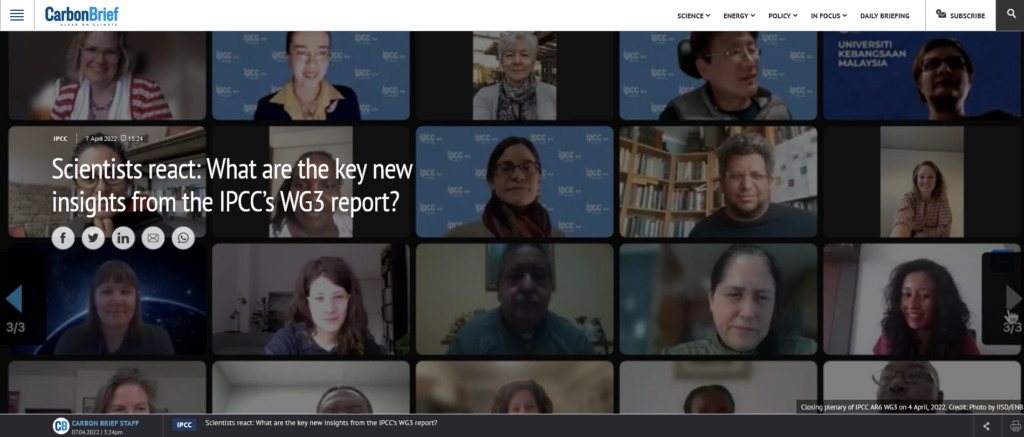
“I had a job that I loved and that I was very, very good at, and I was very sad to leave it,” she said. “The reason why I left it is because I am a scientist and I looked at the IPCC [Intergovernmental Panel on Climate Change], which tells us that this planet is heading towards unprecedented stresses. We are heading towards a 1.5 degrees Celsius increase in global temperatures and beyond. That is the existential threat for us right now.

Read the complete article….
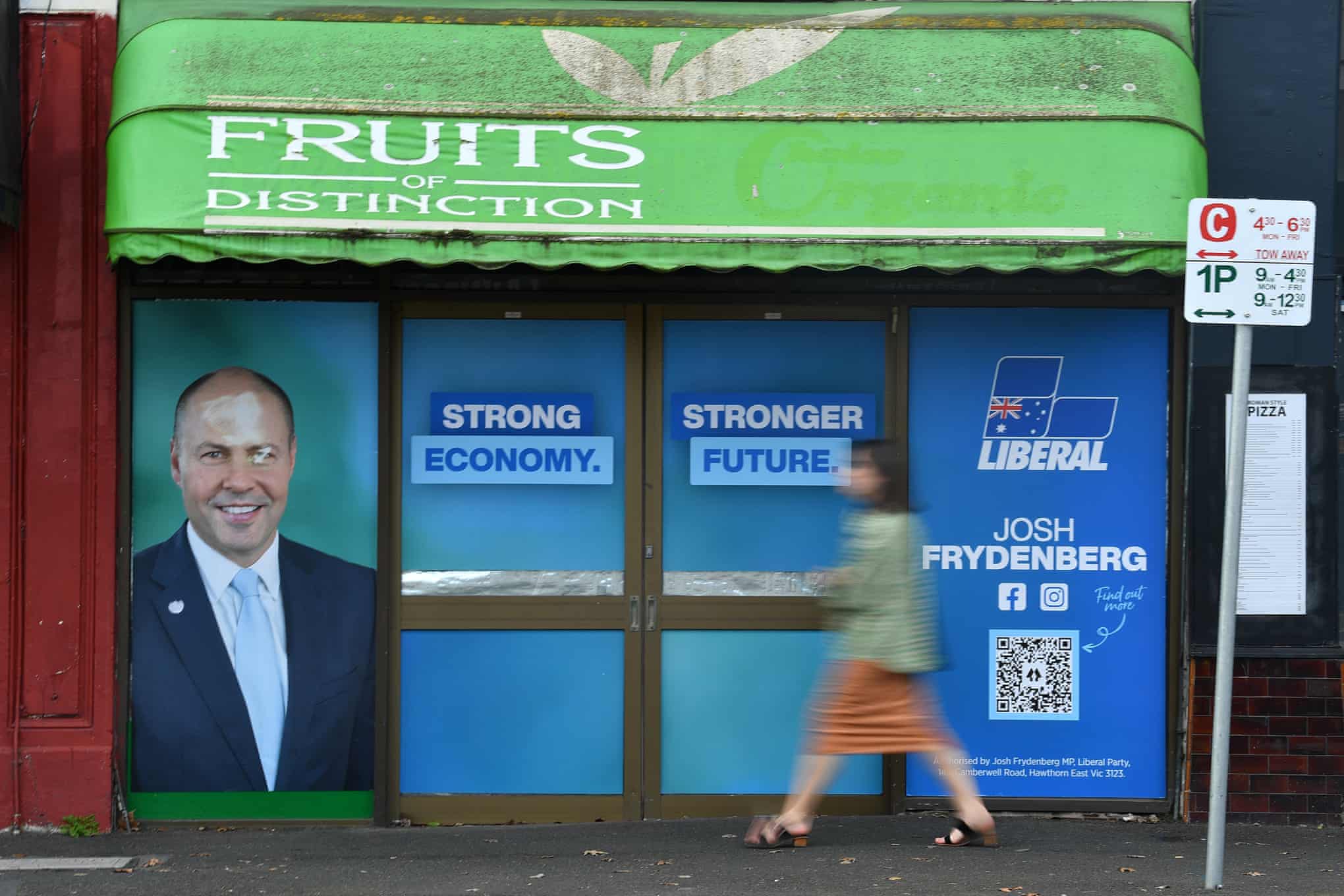
Kooyong is saturated with corflutes and placards of Josh Frydenberg and independent Monique Ryan, both vying for the blue ribbon Liberal seat once held by Robert Menzies. Photograph: Joel Carrett/AAP / from the article

by Calla Wahlquist, 06/05/2022 in the Guardian

Josh Frydenberg pleads with unhappy Liberal voters to stick by him as pressure in Kooyong grows: Treasurer is facing off against a popular independent but polling shows his biggest hurdle may be Scott Morrison

Josh Frydenberg is in trouble, and he knows it. Three weeks before polling day, billboards asking voters to “keep Josh” started appearing in his Melbourne electorate of Kooyong.

At a forum hosted by Sky News on Thursday, the treasurer said the billboards were a reminder to voters that if they like him they should vote for him, regardless of their frustrations with the broader Liberal party.

“People need to know that if they want to keep me as the local member but they may have an issue with something that the Liberal party has said or done, and they want to give us a kick for that, at the end of the day that may not leave me as the local member,” he says. “Which is, of course, not what I want.”

Read the complete article….
Morrison responds to Turnbull speech but won’t say if he will resign under hung parliament – Guardian Video

by Guardian Staff, 06/05/2022

Malcolm Turnbull says Australians are ‘voting with their feet’ to support teal independents in election: Former PM tells Washington Harvard Club the rise of the independents could mean the ‘capture’ of the Liberal party is thwarted by ‘direct democratic action’ in the 2022 federal election

Disgruntled Liberal voters are “voting with their feet” to support the so-called teal independents, because the influence of the party’s moderate wing at the federal level was “diminished and diminishing”, the former prime minister Malcolm Turnbull has said.

Describing the 2022 Australian election campaign in a speech to the Washington Harvard Club, Turnbull said the rise of the independents was “the most interesting part of the election” because “if more of these ‘teal’ independents win, it will mean the capture of the Liberal Party will be thwarted by direct, democratic action from voters. People power, you might say.”

Scott Morrison dead-batted questions about his predecessor on Friday, telling reporters in Perth he “[doesn’t] share his view” and claiming that independents in the balance of power would result in “chaos”.

Read the complete article….

Think of the future and use your vote wisely

If most voters consider the evidence and THINK before they vote, I have little doubt that the green light candidates will gain the majority of first preferences amongst themselves. Whether one of them will win the seat in the end depends on how you and other voters manage your remaining preferences. How the different players may try guide preferences of those who preferred them first may be critical in deciding the election.

Vote Climate One’s Traffic Light Voting System and its voting guides are designed to help people rank their preferences in such a way that if a green light candidate is given the first preference, and doesn’t win, the vote will still go to another green light climate friendly candidate as long as any remain in the running. Only if there are no more green or orange light candidates alive can the vote be given to a red light candidate.

Vote Climate One is also providing downloadable blank ballot formats so preferences can be decided at home, so the choices can easily be transferred to the formal ballot paper in the voting booth. Check the bottom of the your electorate’s page in the voting guide. (If you don’t find it now, check again in a couple of days as they are being progressively loaded into our system.)

See Climate Sentinel News‘s Corrupt leaders, casual media, gullible believers for a different and sometimes humorous take on how use preferential voting to make the kind of humongous political transition we need to make to cleanse the Parliamentary stable of its many years accumulation of bulldust.

In any event consider the following when you are thinking about your preferences. The IPCC tells us that this election is probably our last chance to change our current puppet government to one that will act in our behalf to resolve or at least mitigate the accelerating climate crisis.


We need to turn away from the the Apocalypse on the road to hothouse hell, and we won’t do this by continuing with business as usual!

It seems to have taken the clear thinking of Greta Thunberg, a 16 year-old girl who concluded school was pointless as long as humans continued their blind ‘business as usual’ rush towards extinction.
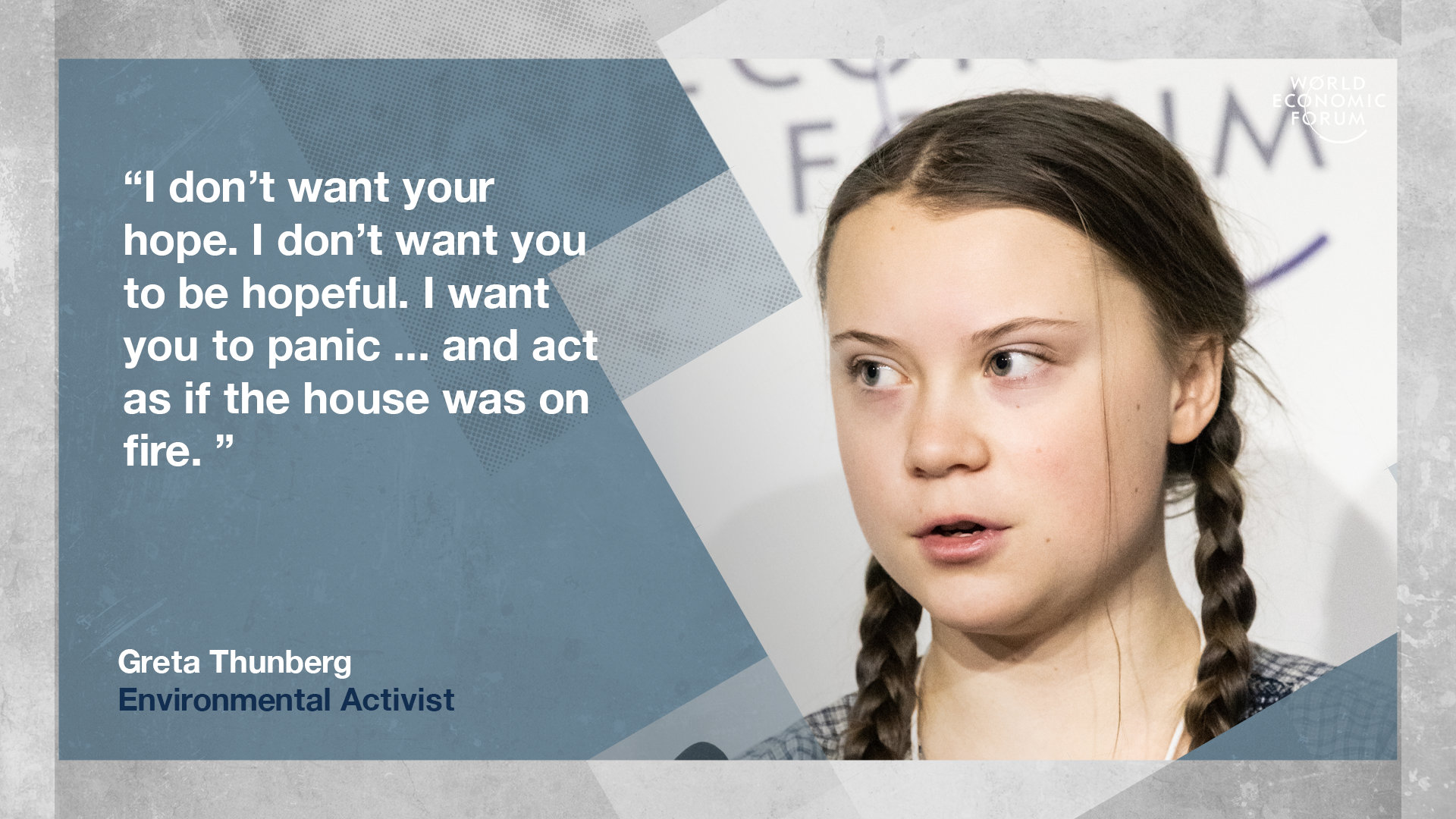
greta-act-as-if-the-house-was-on-fire
Listen to Greta’s speech live at the World Economic forum in Davos 2019. Except for her reliance on the IPCC’s overoptimistic emissions budget, everything she says is spot on that even she, as a child, can understand the alternatives and what has to happen.

In other words, wake up! smell the smoke! see the grimly frightful reality, and fight the fire that is burning up our only planet so we can give our offspring a hopeful future. This is the only issue that matters. Even the IPCC’s hyperconservative Sixth Assessment Report that looks at climate change’s global and regional impacts on ecosystems, biodiversity, and human communities makes it clear we are headed for an existential climate catastrophe if we don’t stop the warming process.

Scott Morrison and his troop of wooden-headed puppets are doing essentially nothing to organize effective action against the warming. In fact all they doing is rearranging the furniture in the burning house to be incinerated along with anything and everyone we may care about.

In Greta’s words, “even a small child can understand [this]”. Like Georgia Steele, people hope for their children’s futures. Greta doesn’t want your hopium. She wants you to rationally panic enough to wake up, pay attention to reality, and fight the fire…. so our offspring can have some hope for their future.

Let’s hope that we can stop global warming soon enough to leave them with a future where they can survive and flourish.

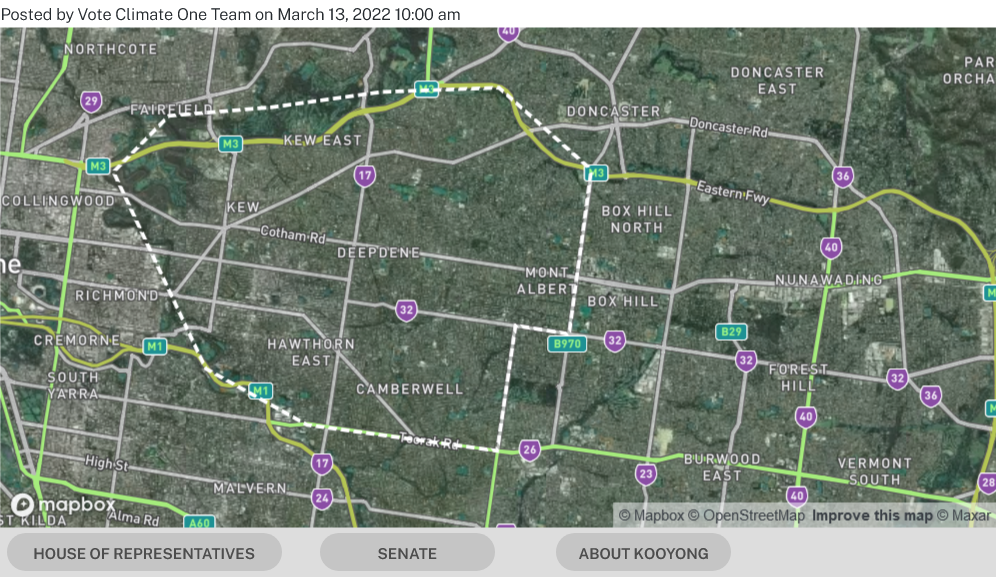
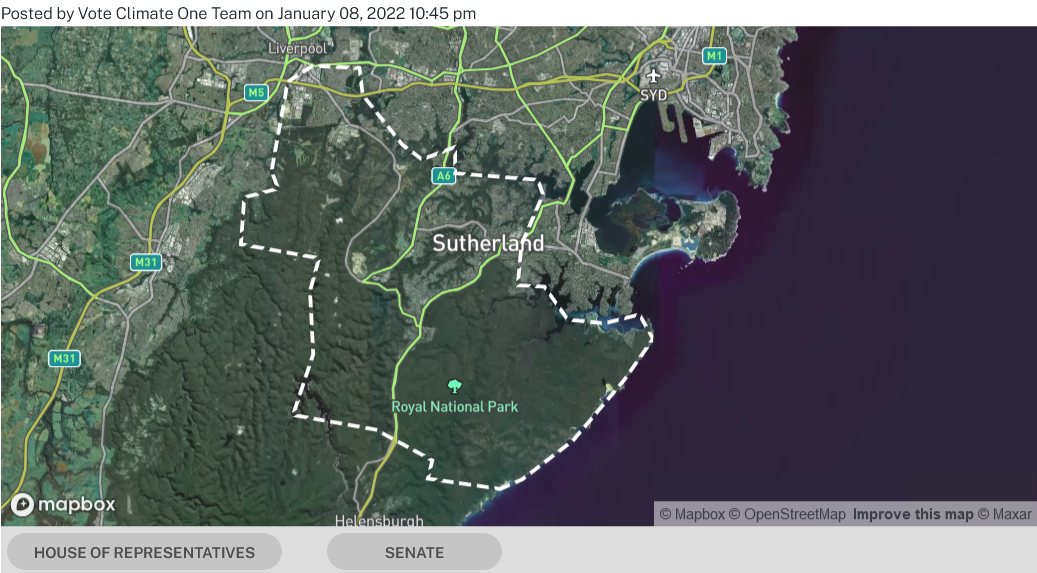
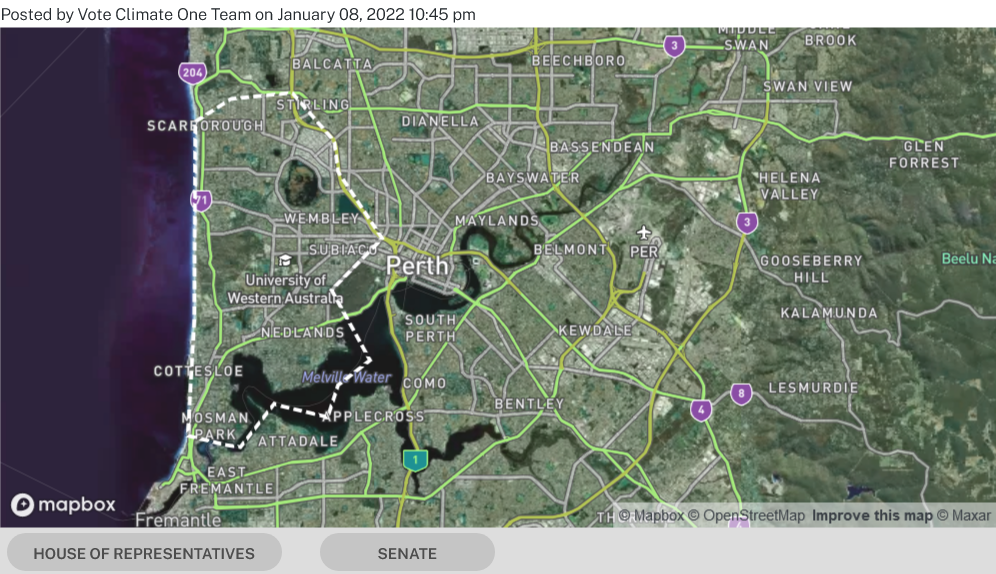
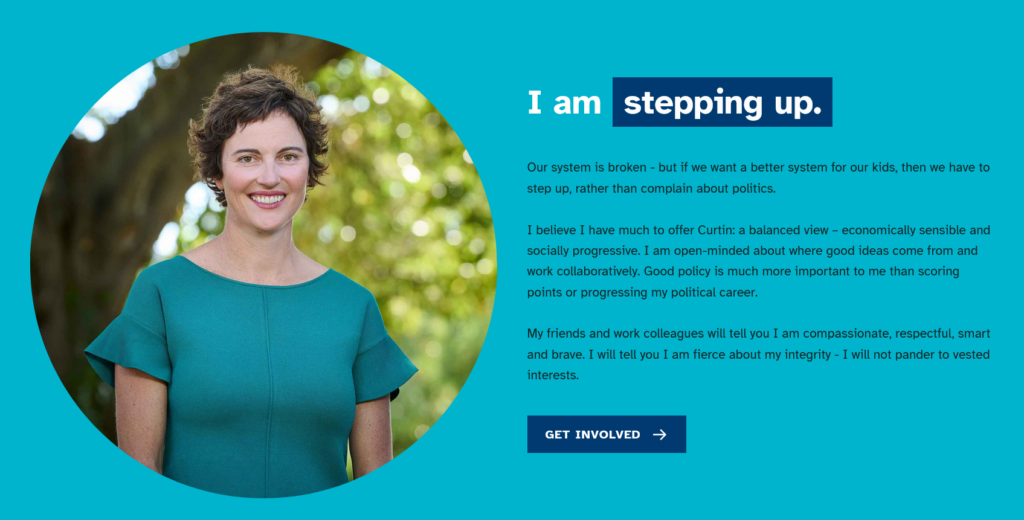
Featured Image Boundaries of the Kooyong Electorate from Vote Climate One’s Kooyong Electorate page. Click candidate names for more details.
Views expressed in this post are those of its author(s), not necessarily all Vote Climate One members.

Curtin, WA’s safest Lib seat now ultra-marginal

Chaney, once deputy PM and minister under Fraser says Liberal Party has “lost its way”, backs teal niece, Kate Chaney, to take ultra-safe WA seat of Curtin

Sydney Morning Herald 04/05/2022

Today in the Nine-Newspapers Fred Chaney says why he can no longer support the Liberals

[T]he party I served has lost its way. Members are no longer able to successfully execute what the electorate demands and it is now in the sad position of being held hostage by its extremes and those of its Coalition partner.

Fred Chaney, ex Liberal Deputy PM under Andrew Peacock and Minister in several portfolios under Malcolm Fraser

Fred Chaney is actively supporting his Niece, Kate Chaney, a teal independent who seems to have a good chance to convince thinking Liberal voters in WA’s ‘safest’ Liberal seat that action to deal with the global climate emergency, social responsibility and ethics are much more important than keeping the LNP COALition puppets representing the interests of fossil fuel special interests in power in Canberra.

https://www.katechaney.com.au/about-kate/


Like many other ‘teals’ Kate is a self-motivated thinker and doer concerned about the harsh and scary reality we face today rather than a believer in party political dogma about an endless future of business as usual (especially for the parties’ patrons in the fossil fuel industry). Seeing the dangers ahead being ignored by the party faithful, she has given up her normal occupations to run for Parliament. Her declaration of independence from the established parties seems to stand for all the teals I have studied to now:

We can do much better on climate action and integrity in Federal politics. Decarbonisation will offer significant opportunities in renewables and failure to act now will cost us. We need strong targets, certainty and aligned incentives to ensure that we are well-placed to catch that wave. This isn’t ideology. It is sound economic management. [my emphasis]

Over the years, I have voted for a range of parties but no party represents me. I grew up handing out how-to-vote cards for the Liberal party. I believe in the Liberal party my grandfather and uncle served in – one of opportunity, foresight, freedom and community. I don’t see that party any more.

I thought change could be effected through the Labor Party but when I attended a party event, I was turned off by the tribalism and focus on politics over policy. Until very recently, it was unthinkable that community independent candidates had a real chance of election – a real chance to make a difference, to change the way we do politics.

The rise of grassroots community independent organisations around the country, including here in Curtin, demonstrates that there is now a real opportunity to drive this change. The complex issues we face no longer fall into left and right. Running as an Independent in the current climate allows me to represent the views of the Curtin electorate and stay true to my conscience.

The wave of economically sensible, socially progressive independents who believe in stronger climate action sends a strong message to the major parties that they can’t take moderates for granted. There are Independent candidates like this with a real chance of success across the country, and we may just hold the balance of power. [my emphasis]

About Kate – from her campaign web site.

Curtin is no longer a safe Liberal seat!

The Age/Story Mirror article summarizes the field in Curtain and explains why it should be considered ultra-marginal:

Curtin candidates Kate Chaney, Celia Hammond and Yannick Spencer

by Richard, 27/04/2022 in Story Mirror

Why WA’s safest Liberal seat feels like an ultra-marginal tussle

The presence of local weather and transparency-focused unbiased Kate Chaney might see first-term Liberal member Celia Hammond unseated, which has sparked an election marketing campaign resembling one thing extra akin to ultra-marginal seat tussles and has thrown a spanner within the works for the Liberals’ broader West Australian marketing campaign.

It’s no surprise, with latest polls suggesting a neck-and-neck race between the 2 ladies. Dropping Curtin would place a large boulder within the Liberals’ path again to authorities, in line with Notre Dame Politics and Worldwide Relations professor Martin Drum.

“I feel each type of unbiased race is a bit completely different, however each seat [the Liberals] lose makes it more durable for them to type a majority authorities, ”he says.

Curtin has at all times been a Liberal seat – apart from a hiccup in 1996 when incumbent Liberal Allan Rocher fell out along with his occasion and ran efficiently as an unbiased. Underneath former overseas affairs minister and one-time prime minister hopeful Julie Bishop’s rein from 1998 to 2019, she step by step elevated the margin to 20.7 per cent on the 2016 election.

Read the complete article….

For a community of mostly self-made and thoughtful people that built Western Australia, Kate Chaney is the kind of thoughtful, motivated and powerful independent person to represent your interests in Parliament. Personally, I think there are more of these kinds of people in Curtin than there of the ‘rusted on’ sleepwalkers blinded by clouds of COALition bulldust who would vote to keep our current fossil fuel industry puppet government in power.

Even though the WA economy is built on and around the extractive industries. There is no economy if society collapses under the growing weight of climate disasters and catastrophes as the world continues to warm. Action on climate change can save the economy – especially if it encourages the development of ‘renewable’ industries. On the other hand, social collapse will destroy whatever economy there is.

The climate emergency is very definitely a major issue on the ballot in Curtin, and it is likely that no party will achieve a majority in its own right.

If voters consider the evidence and THINK before they vote, I have little doubt that the green light candidates will gain the majority of first preferences amongst themselves. Whether one of them will win the seat in the end depends on how voters manage their remaining preferences. How the different players will guide preferences may be critical in deciding the election. Most importantly, the Greens have already recommended that Greens voters give their second preference to Kate Chaney rather than any of the established parties. Although the Labor candidate, Yannick Spencer is much less well know, he has also stressed the importance of climate, and may well preference Kate.

Vote Climate One’s Traffic Light Voting System and its voting guides are designed to help people rank their preferences in such a way that if a green light candidate is given the first preference, and doesn’t win, the vote will still go to another green light climate friendly candidate as long as any remain in the running. Only if there are no more green or orange light candidates alive can the vote be given to a red light candidate.

Vote Climate One is also providing downloadable blank ballot formats so preferences can be decided at home, so the choices can easily be transferred to the formal ballot paper in the voting booth. Check the bottom of the your electorate’s page in the voting guide. (If you don’t find it now, check again in a couple of days as they are being progressively loaded into our system.)

See Climate Sentinel News‘s Corrupt leaders, casual media, gullible believers for a different and sometimes humorous take on how use preferential voting to make the kind of humongous political transition we need to make to cleanse the Parliamentary stable of its many years accumulation of bulldust.

In any event, the IPCC tells us that this election is probably our last chance to change our current puppet government to one that will act in our behalf to resolve or at least mitigate the accelerating climate crisis.


We need to turn away from the the Apocalypse on the road to hothouse hell, and we won’t do this by continuing with business as usual!

It seems to have taken the clear thinking of Greta Thunberg, a 16 year-old girl who concluded school was pointless as long as humans continued their blind ‘business as usual’ rush towards extinction.

greta-act-as-if-the-house-was-on-fire
Listen to Greta’s speech live at the World Economic forum in Davos 2019. Except for her reliance on the IPCC’s overoptimistic emissions budget, everything she says is spot on that even she, as a child, can understand the alternatives and what has to happen.

In other words, wake up! smell the smoke! see the grimly frightful reality, and fight the fire that is burning up our only planet so we can give our offspring a hopeful future. This is the only issue that matters. Even the IPCC’s hyperconservative Sixth Assessment Report that looks at climate change’s global and regional impacts on ecosystems, biodiversity, and human communities makes it clear we are headed for an existential climate catastrophe if we don’t stop the warming process.

Scott Morrison and his troop of wooden-headed puppets are doing essentially nothing to organize effective action against the warming. In fact all they doing is rearranging the furniture in the burning house to be incinerated along with anything and everyone we may care about.

In Greta’s words, “even a small child can understand [this]”. Like Georgia Steele, people hope for their children’s futures. Greta doesn’t want your hopium. She wants you to rationally panic enough to wake up, pay attention to reality, and fight the fire…. so our offspring can have some hope for their future.

Let’s hope that we can stop global warming soon enough to leave them with a future where they can survive and flourish.

Featured Image Boundaries of the Curtin Electorate from Vote Climate One’s Curtin Electorate page. Click candidate names for more details.
Views expressed in this post are those of its author(s), not necessarily all Vote Climate One members.

Goldstein: ‘safe’ Lib apparatchik threatened by teal

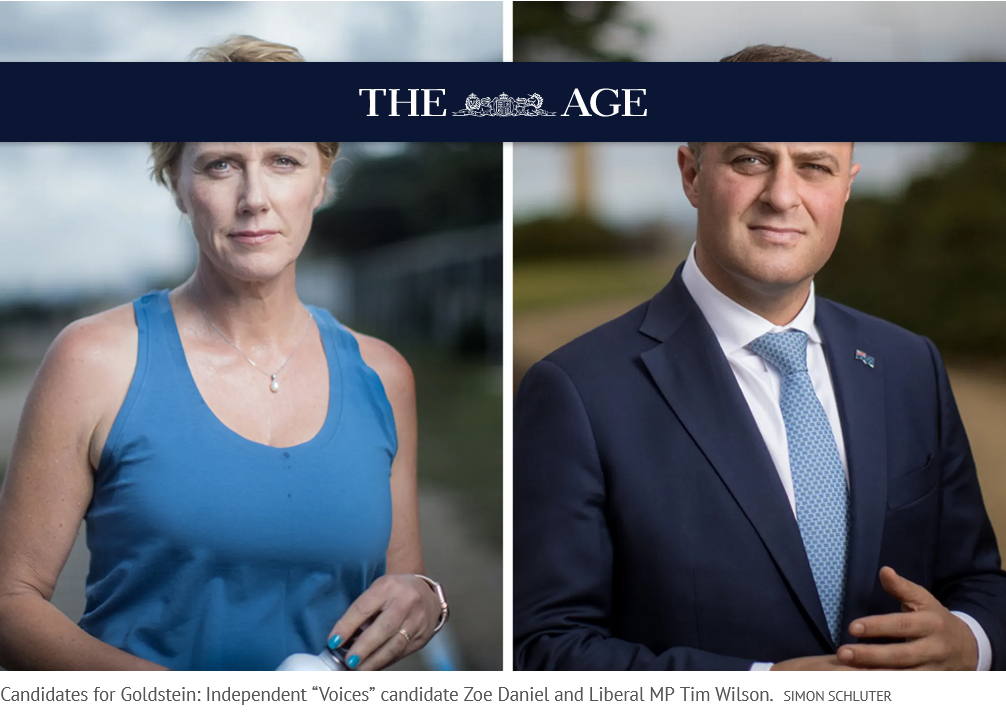
‘Safe’ Victorian Liberal seat held by Tim Wilson, ex Policy Director & spokesperson for right wing IPA vs even better known teal, Zoe Daniel

Another interesting electoral contest for 2022 is that taking place in the wealthy Victorian suburban seat of Goldstein on east side of Pt Philip Bay, with 9 candidates on the ballot.

Following Vote Climate One’s traffic light ranking, ● there are three green lights: Greens’ Alana Galli-McRostie a real-estate conveyancer running for the first time; independent (Sustainable Australia) Brandon Hoult a person with a disability running for the second time; and independent Zoe Daniel a well known ABC correspondent for 30 years also running for the first time. ● one orange light: Labor’s Martyn Abbott public servant with a finance background running for the first time. And, ● five red lights: the Liberal incumbent Tim Wilson running for the third time; United Australia Party’s Catherine Reynolds chiropractic doctor and registered nurse running for the first time; Liberal Democrat’s David Segal stockbroker running for the first time; Pauline Hanson’s One Nation Lisa Stark business woman running for the first time; Derryn Hinch’s Justice Party’s Ellie Jean Sullivan musician and entertainer who previously ran in Bentleigh in 2018.

At this point, with three weeks to go, the contest is likely to boil down to a face-off between Tim Wilson and Zoe Daniel. The Labor and Greens candidates are also likely to garner significant numbers of first preferences, so their preferences from faithful party members may affect the result. These four have debated their differences in public:

by Royce Millar and Najma Sambul, 29/04/2022 in The Age

Battle for Goldstein / How the Goldstein debate unfolded, from beginning to end: The Age is reporting from Goldstein in bayside Melbourne, exploring the national election story where it matters most – on the ground, seat by seat. Royce Millar and Najma Sambul will be filing stories and observations daily. If you live there and have insights, tips or thoughts about the key local issues, please contact them on [email protected] and [email protected]

The full Goldstein forum debate as it happened

For two hours on Thursday night, four key Goldstein candidates, Martyn Abbott from Labor, Independent Zoe Daniel, Green candidate Alana Galli-McRostie and Liberal incumbent Tim Wilson appeared at the Brighton Town Hall to debate climate change (and a few other matters) and answer questions from the 400 people in attendance.

Our breaking reporter, Cassandra Morgan, live blogged it. We thought it might be useful to reproduce all her blog posts in chronological order.

Read the complete article….

Some background

Goldstein

MP

Tim Wilson (Liberal) since 2016.

Profile

Goldstein covers 51 sq.km in Melbourne’s south-east and runs along Port Phillip Bay from Glen Huntly Road in the north to Beaumaris in the south. It includes the bayside suburbs of Brighton, Sandringham, Black Rock and Beaumaris, as well as Highett, Hampton, Bentleigh and parts of Elsternwick, Caulfield, Ormond and Glen Huntly further inland.

Read the complete article….

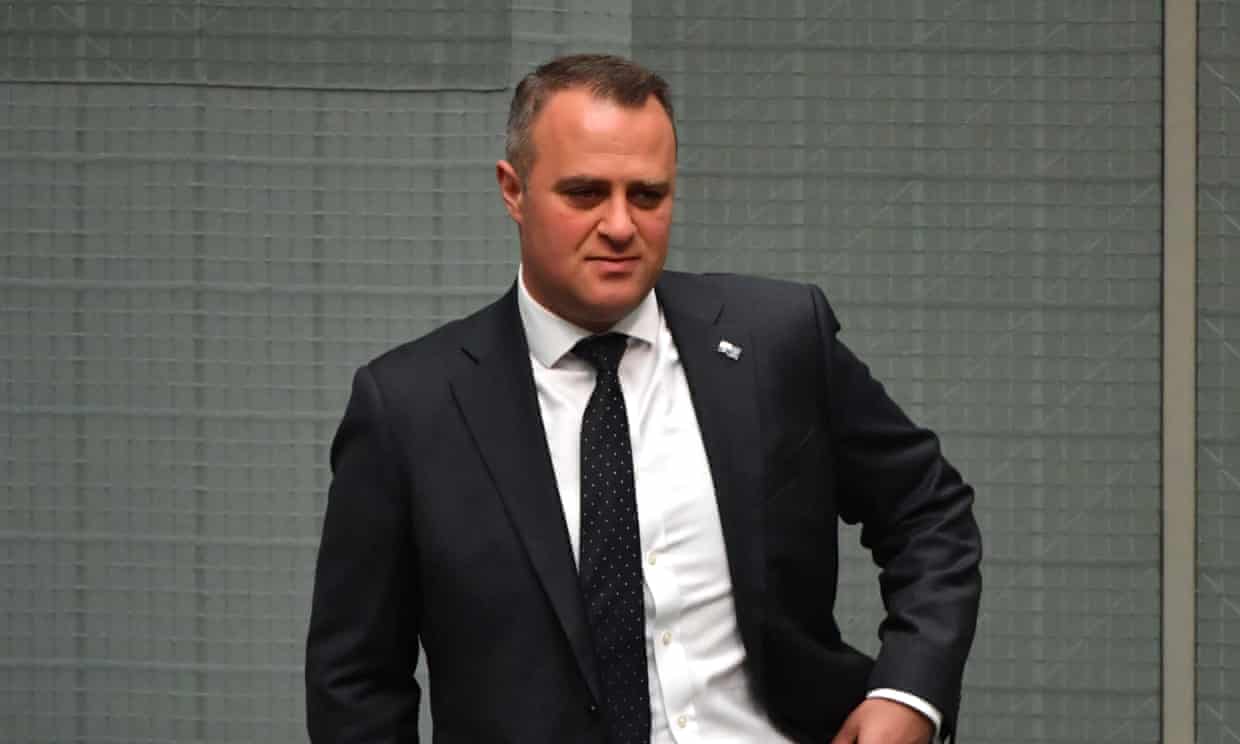
Tim Wilson at the 2015 Indigenous Leaders Roundtable Broome / CC BY 2.0
File:Tim Wilson (17887430121) (cropped).jpg
Created: 18 May 2015

Wikipedia (13/04/2022 update)

Tim Wilson (Australian politician)

Timothy Robert Wilson (born 12 March 1980) is an Australian politician and a member of the Liberal Party of Australia. Wilson serves as the Federal Member for Goldstein in the Australian House of Representatives. He was elected in 2016 and re-elected in 2019, and served as the Chair of the Standing Committee on Economics from September 2018 to September 2021. He is currently the Assistant Minister to the Minister for Industry, Energy and Emissions Reduction.

Before entering politics, Wilson was a policy director at the Institute of Public Affairs (IPA) from 2007 to 2013 and Australia’s Human Rights Commissioner from 2014 to 2016.

Institute of Public Affairs (IPA)

Wilson was employed by the Institute of Public Affairs for seven years, serving as Director of Climate Change Policy and of Intellectual Property and Free Trade.[7]

Human Rights Commissioner (HRC)

During his time at the IPA, Wilson was a vocal critic of the Human Rights Commission and called for the abolition of the Commission.[8]

He was appointed as Australia’s Human Rights Commissioner between February 2014 and February 2016.[9][10][11] On appointment to the Human Rights Commission, Wilson resigned his membership of the Liberal Party.[12]

Read the complete article….

Liberal Tim Wilson, who holds the Victorian electorate of Goldstein, faces opposition from a local grassroots movement endorsed by former Liberal minister Ian Macphee. Photograph: Mick Tsikas/AAP / From the article

by Katharine Murphy, 03/08/2021 in the Guardian

Former Liberal minister endorses ousting of MP Tim Wilson at next federal election: Ian Macphee calls for voters in Goldstein to ‘play their part’ and support an independent alternative.

The Fraser-era immigration minister Ian Macphee has endorsed a local push to replace the incumbent Liberal MP Tim Wilson in his former electorate of Goldstein with an independent at the next federal election.

Macphee, a vocal party moderate, held the Victorian electorate of Goldstein during his political career before he lost Liberal preselection in 1989.

During an interview with a moderator of community group Voices of Goldstein, the former Liberal minister said this was a time “when voters in a progressive electorate like Goldstein must play their part”.

Macphee said he greatly admired the work of Voices for Goldstein. “I believe grassroots activity is imperative and can be done by supporting good independent candidates.”

Read the complete article….

Former ABC correspondent Zoe Daniel has announced her candidacy as an independent in the upcoming federal election. Photograph: Zoe Daniel Twitter / From the article

by Nino Bucci, 25/11/2021 in The Guardian

Former ABC journalist Zoe Daniel to run as an independent against Liberal MP Tim Wilson in Victoria: Daniel, previously the ABC’s US correspondent, says it is time to end the ‘weaponisation’ of climate policy


The former ABC reporter Zoe Daniel has announced she will run as an independent in the upcoming federal election in the Melbourne electorate of Goldstein, which is currently held by Liberal MP Tim Wilson.

Daniel announced in a series of tweets on Thursday that she would be contesting the seat in the city’s south-east, citing integrity in politics and climate change among her core concerns.

Her candidacy has been backed by Voices of Goldstein, one of a number of campaigns funding independent candidates in Coalition-held seats under the “Voice Of” movement.

Daniel told Guardian Australia it was time to end the “weaponisation” of climate policy. She backs an “enforceable” 50% emissions cut by 2030 to encourage economic investment.

Read the complete article….

Goldstein is another seat that may be decided by thinkers rather than believers

Tim Wilson (the incumbent) is a very smart, ambitious, and opinionated young man who maintains a high public profile. I have been aware of his presence for several years and even invited him to address an atheist and freethinkers group when I was its convenor. Clearly he has his personal opinions – many of them progressive, but even back into his early days as a mouthpiece of the Institute of Public Affairs what most impressed me was his willingness to spruik far-right propaganda for those he represents. Today he is still a good puppet telling people what Scotty from Marketing wants them to believe. This is particularly evident when he flogs the smoke and nonsense of the COALition’s climate and energy policies dictated by their National Party partners.

After 30 years as a top ABC correspondent observing the often dismal reality of the world including climate catastrophes, Trumpist America and the rapidly thawing Arctic, Zoe Daniel is a woman who sees and thinks about reality as it is, and does not try to hide its awful taste with Kool-Aid. She is an observer and thinker, who is very good at communicating with other thinkers.

As one of the most affluent electorates in Victoria that has been well served in the past by Liberal moderates (e.g., Ian Macphee who was a hero of mine in the Fraser era). To some degree many in the electorate have associated the Liberal Party with their personal wealth, and have become ‘rusted on’ Liberal voters, prepared to believe whatever ideas the Party marketed to them. Wilson’s survival in Parliament depends on this.

However, we should all consider that people in Goldstein were able to build their wealth because they were intelligent, observant, and thoughtful enough to tell the difference between genuine opportunities and believing in fairy tales. Thanks to all kinds of extreme weather events and climate catastrophes the reality of the existential risks we face in the next few generations are becoming obvious to all who have not let themselves be blinded by the myths, fables, and lies spun by the fossil fuel puppets.

Goldstein is NOT a safe Liberal seat!

For a community of thoughtful people, Zoe Daniel is the kind of thoughtful, motivated and powerful independent person to represent your interests in Parliament. Personally, I think there are more of these kinds of people in Goldstein than there of the sleepwalkers blinded by clouds of COALition bulldust who would vote to keep our current fossil fuel industry puppet government in power.

If voters consider the evidence and THINK before they vote, I have little doubt that the green light candidates will gain the majority of first preferences amongst themselves. Whether one of them will win the seat in the end depends on how voters manage their remaining preferences. Vote Climate One’s Traffic Light Voting System and its voting guides are designed to help people rank their preferences in such a way that if a green light candidate is given the first preference, and doesn’t win, the vote will still go to another green light climate friendly candidate as long as any remain in the running. Only if there are no more green or orange light candidates alive can the vote be given to a red light candidate.

Vote Climate One is also providing downloadable blank ballot formats so preferences can be decided at home, so the choices can easily be transferred to the formal ballot paper in the voting booth. Check the bottom of the your electorate’s page in the voting guide. (If you don’t find it now, check again in a couple of days as they are being progressively loaded into our system.)

See Climate Sentinel News‘s Corrupt leaders, casual media, gullible believers for a different and sometimes humorous take on how use preferential voting to make the kind of humongous political transition we need to make to cleanse the Parliamentary stable of its many years accumulation of bulldust.

In any event, the IPCC tells us that this election is probably our last chance to change our current puppet government to one that will act in our behalf to resolve or at least mitigate the accelerating climate crisis.


We need to turn away from the the Apocalypse on the road to hothouse hell, and we won’t do this by continuing with business as usual!

It seems to have taken the clear thinking of Greta Thunberg, a 16 year-old girl who concluded school was pointless as long as humans continued their blind ‘business as usual’ rush towards extinction.

greta-act-as-if-the-house-was-on-fire
Listen to Greta’s speech live at the World Economic forum in Davos 2019. Except for her reliance on the IPCC’s overoptimistic emissions budget, everything she says is spot on that even she, as a child, can understand the alternatives and what has to happen.

In other words, wake up! smell the smoke! see the grimly frightful reality, and fight the fire that is burning up our only planet so we can give our offspring a hopeful future. This is the only issue that matters. Even the IPCC’s hyperconservative Sixth Assessment Report that looks at climate change’s global and regional impacts on ecosystems, biodiversity, and human communities makes it clear we are headed for an existential climate catastrophe if we don’t stop the warming process.

Scott Morrison and his troop of wooden-headed puppets are doing essentially nothing to organize effective action against the warming. In fact all they doing is rearranging the furniture in the burning house to be incinerated along with anything and everyone we may care about.

In Greta’s words, “even a small child can understand [this]”. Like Georgia Steele, people hope for their children’s futures. Greta doesn’t want your hopium. She wants you to rationally panic enough to wake up, pay attention to reality, and fight the fire…. so our offspring can have some hope for their future.

Let’s hope that we can stop global warming soon enough to leave them with a future where they can survive and flourish.

Featured Image: Boundaries of the Huges Electorate from Vote Climate One’s Goldstein Electorate page. Click candidate names for more details.

Views expressed in this post are those of its author(s), not necessarily all Vote Climate One members.

Hughes: ‘safe’ COALition seat, interesting contest

Held by science denying, coal loving Lib turncoat funded by Clive Palmer, Craig Kelly, contested by 2 teals, a Green, One Nation and the Libs

Georgia Steele is one of the independent candidates running in Hughes.(ABC News – from the article)

by Amy Greenbank, 16/04/2022 in ABC News – Federal Election 2022 – Australia Votes

Liberal candidate for Hughes in a ‘sprint’ against independents and Craig Kelly

Jenny Ware is upbeat as she walks around a picturesque waterfront park in Como, in Sydney’s south.

She’s on a mission to introduce herself to as many people as possible, but knows her time is short. 

“Hi, I’m Jenny Ware. I’m the Liberal candidate for Hughes,” she tells a handful of parents and grandparents supervising kids in a bustling playground.

Her reception is mixed, but she’s not daunted.

Two pro-climate independents are also running and sense an opportunity.

“I think people are seeing the internal party machinations as a debacle, but I won’t ever be subjected to internal party politics, so it is a bit of a bonus I think,” independent candidate Linda Seymour said.

“After the last 12 years [of Craig Kelly] I think this electorate is ready for change.”

Another independent candidate, Georgia Steele, is hoping to stage a Zali Steggall-style upset and snatch a safe seat.

Read the complete article….

Editor’s comments

This is a very interesting contest to see how a reasonably affluent urban fringe electorate dominated by lower tier professionals and tradies with moderately high level of home ownership and commuting requirements respond to the choice between three fossil-fueled spin merchants given the ‘red light’ by Vote Climate One, three climate emergency realists given the ‘green light’, and an ‘orange light’ Labor nominee with little to offer but the party line.

In Hughes, I doubt that any candidate will achieve an outright majority in the election. Thus, how voters in this electorate manage their preferences may be critically important in determining whether the type of candidate they want is elected. Vote Climate One’s Traffic Light Voting System is designed to help you rank candidates by Traffic Light categories so your intent to vote for a climate friendly government isn’t accidentally lost to a fossil fuel puppet.

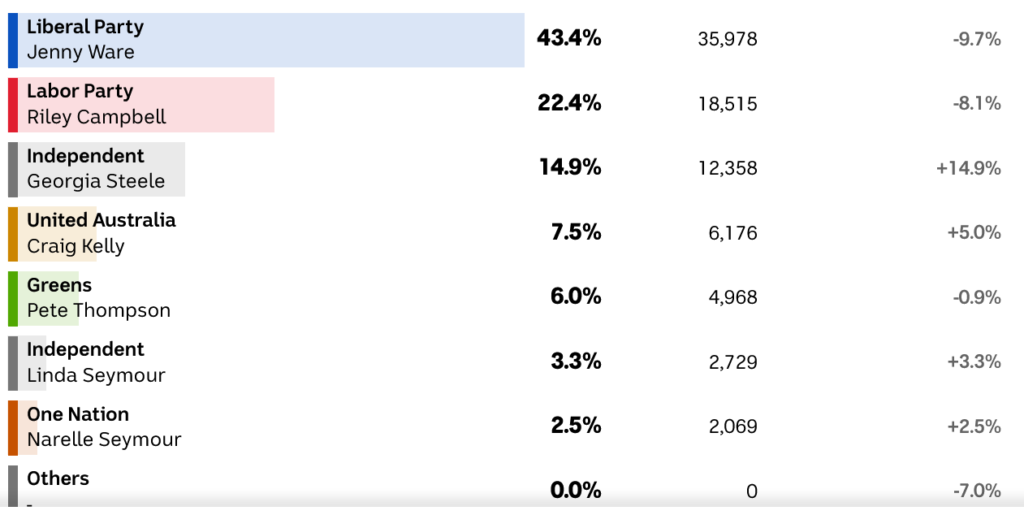
There are three red light candidates. As summarized in the featured article, the Liberal candidate, Jenny Ware, suffered a major loss in campaigning time in an epic preselection battle between the Liberal Party federal executive and the local branch that was only settled with a High Court ruling. Ware was nominated to replace the once popular ex-Liberal incumbent, Craig Kelly, who moved to the extreme right and is seeking re-election as ‘leader’ of multi-billionaire coal miner Clive Palmer’s United Australia Party. The third red-light candidate is Narelle Seymour, representing Pauline Hanson’s One Nation Party, is completely unknown to Google or even One Nation’s web site as at 29/04/2022. If this was the USA, I would say Narelle Seymour is probably a bogus candidate whose name was put up to draw votes away from Linda Seymour who is a credible teal independent running for the seat.

The Labor Party, that held the seat for most of its history prior to Kelly’s election as a Liberal, is represented by Riley Campbell, who, as a relative unknown with no obvious qualifications, seems to be nominated as a place holder.

Then there are three green light candidates: ● Peter Thompson – the Green – who grew up on the beaches, waterways and National Parks of the Southerland Shire (similar to my own childhood in Southern California), a science teacher for 24 years, and a strong environmentalist for 20 years; and two teal independents: ● Linda Seymour – Also home grown in the electorate, an environmentalist and high-level professional architect and communicator with experience on a number of major Australian and overseas projects; and ● Georgia Steele, born in Southerland, high school and uni in Canberra, a high-powered corporate lawyer and litigator across 4 continents, ‘obsessed with politics’ from her time in Canberra, and settled down back in Southerland to raise a family.

I quote Georgia Steele’s well expressed reasons for running because these seem typical for most of the ‘teal’ independents I have studied:

A few years ago, I started waking up in the early hours of the morning, worrying. Worrying about my kids. Not about their current lives, but about their future. Worrying that it’s only so long that they will continue to have the same opportunities that I had when I was growing up. That all the driving, coaching, cooking, will all be for nought.

This is because, if something doesn’t change – and fast – the world they’ll be living in in their 40s, will be unrecognisable from the world that we live in now. The waterline of the beautiful Wonnie will be who knows how far up the hill and the Royal National Park will have been so badly hit with bushfires that there will be almost nothing left of it.

What really kills me about this, what keeps me up at night, what frustrates the hell out of me, is that it’s a fixable problem.

Humans have got this. Humans have already invented, manufactured and commercialised all of the technology that we need to get the planet back on track. Remember what it was like to be a world leader at something? [Editor’s emphasis]

In those early morning sleepless hours, I’d ask myself whether I was doing enough. I had banned single-use plastics from the house, I had put solar panels on the roof, I’d bought a hybrid car. I’d even become a vegetarian. But somehow, it really didn’t seem enough.

Then it dawned on me. The problem is a political one. It requires a political solution. I’m a litigator. What great qualifications for being a politician! I can write. I can argue. I can persuade. I can negotiate. I can compromise. I can do that job. And surely that would be doing enough?

So, I said goodbye to the law. I put aside my dream of writing the great Australian novel, and I’ve decided to run for office. Because things need to change, and quickly. In 30 or 40 years’ time, when my kids come to me and say “Mum, how the hell did we let it get this bad?” I’ll genuinely be able to tell them that I did everything I could. With any luck, we won’t have to have that conversation at all.

From Georgia Steele’s Blog, 24/11/2021, Why I’m Running for the Seat of Hughes

Pundits think the seat will return to the Libs. I think otherwise [See post-election note below]

The demographics of Hughes suggests that the electorate is well populated by smart, practical, largely self-made people who are good at thinking for themselves. Such people are not so likely to sheepishly follow either the party-line blather and humbug of the COALition’s fossil fuel puppet brigade or Clive Palmer’s puppet Craig Kelly anti-scientific and anti-climate fairy tales. Any one of the three green light candidates is better qualified and more likely to develop and negotiate rational and effective responses to the growing climate emergency (and many other fraught issues as well) than are any of the other candidates in this electorate.

If voters consider the evidence and THINK before they vote, I have little doubt that the green light trio will gain the majority of first preferences amongst themselves. Whether one of them will win the seat in the end depends on how voters manage their remaining preferences. Vote Climate One’s Traffic Light Voting System and its voting guides are designed to help people rank their preferences in such a way that if a green light candidate is given the first preference, and doesn’t win, the vote will still go to another green light climate friendly candidate as long as any remain in the running. Only if there are no more green or orange light candidates alive can the vote be given to a red light candidate.

Vote Climate One is also providing downloadable blank ballot formats so preferences can be decided at home, so the choices can easily be transferred to the formal ballot paper in the voting booth.

See Climate Sentinel News‘s Corrupt leaders, casual media, gullible believers for a different and sometimes humorous take on how use preferential voting to make the kind of humongous political transition we need to make to cleanse the Parliamentary stable of its many years accumulation of bulldust.

In any event, the IPCC tells us that this election is probably our last chance to change our current puppet government to one that will act in our behalf to resolve or at least mitigate the accelerating climate crisis.

Post election note

The pundits were right – from ABC:


We need to turn away from the the Apocalypse on the road to hothouse hell, and we won’t do this by continuing with business as usual!

It seems to have taken the clear thinking of Greta Thunberg, a 16 year-old girl who concluded school was pointless as long as humans continued their blind ‘business as usual’ rush towards extinction.

greta-act-as-if-the-house-was-on-fire
Listen to Greta’s speech live at the World Economic forum in Davos 2019. Except for her reliance on the IPCC’s overoptimistic emissions budget, everything she says is spot on that even she, as a child, can understand the alternatives and what has to happen.

In other words, wake up! smell the smoke! see the grimly frightful reality, and fight the fire that is burning up our only planet so we can give our offspring a hopeful future. This is the only issue that matters. Even the IPCC’s hyperconservative Sixth Assessment Report that looks at climate change’s global and regional impacts on ecosystems, biodiversity, and human communities makes it clear we are headed for an existential climate catastrophe if we don’t stop the warming process.

Scott Morrison and his troop of wooden-headed puppets are doing essentially nothing to organize effective action against the warming. In fact all they doing is rearranging the furniture in the burning house to be incinerated along with anything and everyone we may care about.

In Greta’s words, “even a small child can understand [this]”. Like Georgia Steele, people hope for their children’s futures. Greta doesn’t want your hopium. She wants you to rationally panic enough to wake up, pay attention to reality, and fight the fire…. so our offspring can have some hope for their future.

Let’s hope that we can stop global warming soon enough to leave them with a future where they can survive and flourish.

Featured Image: Boundaries of the Huges Electorate from Vote Climate One’s Hughes Electorate page. Click candidate names for more details.
Views expressed in this post are those of its author(s), not necessarily all Vote Climate One members.

UN Global Assessment Report on Disaster Risk Reduction:

Our World at Risk: Transforming Governance
for a Resilient Future 2022

United Nations Office for Disaster Risk Reduction (2022). Global Assessment Report on Disaster Risk Reduction 2022: Our World at Risk: Transforming Governance for a Resilient Future. Geneva

Preface

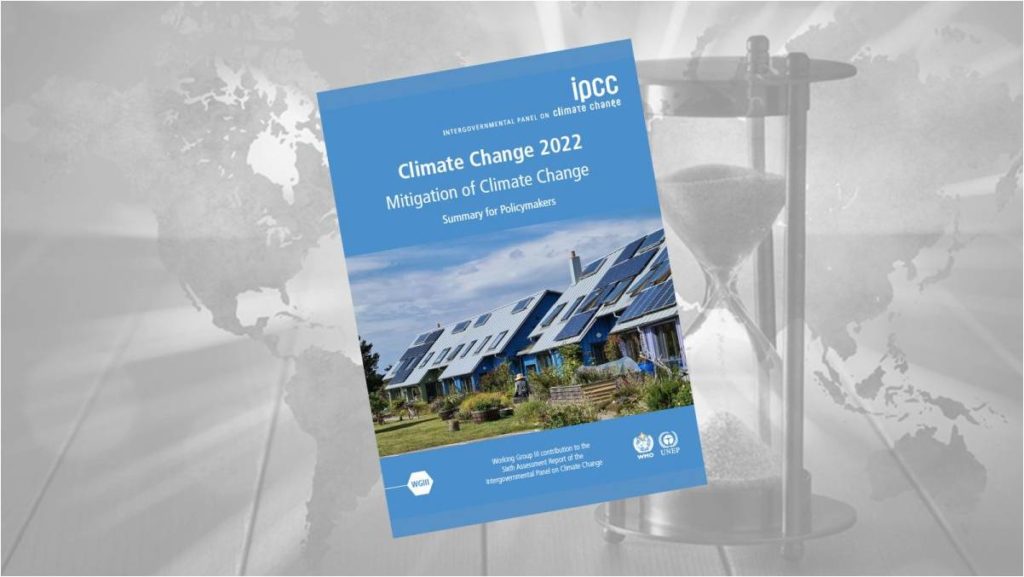
As this Global Assessment Report on Disaster Risk Reduction 2022 (GAR2022) goes to print, the world finds itself in some of the darkest days in living memory. The war in Ukraine becomes more devastating every day, and COVID-19 has affected every corner of the world. The latest Intergovernmental Panel on Climate Change report warns that without immediate and deep emission reductions across all sectors, keeping global warming below the 1.5°C threshold will be impossible.

In the years since the previous GAR, the COVID-19 pandemic has shown starkly how a hazard can cascade across systems, but also how people and societies can adopt new behaviours when the problem and the needs for action are clear.

GAR2022 highlights country case study examples, tools and ideas for how to address systemic risk and transform how we think about risk – including addressing biases and prejudices of which we are sometimes not conscious. It also encourages action to make risk governance fit for purpose in the context of the climate emergency and an increasingly complex and interconnected world.

GAR2022 is a call to action to better understand and act to address systemic risk and to invest in building resilient communities and global systems. Whether we can achieve [this] in the coming years to 2030 is decisive in the race to reach the Sustainable Development Goal targets, for a sustainable and resilient future for all.

There is no time to waste; we need to act now.

DOWNLOAD THE COMPLETE REPORT….

Why is this report important to Australian voters?

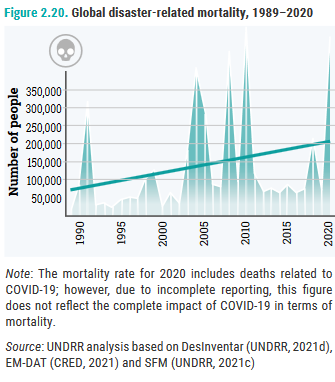
Even if you haven’t been impacted directly, evidence from a wide variety of sources surveyed and reported on Vote Climate One’s Climate Sentinel News documents the fact that increasing numbers of humans (including those of us living here in Australia) have been battered, impoverished, injured and even killed in a growing crescendo of ‘natural’ disasters and catastrophes. Many of these ‘extreme’ events are clearly associated with the accelerating warming of our planet. Clearly we need to improve our disaster risk reduction.

This image has an empty alt attribute; its file name is Screenshot-Global-Assessment-Report-on-Disaster-Risk-Reduction-2022_0..png

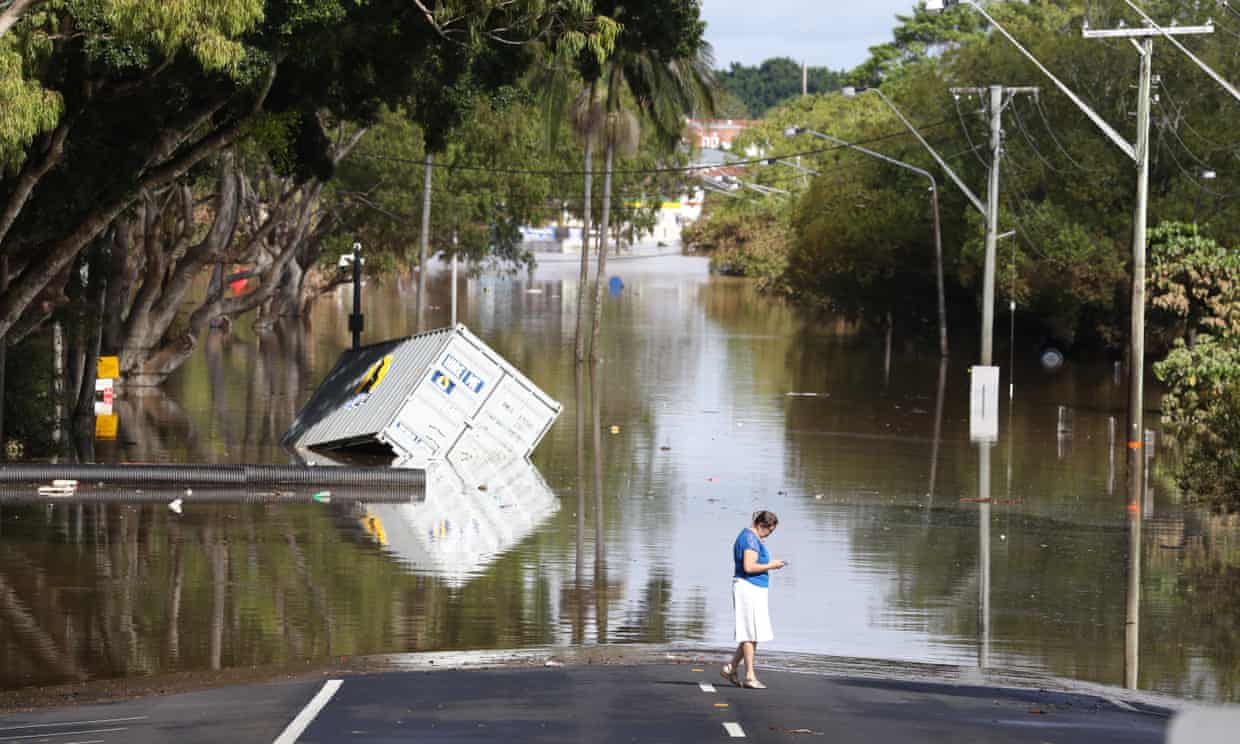
Not only are the disasters becoming more frequent, but they are both becoming more extensive in terms of their areas of impact and numbers of people harmed, and they are beginning to concatenate/overlap. Here, the next disaster may follow the first disaster so closely that people affected have not had time to recover fully from the first — greatly increasing their impoverishment and diminishing their hopes for a better future. The repeated floodings of northern coastal areas of NSW and areas of Queensland including Brisbane are clear examples of this.

In line with the UN IPCC’s Assessment Reports on Climate Change, the UN has published a series of Global Assessment Reports on disaster risk reduction and management. Here the focus is on identifying disaster risks and working out how to avoid/control the risks and minimizing the consequences of those that actually happen. Much of the analysis reflects the logic of a complex systems engineering analytical point of view.

Part I of the present report looks at the concept of risk in complex social systems and the roles of human actions in generating risk and what people need to learn from this.

Part II focuses on the roles of human biases and communications in creating and managing risks associated with the social systems.

Part III explores possible solutions for better understanding, managing risks, and risk mitigation strategies in the social systems exposed to the risks.

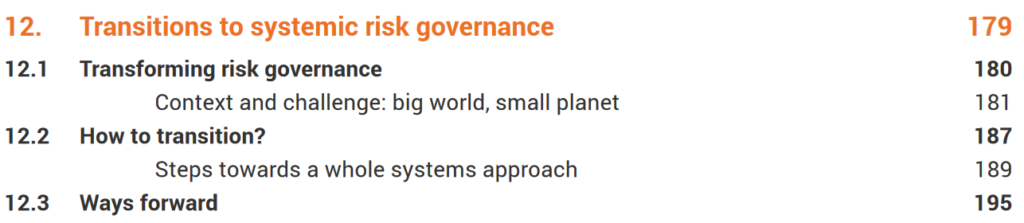
Contents of Chapter 12,

Here, Chapter 12 explores how we can transition from our existing chaotic and ineffective states of ‘ungovernance’ based on ‘beliefs’ of the day, to rational, evidence-based thinking about risky aspects of complex system in the real world. A couple of days ago, I considered in some detail the differences between believing and thinking in a major essay, Corrupt leaders, casual media, gullible believers.

How and to what extent our Government leaders come to understand and apply the ideas and concepts explored, explained, and developed in this UN Assessment Report will have a profound impact on the future qualities of life we can achieve as Australian citizens.

We Australians have a choice to make on Saturday 21st May

What kind of people do you want to be responsible for governing our country now that we are on the cusp of what will be probably the historically most crucial decisions relating to how we manage the accelerating climate crisis, along with possibly increasingly virulent pandemics (e.g., H5N1 Avian Flu potentially crossing species barriers) as ecosystems become more chaotic with warming: ● Scotty the marketing guru who is Capt Humbug for his troop of puppets and knaves peddling faith and belief in the fossil fuel industry? Or ● Independent thinkers and green parties who have publicly committed themselves to tackling the climate emergency as their first priority if elected to Parliament?

If you believe that our present COALition government will govern in your interests rather than their patrons in the fossil fuel and related industries, then go with the flow and don’t concern yourself with the likely consequences of going down their fossil fueled road towards runaway global warming. On the other hand, if you think it is better to work for a sustainable future where your children and their children can hope for a happy future, Vote Climate One can help you elect a government that will actively lead and support this effort.

Our Climate Sentinel News provides access to factual evidence about the growing climate crisis to support your thinking; and our Traffic Light Voting System gives you easy to use factual evidence about where each candidate in your electorate ranks in relation to their commitment to prioritize action on the climate emergency. This should make it easier to decide your voting preferences before confronting a long ballot paper in the voting booth.

We need to turn away from the the Apocalypse on the road to hothouse hell, and we won’t do this by continuing with business as usual!

It seems to have taken the clear thinking of Greta Thunberg, a 16 year-old girl who concluded school was pointless as long as humans continued their blind ‘business as usual’ rush towards extinction.

greta-act-as-if-the-house-was-on-fire
Listen to Greta’s speech live at the World Economic forum in Davos 2019. Except for her reliance on the IPCC’s overoptimistic emissions budget, everything she says is spot on that even she, as a child, can understand the alternatives and what has to happen.

In other words, wake up! smell the smoke! see the grimly frightful reality, and fight the fire that is burning up our only planet so we can give our offspring a hopeful future. This is the only issue that matters. Even the IPCC’s hyperconservative Sixth Assessment Report that looks at climate change’s global and regional impacts on ecosystems, biodiversity, and human communities makes it clear we are headed for an existential climate catastrophe if we don’t stop the warming process.

Scott Morrison and his troop of wooden-headed puppets are doing essentially nothing to organize effective action against the warming. In fact all they doing is rearranging the furniture in the burning house to be incinerated along with anything and everyone we may care about.

In Greta’s words, “even a small child can understand [this]”. People hope for their children’s futures. She doesn’t want your hopium. She wants you to rationally panic enough to wake up, pay attention to reality, and fight the fire…. so our offspring can have some hope for their future.

Let’s hope that we can stop global warming soon enough to leave them with a future where they can survive and flourish.

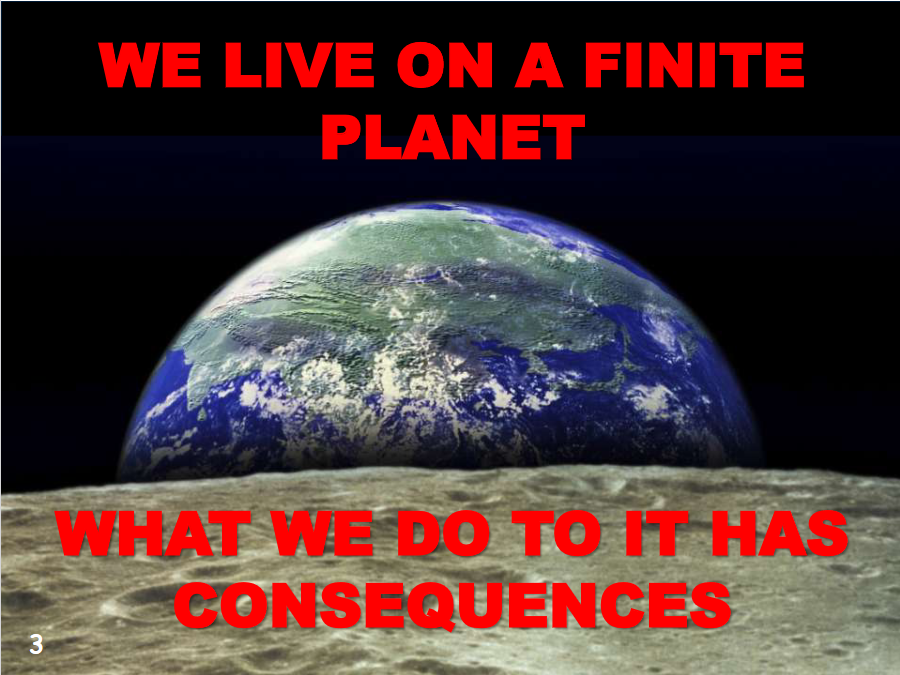
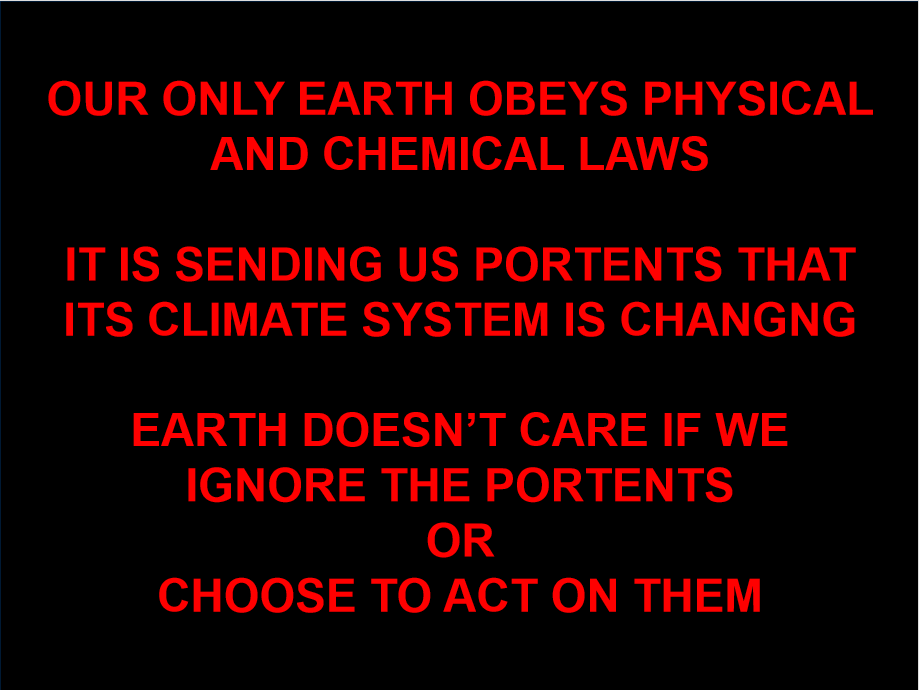
Featured image: We live on a finite planet – what we do to it has consequences. From William P. Hall (2019). We’re told we are facing climate and ecological emergencies – Is it so? What do we do about them?

Views expressed in this post are those of its author(s), not necessarily all Vote Climate One members.

Corrupt leaders, casual media, gullible believers

This is the recipe for extinction when facing existential catastrophe. A lesson on the difference between thinking and believing

We humans face a very real risk of runaway global warming that we have triggered by burning fossil carbon accumulated over millions of years in around 150 years. We have already passed the trigger points where the warming will continue without further human contributions; and are approaching the point of no return where nothing that humans could do would stop positive feedbacks from continuing the warming until Earth’s “Hothouse” state is reached.

Rather than promoting and facilitating effective responses to control and resolve the crisis, much of the world’s media and political ‘leadership’ seems to be working to primarily to promote and protect the continued growth of the fossil fuel industry from ‘harm’ by citizens more concerned to promote and protect their families from the existential consequences of runaway warming.

The crisis

Climate Sentinel News has presented a plethora of fact-based science that Earth’s Climate System is being driven by humanity’s greenhouse gas emissions towards a point of no return.

Here, increasing global temperatures will generate enough natural positive feedbacks to ‘run away’ into a global ‘hothouse’ of lethally high temperatures and insanely extreme weather. Given the exponential nature of positive feedbacks, only a few more decades of heating will drive global temperatures to extremes that will be lethal to most life – resulting in global mass extinction for most large and complex organisms — including humans.

A fundamental problem is the ease by which many people are conned by marketeers, faith-healers, demagogues and other humbuggers that tell them what they want to believe and that there is nothing to fear (i.e., ‘this is coal – – don’t be ‘fraid, don’t be scared‘)….

Facts vs Beliefs

Some of our religions and many of our political ‘leaders’ try to teach us that our “beliefs” are all-important. They teach that we must accept and believe in whatever ‘truth’ they teach by ‘faith and faith alone’ — at least that was what I was being taught in Sunday school shortly before refusing to go any more. (Fortunately my parents were easy enough about religion that they accepted my decision – others haven’t been so lucky).

Science teaches us that we need to base our decisions and actions on what we think and know about reality based on facts and evidence provided by the world we live in. This gives us the best chances to anticipate and react rationally to whatever the real-world throws at us.

Although I tacitly understood most of this from my science education, it was a master machinist who had a vast knowledge of what you could do with a block of metal from many years of hands on experience, that taught me the deeply visceral difference between believing and thinking.

As I finished my BS degree in Zoology and started my postgraduate work I was working part time as a research assistant in a hospital-based neurophysiology research lab where Norm hand-made all-kinds of precision scientific and microsurgical equipment from blocks of metal, glass tubing, and other sorts of bulk materials as required. Other than technical stuff for the job, the only reading Norm ever admitted to was the Bible and Shakespeare’s complete works, because these taught him everything he wanted to know about people. Our lunch-break was the best time of the day, when Norm and I would have long rambling discussions of world affairs and the future (in a time when one could be optimistic about he future).

Many of my flights of fancy unconsciously included the words “I believe that…” as if this was a telling point in the argument. The day finally came when Norm had had enough of my fancy talk, and decided to teach me a lesson in humility.

He stopped responding to any and all of my attempts to start a conversation. After a week or so of the silent treatment, I broke down and begged for him to tell me what was so wrong. He thought a bit, and answered: “Bill, I’m fed up with your ‘beliefs’. I don’t give a damn what you believe…. It’s what you THINK that matters…. ‘He who assumes, zooms‘ [as in taking a pratfall]. Since I’m not interested in talking about baseless beliefs, whenever you used the world ‘believe’ I decided there was nothing worth discussing. However, when you start a statement with ‘I think, there is an assumption of a rational chain of reasoning based on some fact-based evidence.” This would have been around 1963-64. Since then I have worked to remove ‘I believe’ from my vocabulary, and to ensure that my statements are underpinned by rational connections with real-world evidence.

The following search strings show you the evidence that Climate Sentinel News has reported about the fact-based science: ● “Road to Hothouse Hell“, ● “Existential Risk“; and our LNP COALition Government’s responses to the evidence:

Unfortunately, Australia is presently governed by a PM from marketing who actively spruiks whatever humbug his special interest patrons appear to want.

Lesson begins

Here is a real-life televised interview between some media people and Miranda Whelehan on ITV’s Good Morning Britain (11 April 2022 | Just Stop Oil). The interview lasts 10 minutes – but displays the stark reality as to how the ‘seriously’ some commercial media take the climate emergency.

The ‘parody’ using parts of Whelehan’s interview demonstrates Hollywood’s imagination in the movie Don’t Look Up was limited in comparison to the reality of British morning TV. Too many people believe what they hear/see on TV in preference to thinking about the extent of what they hear/see is actually based on evidence of reality.

Australia today

Unfortunately, the next parody by Juice Media isn’t a parody at all. Juice is far more factual than you will hear from most COALition politicians (along with many others). The evidence underlying almost every statement has already been discussed on Climate Sentinel News; and there would be even more if I had the time and stamina to produce it.

Sorry about the profanity, though.

Unfortunately, polite English doesn’t have strong enough words words to express how many people who think rationally feel about a government that is supposed to keep Australians safe but spends billions of our dollars shoveling more coal on the fires causing global warming….

What to do about the situation

Vote Climate One is comprised of a group of volunteers who decided to pool our various resources to document the issues and the consequences of ignoring them. Our primary goal is to do what we can to replace the existing puppet government in league with the fossil fuel industry with people who have provided evidence that they will prioritize action on the climate emergency in government. Towards achieving this goal, (1) we are ranking every candidate in every Australian electorate as to the evidence we have as to their willingness to place action on the climate emergency as their first priority in parliament, and (2) establish Climate Sentinel News as a way to detail evidence that the crisis is real, and of the COALition’s malfeasance in protecting Australian citizens from the dangers of global warming.

Another Juice Media parody that isn’t a parody at all, explains how preferential voting can be used to change our government for the better.

Juice Media describes Australian preferential voting quite effectively. It is up to Australian voters to use this process effectively to get the kind of government you want.

Vote Climate One works under the assumption that there are a lot of people who have been swayed in the past by the rhetoric and what the Juice Ladies call ‘shitfuckery’ to vote for fossil fuel puppet parties and and individuals protecting and promoting the fossil fuel industry. In the past this could be justified by their (supposed) support for economic growth and employment opportunities. However, in in the present, as our understanding of climate change grows, it is increasingly evident that the fossil fuel interests and their puppets are paving the road to mass extinction by still working to expand the burning coal, oil and gas.

We think that if they are given the facts and understanding of the differences between thinking and believing many past voters for the LNP and similar puppets will consider voting for people who have pledged to put action on the climate emergency at the tops of their agendas if elected to Parliament. Climate Sentinel News focuses on what we know about climate change and think about it. Our Traffic Light Voting System ranks every candidate in every electorate with our traffic lights and provides a form you can fill out at home before voting to ensure your preferences have the best chance of giving you the election results you want.

The bad news is that if Capt Humbug’s government remains in power, they have proved that they can be quite effective in distracting from and blocking effective action to resolve solve the climate emergency. If Humbug has its way, Australia will have done nothing effective to slow and stop our progress towards runaway global warming and what may prove to be the end of humanity in our world’s worst global mass extinction event.

The good news from the IPCC and other scientific bodies is that if we accept we are facing the crux of the crisis and unite with other nations who take the risk of extinction seriously, we still have a very few years where it is still possible to stop and reverse the warming process. However, to do this we will need the backing and support of a progressive government that puts action on climate change at the top of its Parliamentary agenda, as the candidates we have flagged with our ‘green light’ have done.

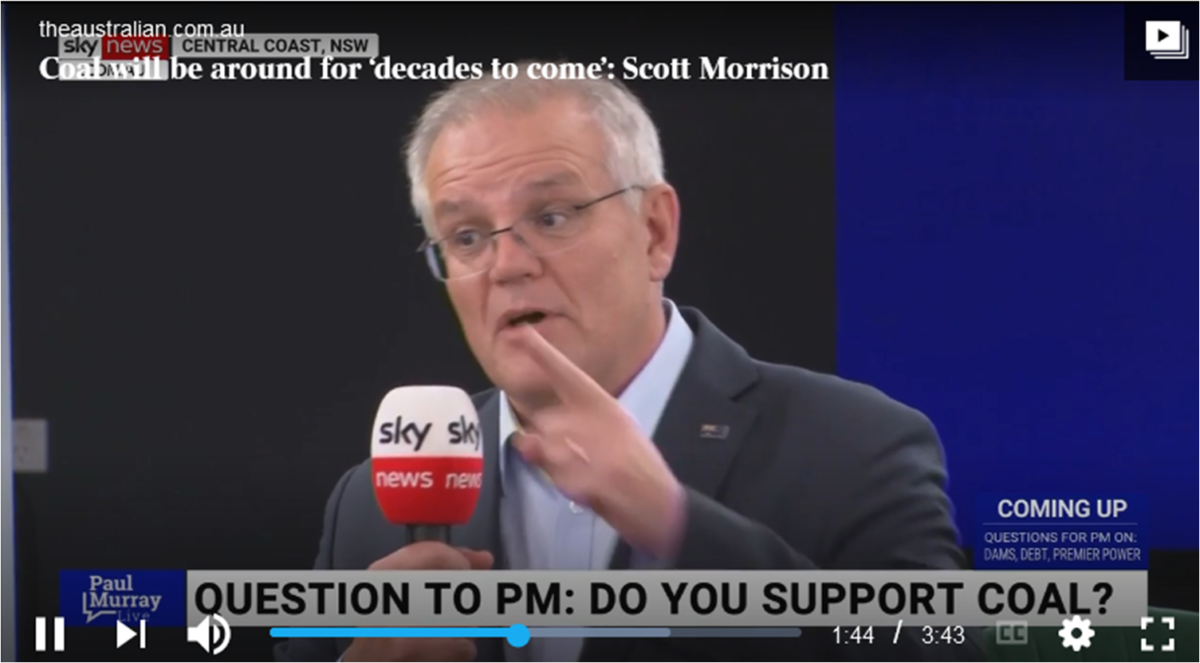
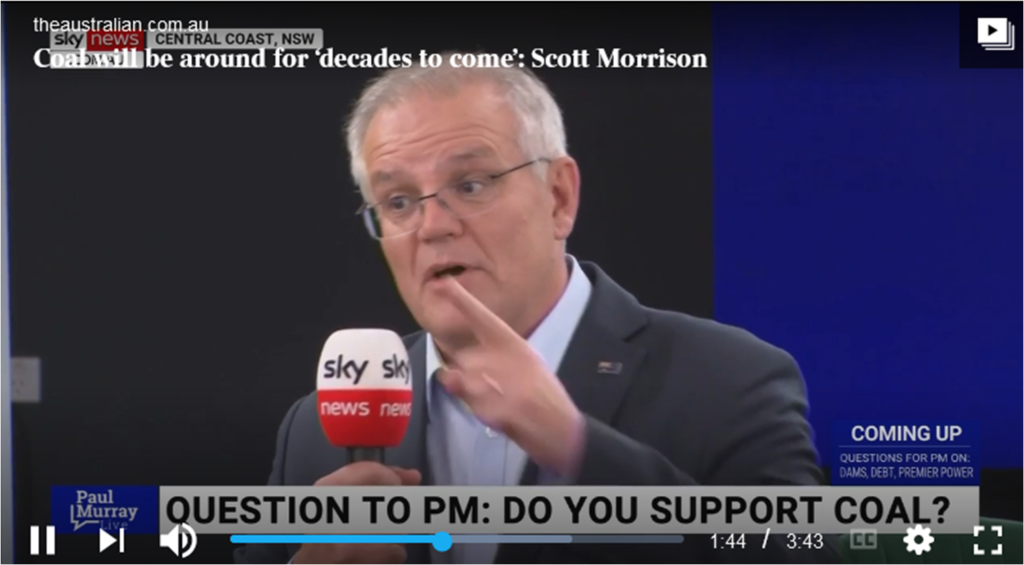
Featured Image: Scott Morrison: From the Australian, Paul Murray Live – 14/03/2022.

Prime Minister Scott Morrison says he is supportive of Australia’s fossil fuel industry – and particularly coal, which he says will be around for “decades to come”. “When it comes to the coal industry, it’s worth $35 billion to us every year in exports, and that’s money Australia needs to grow our economy,” Mr Morrison said. “What you need in today’s energy economy is you need to continue to run your coal-fired power stations for as long as you possibly can and that is our policy … we want them to run as long as they possibly can.” Coal-fired power stations will continue to run to back up renewable power sources, although Mr Morrison said gas would play a larger role in the energy mix in years to come. Mr Morrison added that building a new coal-fired power station would be difficult because of the state government planning powers, which would “probably never allow them to do it”.

Views expressed in this post are those of its author(s), not necessarily all Vote Climate One members.

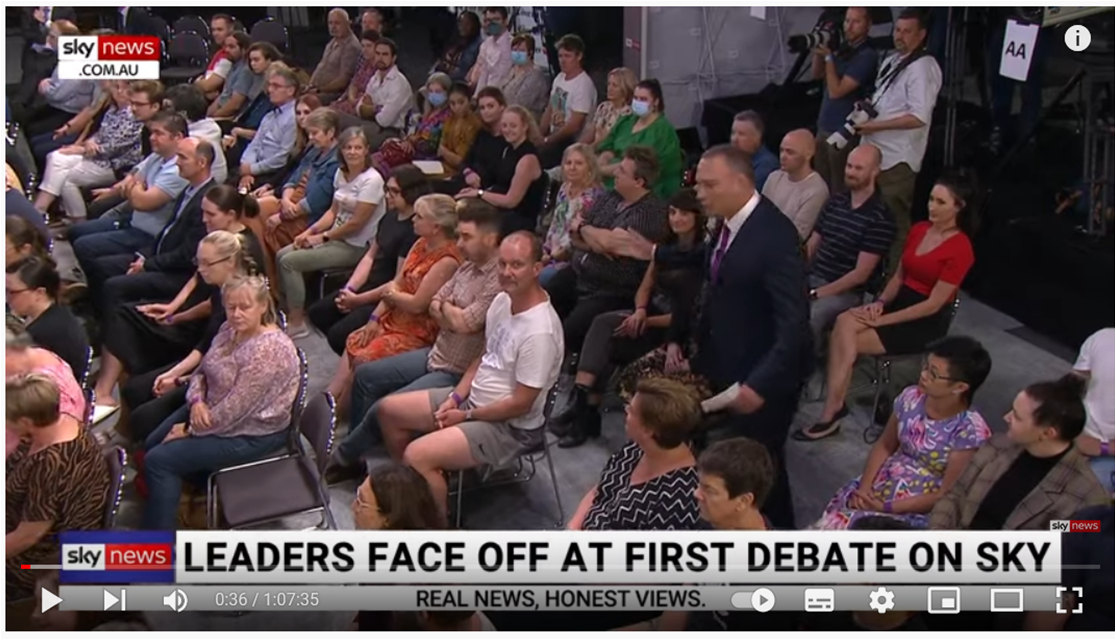
Leaders Debate: Live view was owned by Sky News

If you compare what Scotty and Albo think about climate change, you won’t find it here. Unlike Q&A, Sky didn’t find an audience concerned about the future

Editors commentary

After not finding any freely available live broadcast of the Leaders Debate from the Gabba Stadium in Brisbane, someone sent me a link to the YouTube version, linked here. Comparing the questions and responses here to what transpired on ABC’s Q&A session in Gladstone is like comparing two completely different planets.

Based on questions Sky News read out, their audience was primarily interested in personal things like taxes, jobs, immigration, cost of living, pensions, health services, etc. Energy policy was mentioned perhaps twice, net-zero (with no explanation) was mentioned about once; and I don’t think issues like climate change, climate emergency, etc. were mentioned at all by questioners or the ‘leaders’. Interestingly, in over half an hour of searching with Google (which I am fairly good at using) I couldn’t find any news outlet or other organ who has published a complete transcript of the debate.

Contrast this with ABC’s live broadcast of Q&A from Gladstone, Qld:

Note that the Youtube video from Q&A includes a complete and searchable transcript of the video, making it easy to analyze the discussion. In any event there were a good 18 minutes of discussion relating to the climate emergency and its effects on Australia.

In any event, my own thoughts on the Leaders Debate, is that if this the best on offer by the dominant parties, if you are concerned about our future in a catastrophically changing climate, bring on the independents. Labor may be better than the COALition, but if they have no intention to shut down coal mining or gas production, the difference is minor where climate action is concerned.

Featured Image: Grab from the Featured Video.

Views expressed in this post are those of its author(s), not necessarily all Vote Climate One members.

Since when does pay-tv own the Leaders Debate?

Does Murdoch media own the Australian’s Leaders Debate?

It took a fair bit of searching to find a explicit statement for what I suspected. Murdoch’s media somehow ended up owning the content of our first Leaders Debase in the 2022 National Election:

ABC News’s ‘analysis’ of the first Leaders’ Debate. No live feed was available free to the air in any of Australia’s capitol cities. It was only available on Murdoch’s pay to view Sky News cable and satellite broadcasters

by Rayane Tamer, 20/04/2022 at 5:03pm, updated 3 hours ago at 6:43pm SBS News

Scott Morrison and Anthony Albanese will face off in a leaders’ debate tonight. Here’s what you need to know: In an Australian-first, SBS will live stream the debate in both Arabic and Mandarin [but NOT in English!].

The debate is not on free-to-air in the major cities, so you can only watch the broadcast event live in English on Sky News.

SBS will be live-streaming the debate, translated into both Arabic and Mandarin to ensure two of the largest language groups will be able to watch along as both political leaders are grilled on their contested policies.

“By offering the leaders’ debate in Arabic and Mandarin, we hope to ultimately drive an understanding of the key issues, and enable informed participation in this election,” SBS Director of Audio and Language Content David Hua said.

You can tune in with the live translations on SBS On Demand.

To me this is close to unbelievable, that somehow the two major political parties would allow Rupert Murdoch’s media empire take ownership of information in the candidates’ own words that should be readily available to all Australian voters. As the situation stands tonight, the more than 17 million Australians living in our capital cities can easily access the debates ONLY through Murdoch’s media or if they understand Mandarin or Arabic.

There is good reason to believe that Scotty from Marketing and many of his COALition henchmen/women are Murdoch Puppets, but I am surprised the Albanese would go along with this kind of arrangement.

Yet another reason to give your first preferences to green independents, or the Greens. @Vote Climate One’s Climate Sentinel News will give you many more reasons for putting the COALition and their friends last, and not putting Labor first on your ballot, and our Traffic Light Voting System for every Australian electorate shows you how you can use your preferences most effectively to support green independents and Greens who are publicly committed to put action on climate change at the top of their Parliamentary agendas.

Featured Image: Prime Minister Scott Morrison and Labor leader Anthony Albanese will go head-to-head in the election campaign’s first leaders’ debate. Source: From the featured article in SBS News.

Views expressed in this post are those of its author(s), not necessarily all Vote Climate One members.

Direct Air Capture of CO₂ at PPM levels is a folly

The physical laws of thermodynamics rule that it takes a lot of energy to capture wide-spread rare gas molecules into a tight space

The article below extrapolates the costs of ‘proven’ technologies for direct air capture and sequestration of CO₂. To have any hope of cleansing our planet’s atmosphere, MILLIONS of these complex engineered contraptions would have to be manufactured, transported, and installed around the world. Of course, the fossil fuel industry would love to take on the task of doing this because of the trillions of dollars to be made from building the devices and producing the vast amounts of fuel required to make them work to reduce the entropy of the gas molecules emitted from driving the machines capturing the gas.

Plants already do this work using solar energy. They too are inefficient, but they use the small fraction of the solar energy captured that passes through their cells to grow more and ever more plants until space and/or their simple nutrients are used up. Nevertheless, they are self-reproducing and grow exponentially as long as they can, capturing CO₂ to make the sugars they use for fuel and building blocks for their structures. As long as the carbon remains captured in living or dead plant matter it is well concentrated and easily sequestered.

With appropriate changes farming and forestry techniques a lot of carbon can be captured and sequestered; but potentially much more can be done by fertilizing AND FARMING the nearly sterile areas of ocean over abyssal depths These comprise approximately 1/5 of the Earth’s total unfrozen surface. The US National Academies of Science, Engineering, Medicine (2021) A Research Strategy for Ocean-based Carbon Dioxide Removal and Sequestration — especially Chapter 3, Nutrient Fertilization provides an excellent review.

The Featured Image above, based on satellite tracking of the amount of chlorophyll-a in the oceans shows ocean deserts (i.e., areas where there is virtually no chlorophyll – and thus no photosynthesis) as dark blue or purple. Even some of the lighter blue areas might also be made more productive with fertilization.

The National Academies report considers mainly the first part of the process – fertilization mainly by providing iron in micronutrient quantities. This is often all that is required to enable large blooms of microalgae, but the blooms also can cause problems, and the individual algal cells aren’t large enough to sink the carbon they capture out of the zone where decomposition soon releases the carbon back to the atmosphere.

What is missing in the National Academies report is the need for active seeding and farming of appropriate ecosystems of consumers to eat and package the microalgal carbon content into fecal pellets and dead bodies dense enough to sink into the abyssal depths where the carbon will be incorporated into the bottom sediment. However, unlike mechanical contrivances that have to be manufactured, once the appropriate mix of ‘seeds’ is worked out, the suite of consumer organisms will also with some appropriate tweaking by the farmers, self-reproduce and grow exponentially to meet the demand,

Yes, it is quite likely there will be eggs broken and catastrophic major failures (easily stopped by stopping the algal fertilization with iron), but if we don’t have other proven means of sequestration, the price of not trying this reasonably quick and thermodynamically plausible solution could well be the completion of global mass extinction and the end of the human species.

Direct Air Capture installation / from the article

by Leigh Collins, 14/09/2021 in Recharge

‘The amount of energy required by direct air carbon capture proves it is an exercise in futility’

Removing CO2 directly from the air requires almost as many joules as those produced by burning the fossil fuel in the first place, writes Leigh Collins

Capturing CO2 emissions using direct-air-capture (DAC) technology requires almost as much energy as that contained in the fossil fuels that produced the carbon dioxide in the first place, according to new analysis.

In 2020, the world used 462 exajoules (EJ) of energy from fossil fuels, which resulted in 32 billion tonnes of CO2 emissions. Capturing that carbon dioxide through DAC — which sucks the greenhouse gas out of the air — would require 448EJ, according to calculations by Australian maths-as-a-service company Keynumbers.

Read the complete article….

Australia needs a government formed of people who understand and accept the reality of the physical world, not one formed of fossil fuel puppets led by Scotty from Marketing (a.k.a. Capt. Humbug).

Working WITH our multi-billionaires

Scotty from marketing and his fellow puppets work assiduously to protect fossil fuel multibillionaires (not all of them are even Australian – e.g., Adani) and make them even richer. And then there was Clive Palmer last week

Green’s Adam Bandt’s National Press Club address this week proposes taxing Australia’s billionaires to support otherwise unprofitable community services.

However, I think Australia has at least one multi-billionaire who is already doing a lot to develop ‘green’ industries to minimize carbon emissions. Dr Andrew Forrest (i.e., ‘Twiggy’), Australia’s second richest person last time I looked, may have stepped on more than a few toes building his industrial empire, but I am unaware of any other person who parked his industries and iron mines in a charitable foundation and spent several years EARNING a doctorate in marine sciences and establishing a substantial marine sciences lab, aside from pledging upwards of a billion dollars to establish zero emissions mining and manufacturing systems.

Hopefully we can elect the kind of people to our Parliament who have the foresight, understanding and integrity to persuade and work with people like Forrest who seems inclined to invest significant fractions of their private resources in the fight against likely runaway global warming. Unfortunately, several narcissistic and hedonistic multibillionaire fossil fuel special interests are doing a very effective job persuading their current Parliamentary puppets to spend public resources shoveling more carbon fuel onto the fires of global warming.

In his own words, Scotty makes it blindingly obvious that he is vastly more interested in stoking his patrons’ fossil fuel fires than in stopping their emissions to mitigate global warming and the possible mass extinctions of humans and the millions of other species of life we share our planet with.

Prime Minister Scott Morrison says he is supportive of Australia’s fossil fuel industry – and particularly coal, which he… says will be around for “decades to come”. “When it comes to the coal industry, it’s worth $35 billion to us every year in exports, and that’s money Australia needs to grow our economy,” Mr Morrison said. “What you need in today’s energy economy is you need to continue to run your coal-fired power stations for as long as you possibly can and that is our policy … we want them to run as long as they possibly can.” Coal-fired power stations will continue to run to back up renewable power sources, although Mr Morrison said gas would play a larger role in the energy mix in years to come. Mr Morrison added that building a new coal-fired power station would be difficult because of the state government planning powers, which would “probably never allow them to do it”. For the video see: The Australian, 14/03/2022, Commentary/coal-will-be-around-for-decades-to-come-scott-morrison/video. See also ‘We will keep mining’, says Australian prime minister Scott Morrison about the future of coal.

If that wasn’t enough, here’s a choice of some more of Scotty’s thinking about stopping the Apocalypse of global warming

We’ll keep mining!
09/09/2021 via the Guardian
We need to get the gas from under our feet. We’ve got to get the gas!
The future of power: What’s behind Australia’s push for gas-fired energy | ABC Four Corners

We need to turn away from the the Apocalypse on the road to hothouse hell, and we won’t do this by continuing with business as usual!

It seems to have taken the clear thinking of Greta Thunberg, a 16 year-old girl who concluded school was pointless as long as humans continued their blind ‘business as usual’ rush towards extinction.

greta-act-as-if-the-house-was-on-fire
Listen to Greta’s speech live at the World Economic forum in Davos 2019. Except for her reliance on the IPCC’s overoptimistic emissions budget, everything she says is spot on that even she, as a child, can understand the alternatives and what has to happen.

In other words, wake up! smell the smoke! see the grimly frightful reality, and fight the fire that is burning up our only planet so we can give our offspring a hopeful future. This is the only issue that matters. Even the IPCC’s hyperconservative Sixth Assessment Report that looks at climate change’s global and regional impacts on ecosystems, biodiversity, and human communities makes it clear we are headed for an existential climate catastrophe if we don’t stop the warming process.

Scott Morrison and his troop of wooden-headed puppets are doing essentially nothing to organize effective action against the warming. In fact all they doing is rearranging the furniture in the burning house to be incinerated along with anything and everyone we may care about.

In Greta’s words, “even a small child can understand [this]”. People hope for their children’s futures. She doesn’t want your hopium. She wants you to rationally panic enough to wake up, pay attention to reality, and fight the fire…. so our offspring can have some hope for their future. Vote Climate One’s Traffic Light Voting System will help you use your preferential votes wisely on behalf of our offsprings’ future.

Let’s hope that we can stop global warming soon enough to leave them with a future where they can survive and flourish.

Featured Image:  still frame from a NASA MODIS video of the changing distribution of chlorophyll in Earth’s oceans, showing where photosynthetic carbon fixation is occurring. Most is in near-shore areas of comparatively shallow waters where the fixed carbon is fairly rapidly consumed and cycled back into the atmosphere by the aerobic metabolism of microorganisms, animals and plants. The dark blue to lavender areas are the ocean deserts above abyssal depths where little or no photosynthesis can occur due to the lack of even a few iron and/or magnesium atoms required as micro-nutrients for the formation of a few critical enzymes in the photosynthetic pathway. / via William Hall.

Views expressed in this post are those of its author(s), not necessarily all Vote Climate One members.

IPCC: Stopping emissions no longer enough on its own

Part III of the IPCC’s 6th Assessment published late on 4 April says net zero alone won’t stop global warming. Carbon capture is also needed.

According to the Third Part of the IPCC’s 6th Assessment Report published this week, our last chances to stop and reverse the still accelerating global warming are running out of time. If we don’t act effectively within the next three years or so, humanity will be condemned to extreme hardship and dieoffs as increasingly large areas of our only planet become effectively uninhabitable because of high temperatures and extreme weather, and our agricultural systems also begin to fail for the same reasons. I have already commented extensively on Parts I and II of the report and consequently have reached and written about many of the topics covered in Part III, and my conclusions from the evidence are even more grim than the IPCC’s. So, other than providing a bit of background on the IPCC and possible limitations of their authoring process, in this post I simply present links to 12 independent commentaries.

Background

The Intergovernmental Panel on Climate Change (!PCC) was established by the United Nations in 1988 to study and make recommendations relating to climate changes triggered by the greenhouse gas released into the atmosphere beginning in the Industrial Revolution by the burning of coal and other fossil carbons for energy production. It presents the most solidly based and peer reviewed scientific understanding of the rapidly expanding climate crisis there is. However, because of its political and academic foundations it has and will consistently under-represent novel and extreme consequences of the on-going global warming. (The reasons for this scientific reticence or ‘conservatism‘ are discussed and explained in detail in my presentation: Some fundamental issues relating to the science underlying climate policy: The IPCC and COP26 couldn’t help but get it wrong.)

However, even in the face of these constraints, the AR6 part 3 Report: Climate Change 2022 – Mitigation of Climate Change, accepts and is based on the extensive research reported in parts 1 and 2 of the full report that failure to stop and reverse global warming before temperatures reach 2.0 °C (or preferably 1.5 °C) will be catastrophic for humans and the biosphere.

Where are we now with the physical state of our atmosphere that drives climate change

NOAA Trends in atmospheric greenhouse gases as at 8 April 2022 / Data source NOAA Global Monitoring Laboratory, Carbon Cycle Greenhouse Gases. / William Hall

The rising concentrations of the three most important greenhouse gases shown above record the physical physical measurements in parts per million or parts per billion (compared to the total number of gas molecules of any kind in the atmosphere) as reported from the Mouna Loa (Hawaii) climate observatory. Details on how the samples were collected, processed and measured are available on the observatory web site. One thing worth noting, is that the longest base-line record from the observatory itself at 3400 meters elevation in the oceanic sub-tropics (shown here) that peaked in February is not identical to the worldwide average CO₂ from multiple sites shown for the Global Monthly Mean CO2 that is still rising in March. NH₄ and N₂O graphs show global means.

It is also worth nothing that the atmospheric concentrations for all of the gases reflect both human generated emissions AND the Earth’s ‘natural’ emissions for each year. We can control human emissions, but the natural emissions increase significantly with each rise in global average temperature.

The chart below shows RELATIVE changes in the global average temperature for each year relative to the global temperature averaged over the 30 years years 1951 through 1980. Earth’s temperature is based on a balance between the absorption of energy from solar radiation at ‘visible’ wave lengths by the planet and everything on it, and the emission of infrared energy by the planet and everything on it. Greenhouse gases heat the planet by blocking some outgoing infrared wave lengths causing the planet to warm until enough energy can be emitted at shorter (more energetic) wavelengths to balance the incoming visible radiation. Again this is a purely physical process that can be measured to relatively high precision.

Global average temperature datasets from NASA, NOAA, Berkeley Earth, and meteorological offices of the U.K. and Japan, show substantial agreement concerning the progress and extent of global warming: all pairwise correlations exceed 98%. / CC BY-SA 4.0
File:20200324 Global average temperature – NASA-GISS HadCrut NOAA Japan BerkeleyE.svg (Version 12) – for more details on sources and construction of the graph see: Wikimedia Commons.

The early trends illustrated by these facts are what drove the formation of the IPCC and its series of increasingly desperate calls to action in its series of “Assessment Reports” involving thousands of well qualified research scientists working as authors over the years of it existence. The 6th Assessment Report discussed here consists of 3 parts: I – The Physical Science Basis: 3949 pages, published 7 Aug 2021; II – Impacts, Adaptation and Vulnerability: 3675 pages, published 27 Feb 2022, and III – Mitigation of Climate Change: 2913 pages, published 4 April 2022. Together the full 3 part report includes 10,537 pages of meticulously peer-reviewed content. My December 202 presentation, Some fundamental issues relating to the science underlying climate policy: The IPCC and COP26 couldn’t help but get it wrong details the IPCC’s rigorous processes for producing the reports. My major criticism is that these processes add years of delay between scientific observations and publication, that the political and academic/institutional environments lead to reticence and understatement of risks, and that an over-reliance on mathematization gives the impression that complexly and chaotically dynamical systems such as the generation of weather and climate are more accurate than they can actually be.

Whatever humbug our governments tell us, we won’t know if we can get off the road to Earth’s Hothouse Hell state until all of the above curves are actually trending downward. As long as they point upwards, it is a clear indication that we are headed towards runaway warming and the unsurvivable hothouse.

Simply stated, where the IPCC observes that the future of humanity is dire, the reality is that it will probably be even worse than that.

What do others make of the IPCC’s Part III report?

Following are 12 independent takes on the IPCC’s recommendations for what we can do that might mitigate the global warming that is already dialed into Earth’s Climate System. Urgently stopping human carbon emissions on its own is no longer enough to stop warming soon enough to avoid major catastrophic damage. We will also have to remove excess carbon from the atmosphere with still unproven technolgies:


One success story in the battle against climate change is that renewable energy sources, such as wind turbines, have dropped significantly in cost over the past decade.Credit: Vincenzo Izzo/LightRocket via Getty

by Jeff Tollefson, 05/04/2022 in Nature / News

IPCC’s starkest message yet: extreme steps needed to avert climate disaster

Radical emissions cuts combined with some atmospheric carbon removal are the only hope to limit global warming to 1.5 °C, scientists warn.

Humanity probably isn’t going to prevent Earth from at least temporarily warming 1.5 °C above pre-industrial levels — but aggressive action to curb greenhouse-gas emissions and extract carbon from the atmosphere could limit the increase and bring temperatures back down, according to the latest report from the United Nations Intergovernmental Panel on Climate Change (IPCC). The report makes it clear, however, that the window is rapidly closing, and with it the opportunity to prevent the worst impacts of global warming. Above the 1.5 °C limit — set by the Paris climate agreement in 2015 — the chances of extreme weather and collapsing ecosystems grow.

Read the complete article….

Climate change is hitting the planet faster than scientists originally thought


Getty / from the article

by John Quiggin, 06/04/2022 in The Conversation

Time’s up: why Australia has to quit stalling and wean itself off fossil fuels

If the world acts now, we can avoid the worst outcomes of climate change without any significant effect on standards of living. That’s a key message from the new report from the Intergovernmental Panel on Climate Change (IPCC).

The key phrase here is “acts now”. Jim Skea, co-chair of the IPCC working group behind the report, said it’s “now or never” to keep global warming to 1.5℃. Action means cutting emissions from fossil fuel use rapidly and hard. Global emissions must peak within three years to have any chance of keeping warming below 1.5℃.

Unfortunately, Australia is not behaving as if the largest issue facing us is urgent – in fact, we’re doubling down on fossil fuels.
In recent years, Australia overtook Qatar to become the world’s largest exporter of liquefied natural gas (LNG). We’re still the second-largest exporter of thermal coal, and the largest for metallurgical coal.

Read the complete article….

Scientists react
From the article

by Carbon Brief Staff, 07/04/2020 in Carbon Brief

Scientists react: What are the key new insights from the IPCCs WG3-report

A new report from the UN’s Intergovernmental Panel on Climate Change (IPCC) outlines what progress has been made in tackling global warming so far – and what will be needed for the world to curb emissions and achieve its climate targets.

It is the third part of the IPCC’s sixth assessment report (AR6), a process that comes around every six or seven years and aims to provide a comprehensive view of the state of knowledge on climate change. (See Carbon Brief’s in-depth Q&A.)

This report, by the IPCC’s Working Group III (WG3) “provides an updated global assessment of climate change mitigation progress and pledges, and examines the sources of global emissions”

Read the complete article….

Flooded streets in New South Wales, Australia, last month. Photograph: Jason O’Brien/AAP / from the article

by Damian Carrington, 04/04/2022 in The Guardian

IPCC report: ‘now or never’ if world is to stave off climate disaster

Greenhouse gas emissions must peak by 2025, say climate scientists in what is in effect their final warning.

The world can still hope to stave off the worst ravages of climate breakdown but only through a “now or never” dash to a low-carbon economy and society, scientists have said in what is in effect a final warning for governments on the climate.

Greenhouse gas emissions must peak by 2025, and can be nearly halved this decade, according to the Intergovernmental Panel on Climate Change (IPCC), to give the world a chance of limiting future heating to 1.5C above pre-industrial levels.

The final cost of doing so will be minimal, amounting to just a few percent of global GDP by mid-century, though it will require a massive effort by governments, businesses and individuals.

But the chances were narrow and the world was failing to make the changes needed, the body of the world’s leading climate scientists warned. Temperatures will soar to more than 3C, with catastrophic consequences, unless policies and actions are urgently strengthened.

Read the complete article….

from the Article

by, Dana Nuccitelli, 06/04/2022 in Yale Climate Connections

New IPCC report: Only political will stands in way of meeting the Paris targets:

The latest major climate assessment outlines the urgency and feasibility of rapid decarbonization to preserve the economy, health, and a stable climate.

In the just-released third installment of its Sixth Assessment Report (the first two volumes covered climate change causes and impacts), the Intergovernmental Panel on Climate Change (IPCC) summarizes the latest scientific research on efforts to mitigate climate change. Written by 278 authors from 65 countries, the new report can be summarized in one word: “urgency.”

To meet the Paris targets, the IPCC says that global emissions must peak immediately; that governments have not yet implemented sufficient policies to make that happen; and that continued expansion of fossil fuel infrastructure would create additional stranded assets potentially amounting to trillions of dollars in lost investments.

Read the complete article….

Smoke billows from a fire in an area of the Amazon rainforest near Porto Velho, Rondonia State, Brazil, September 2019. Photograph: Bruno Kelly/Reuters / from the article

by Peter Kalmus, 07/04/2022 in The Guardian Opinion

Climate scientists are desperate: we’re crying, begging and getting arrested

On Wednesday, I was arrested for locking myself onto an entrance to the JP Morgan Chase building in downtown LA. I can’t stand by – and nor should you.

“Climate activists are sometimes depicted as dangerous radicals, but the truly dangerous radicals are the countries that are increasing the production of fossil fuels.” – United Nations Secretary General Antonio Guterres

I’m a climate scientist and a desperate father. How can I plead any harder? What will it take? What can my colleagues and I do to stop this catastrophe unfolding now all around us with such excruciating clarity?

Read the complete article….

Wind turbines in a rural area of south Wales. Photograph: Wales/Alamy / from the article

by Damian Carrington, 05/04/2020 in The Guardian

It’s over for fossil fuels: IPCC spells out what’s needed to avert climate disaster

Analysis: The third part of the panel’s report makes clear a century of rising emissions must end before 2025.

Thirty months: that is the very short time the world now has for global greenhouse gas emissions to finally start to fall. If not, we will miss the chance to avoid the worst impacts of the climate crisis.

The conclusion of the world’s scientists, collated by the Intergovernmental Panel on Climate Change and approved by all the world’s governments, says this reversal requires “immediate and deep” cuts in emissions everywhere.

The language of the third part of the IPCC’s report is less dramatic than the first two, which placed “unequivocal” blame on us for putting a “livable future” in grave peril. Rather than plainly stating the scale of the climate emergency, the new assessment spells out what needs to be done. Its text was therefore haggled over furiously by those states with much to lose.

Read the complete article….

Shutterstock / from the article

by Thomas Wiedmann et al., 05/04/2022 in The Conversation

IPCC finds the world has its best chance yet to slash emissions – if it seizes the opportunity

The world has its best chance yet to reduce greenhouse gas emissions quickly, but hard and fast cuts are needed across all sectors and nations to hold warming to safe levels, the global authority on climate change says.

The Intergovernmental Panel on Climate Change (IPCC) report, released today, says opportunities to affordably cut global emissions have risen sharply since the last assessment of this kind in 2014. But the need to act has also become far more urgent.

The report is the definitive assessment of how well the world is doing in finding solutions to rising temperatures. We each contributed expertise to the report.

Here, we explain key aspects of the findings and what it means for the world, including Australia.

Read the complete article….
Australian Professor Frank Jotzo was one of the authors of the latest IPCC report.Credit:Alex Ellinghausen / from the article

by Nick O’Malley, 05/04/2022 in The Age

Goal of holding global warming to 1.5 degrees ‘no longer plausible’: UN

The goal of holding global warming to 1.5 degrees is no longer likely to be achieved, the latest report of the United Nations chief climate body says, though scientists still believe warming may be stabilised and returned under the Paris Agreement’s more ambitious warming target after a period of “overshoot”.

The report by the Intergovernmental Panel on Climate Change (IPCC), published early on Tuesday morning Australian time, was evidence of a damning “litany of broken promises” and a “file of shame”, the UN Secretary General Antonio Guterres said in a speech after the release of the report.

Mr Guterres, whose language on climate has become increasingly strong since the lead-up to the COP26 climate talks last year, catalogued the empty pledges that put humanity “firmly on track towards an unlivable world”.

He said governments and companies had lied to people about their commitments to reducing emissions, and that though the world needed to see a 45 per cent reduction in emissions by the end of the decade the world was on track for a 14 per cent increase.

Read the complete article….

From the article

by Sam Wenger & Deanna D’Alessandro, in The Conversation

On top of drastic emissions cuts, IPCC finds large-scale CO₂ removal from air will be “essential” to meeting targets

Large-scale deployment of carbon dioxide removal (CDR) methods is now “unavoidable” if the world is to reach net-zero greenhouse gas emissions, according to this week’s report by the Intergovernmental Panel on Climate Change (IPCC).

The report, released on Monday, finds that in addition to rapid and deep reductions in greenhouse emissions, CO₂ removal is “an essential element of scenarios that limit warming to 1.5℃ or likely below 2℃ by 2100”.

CDR refers to a suite of activities that lower the concentration of CO₂ in the atmosphere. This is done by removing CO₂ molecules and storing the carbon in plants, trees, soil, geological reservoirs, ocean reservoirs or products derived from CO₂.

As the IPCC notes, each mechanism is complex, and has advantages and pitfalls. Much work is needed to ensure CDR projects are rolled out responsibly.

Read the complete article….

From the article

by Aruna Chandrasekhar et al., 05/04/2022 in Carbon Brief

In-depth Q&A: The IPCC’s sixth assessment on how to tackle climate change

Limiting global warming to 1.5C or 2C would mean “rapid and deep” emissions reductions in “all sectors” of the global economy, says the latest report from the United Nations’ Intergovernmental Panel on Climate Change (IPCC).

Instead, emissions have continued to rise – albeit at a slowing rate – and it will be “impossible” to stay below 1.5C with “no or limited overshoot” without stronger climate action this decade, says the new document, which forms part of the IPCC’s sixth assessment report (AR6).

It outlines how these emissions cuts could be achieved, including “substantial” reductions in fossil fuel use, energy efficiency, electrification, the rapid uptake of low-emission energy sources – particularly renewables – and the use of alternative energy carriers, such as hydrogen.

Read the complete article

The latest IPCC report offers a range of solutions that may help limit global warming impacts. Credit:AP / from the article

By Laura Chung and Nick O’Malley, 05 /04/2022 in The Age

UN offers new solutions to limit global warming

The new UN report shows the world is not on track to hold the global temperature rise to 1.5 degrees, the more ambitious Paris Agreement target, and that the window to achieving the goal is closing fast.

One of its lead authors, Australian National University Professor Frank Jotzo, says it may no longer be plausible that the world can make the necessary immediate global reduction in emissions.

But the report also presents a range of solutions that, if applied immediately, could limit global warming, some of which have not been part of previous versions.

Read the complete article….

What do we know about the LNP’s concerns and abilities to mitigate the climate crisis?

As noted in my previous post, many communities are already well prepared to switch from fossil to renewable energy sources as soon as the supply and distribution issues can be resolved. Given that governments supposedly exist to protect and keep their citizens safe from external threats (i.e., global warming) in this case) we should be able to expect that that they would be promoting and facilitating the growth and spread of renewable energy technologies. But, at least in the case of Australian federal and some state governments, they are dong precisely the opposite: denying the science, and blocking and humbugging efforts to research, develop, promote, and roll out renewable technologies across all of our communities.

We have to replace the COALition Government in Parliament with people we can trust to put action on climate change as their first priority before we can have any hope that the government will do its job to facilitate and support effective action to stop global warming and mitigate its effects. Not only do we need to replace Capt Humbug and his troop of fossil fuel puppets, but the clean-out should also include micro-party members such as mining multi-billionaire Clive Palmer’s one-man fake news bureau Craig Kelly, and Pauline Hanson’s anti-science nut Malcolm Roberts.

If you doubt my interpretation, let the fossil fuel industry puppets and humbuggers tell you in their own words how hard they are working to keep growing their patrons’ greenhouse gas emitting industries in the face of the oncoming climate catastrophe.

Prime Minister Scott Morrison says he is supportive of Australia’s fossil fuel industry – and particularly coal, which he… says will be around for “decades to come”. “When it comes to the coal industry, it’s worth $35 billion to us every year in exports, and that’s money Australia needs to grow our economy,” Mr Morrison said. “What you need in today’s energy economy is you need to continue to run your coal-fired power stations for as long as you possibly can and that is our policy … we want them to run as long as they possibly can.” Coal-fired power stations will continue to run to back up renewable power sources, although Mr Morrison said gas would play a larger role in the energy mix in years to come. Mr Morrison added that building a new coal-fired power station would be difficult because of the state government planning powers, which would “probably never allow them to do it”. For the video see: The Australian, 14/03/2022, Commentary/coal-will-be-around-for-decades-to-come-scott-morrison/video. See also ‘We will keep mining’, says Australian prime minister Scott Morrison about the future of coal.

If that wasn’t enough, here’s a choice of some of Scotty’s thinking about stopping our slide down the slope to runaway global warming and possible near-term extinction:

We’ll keep mining!
09/09/2021 via the Guardian

We need to get the gas from under our feet. We’ve got to get the gas!
The future of power: What’s behind Australia’s push for gas-fired energy | ABC Four Corners

We need to turn away from the the road to hothouse hell, and we won’t do this by continuing with the kind of business as usual Scotty from Maketing and his fossil fuel puppets are spruiking!

It seems to taken the clear thinking of Greta Thunberg, a 16 year-old girl who concluded school was pointless as long as humans continued their blind ‘business as usual’ rush towards extinction.

greta-act-as-if-the-house-was-on-fire
Listen to Greta’s speech live at the World Economic forum in Davos 2019. Except for her reliance on the IPCC’s overoptimistic emissions budget, everything she says is spot on that even she, as a child, can understand the alternatives and what has to happen.

In other words, wake up! smell the smoke! see the grimly frightful reality, and fight the fire that is burning up our only planet so we can give our offspring a hopeful future. This is the only issue that matters. Even the IPCC’s hyperconservative Sixth Assessment WG2 Report that looks at climate change’s global and regional impacts on ecosystems, biodiversity, and human communities makes it clear we are headed for climate catastrophe if we don’t stop the warming process.

Scott Morrison and his troop of wooden-headed puppets are doing essentially nothing to organize effective action against the warming. In fact all they doing is rearranging the furniture in the burning house to be incinerated along with anything and everyone we may care about.

In Greta’s words, “even a small child can understand [this]”. People hope for their children’s futures. She doesn’t want your hopium. She wants you to rationally panic enough to wake up, pay attention to reality, and fight the fire…. so our offspring can have some hope for their future. Vote Climate One’s Traffic Light Voting System will help you use your preferential votes wisely on behalf of our young one’s future.

Give the children a future worth running towards rather than misery and probable death in the collapsing shambles of global mass extinction along the road to Hothouse Hell
Views expressed in this post are those of its author(s), not necessarily all Vote Climate One members.