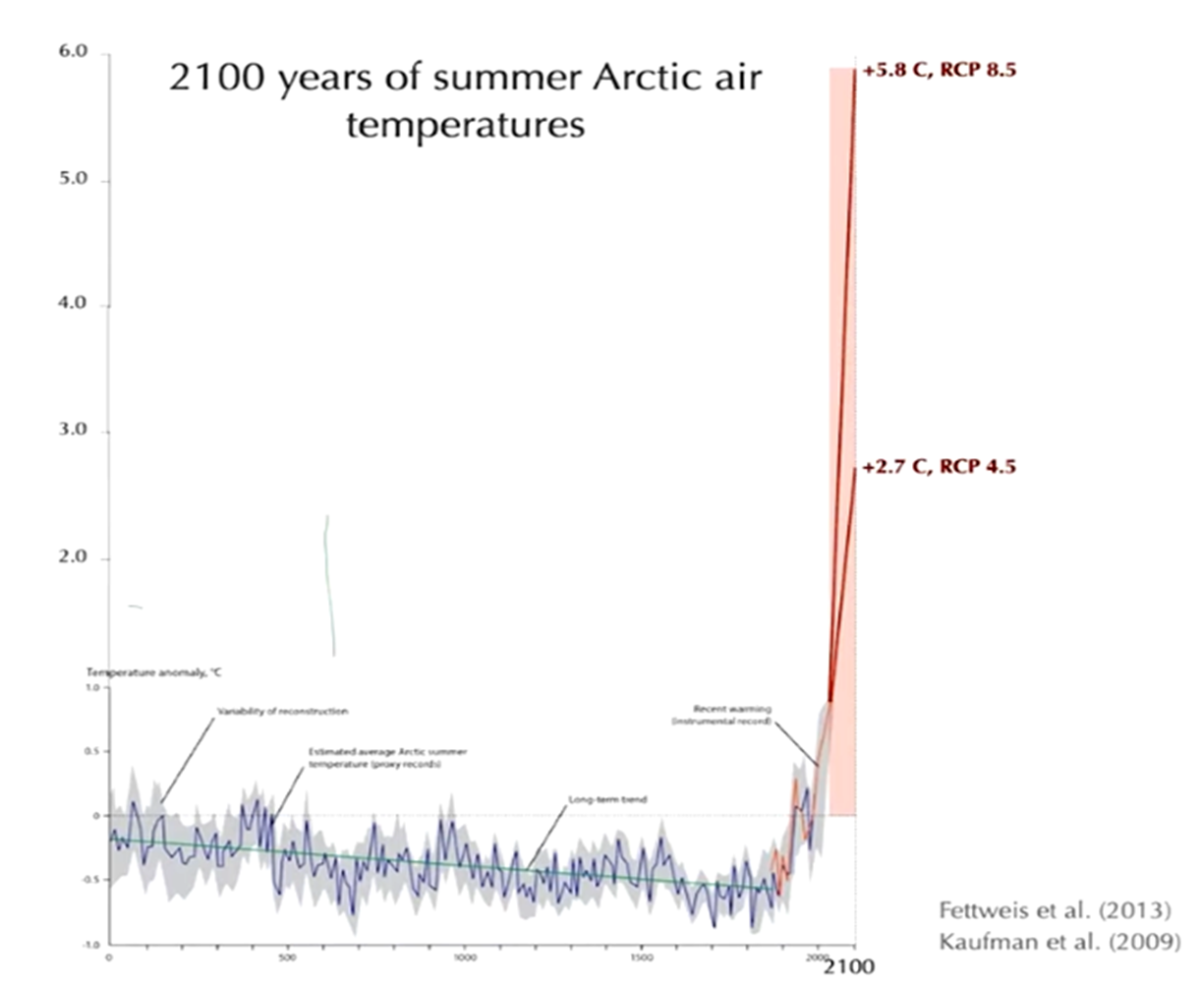
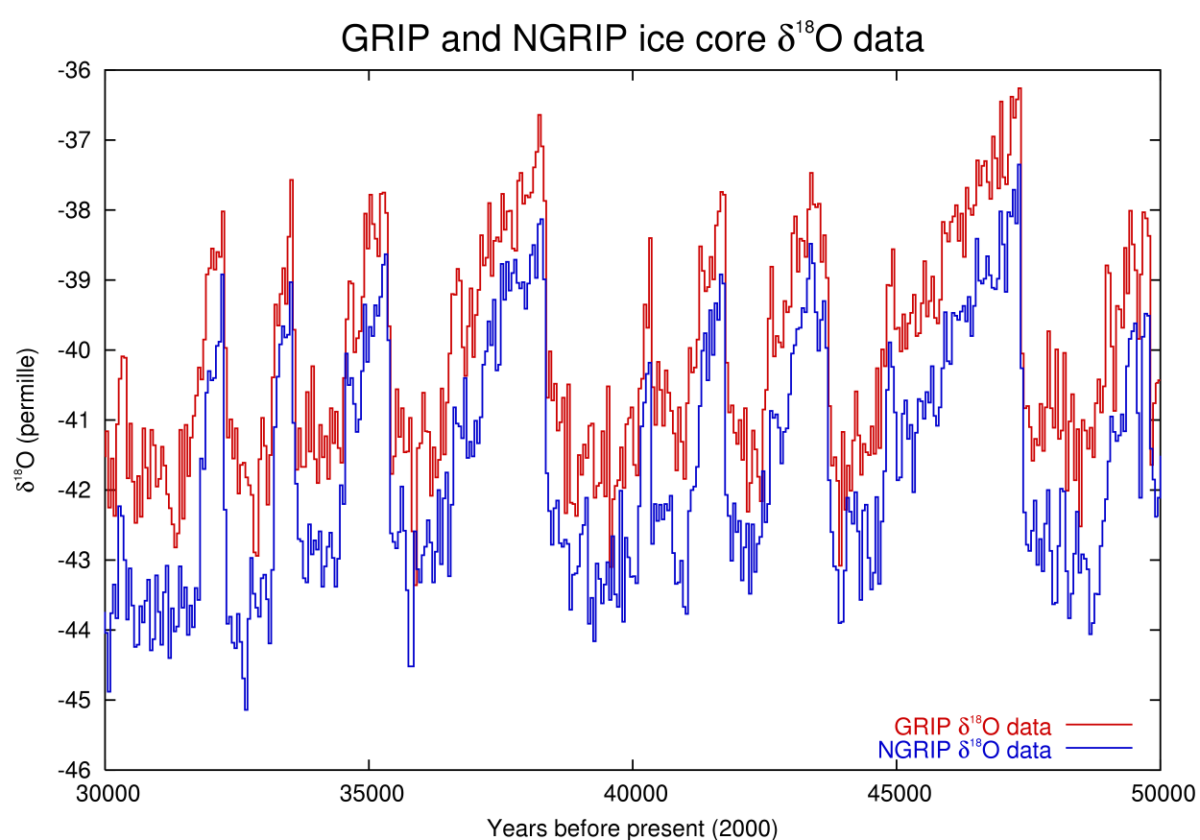
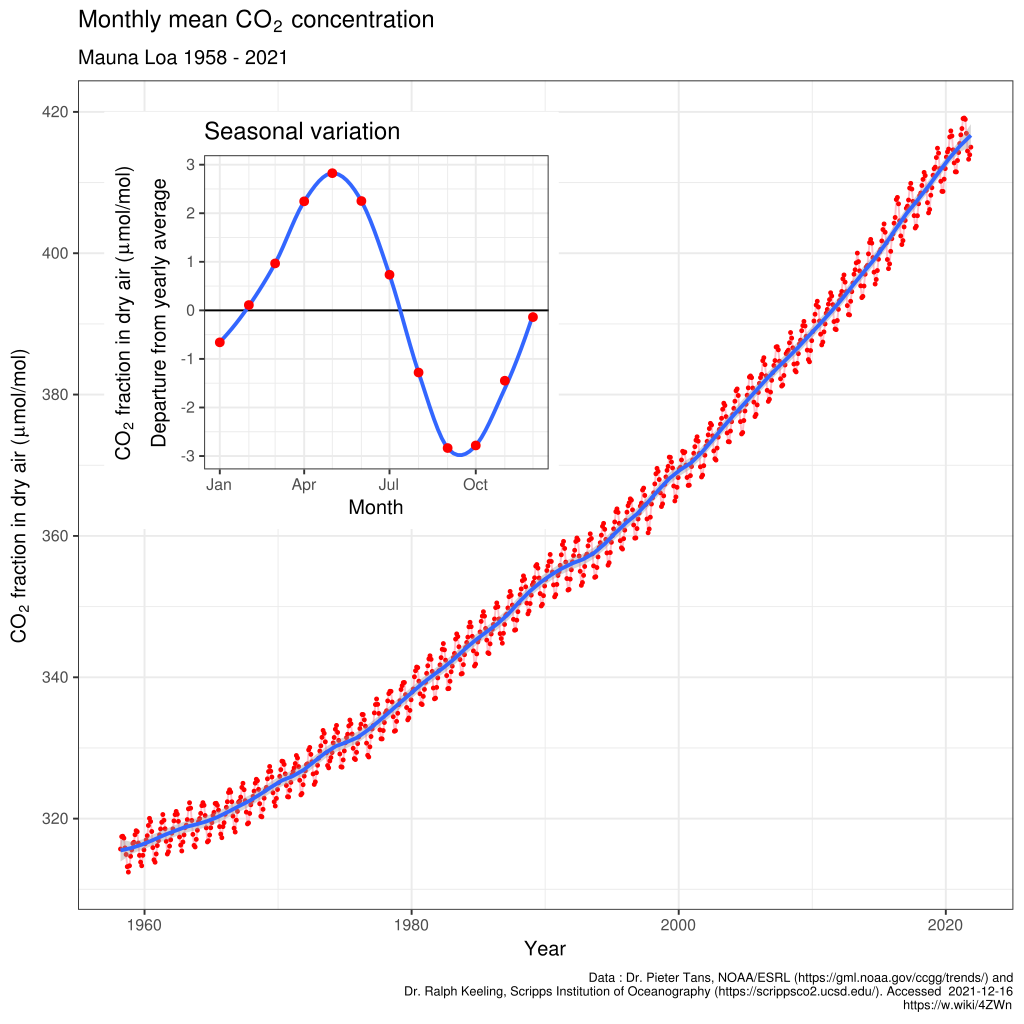
1969 Greenland ice cores provide convincingly accurately timed evidence for abrupt major changes in Earth temperatures and global warming.
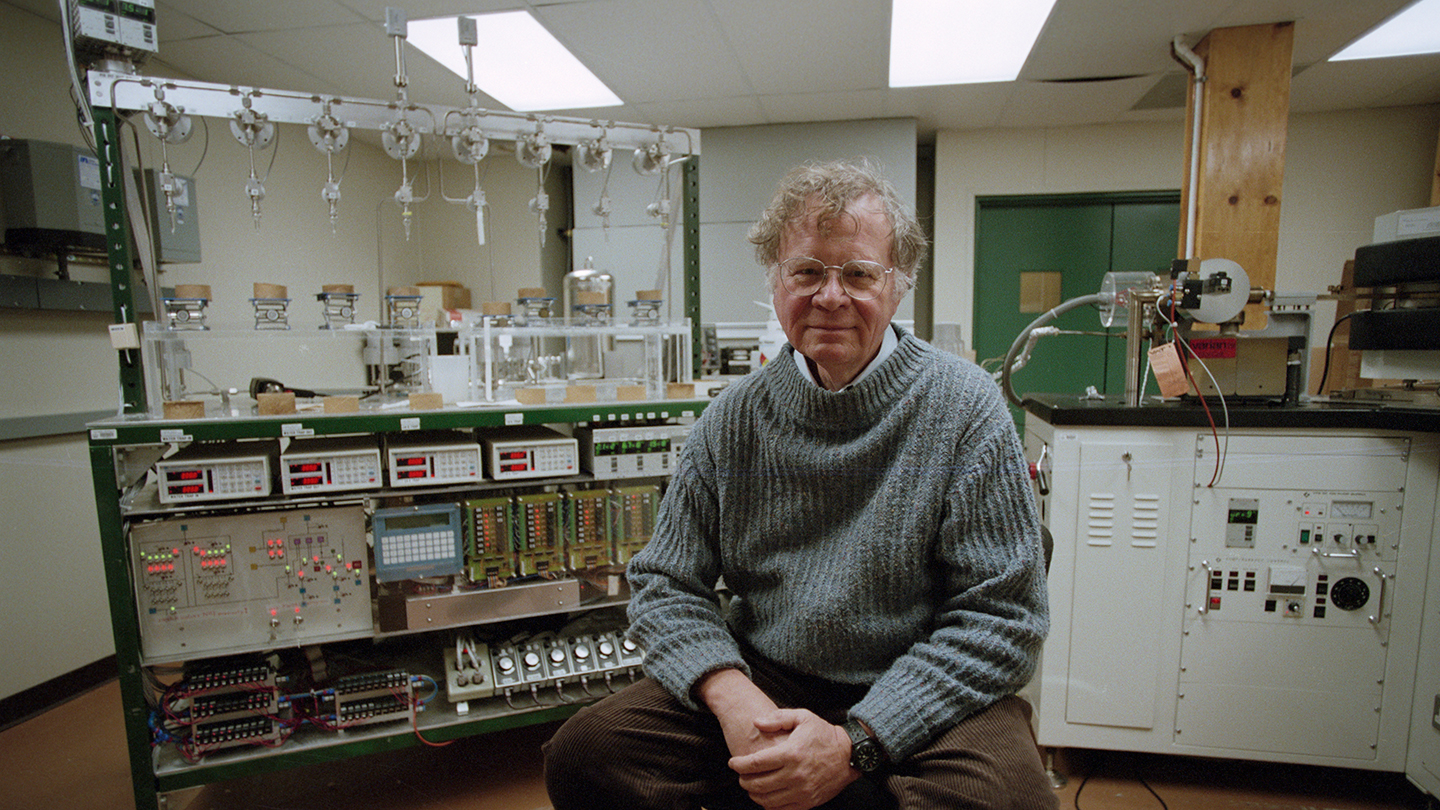
Wally Broecker, shown here in 1997, proposed that the shutdown of a major ocean circulation pattern could lead to abrupt climate change. Jean-Louis Atlan/Paris Match via Getty Images / from the Article
It was the mid-1980s, at a meeting in Switzerland, when Wally Broecker’s ears perked up. Scientist Hans Oeschger was describing an ice core drilled at a military radar station in southern Greenland. Layer by layer, the 2-kilometer-long core revealed what the climate there was like thousands of years ago. Climate shifts, inferred from the amounts of carbon dioxide and of a form of oxygen in the core, played out surprisingly quickly — within just a few decades. It seemed almost too fast to be true.
Editor’s note: See Broecker’s 1975 paper, Are We on the Brink of a Pronounced Global Warming? in Science, that gave us early warning 47 years ago on what might be happening. How different our future might have been if humanity took that warning seriously.
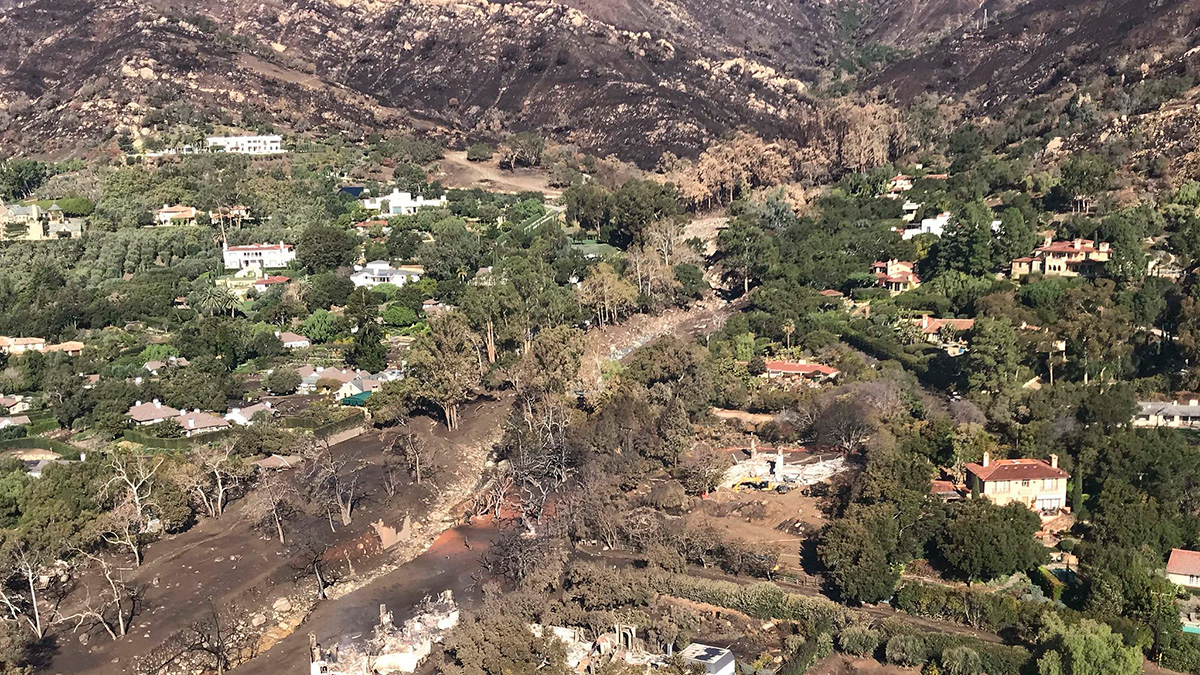
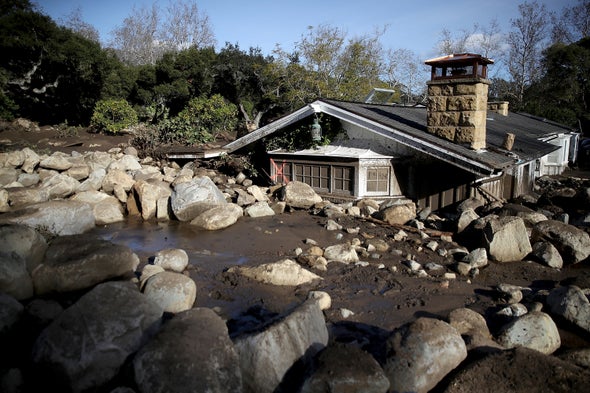
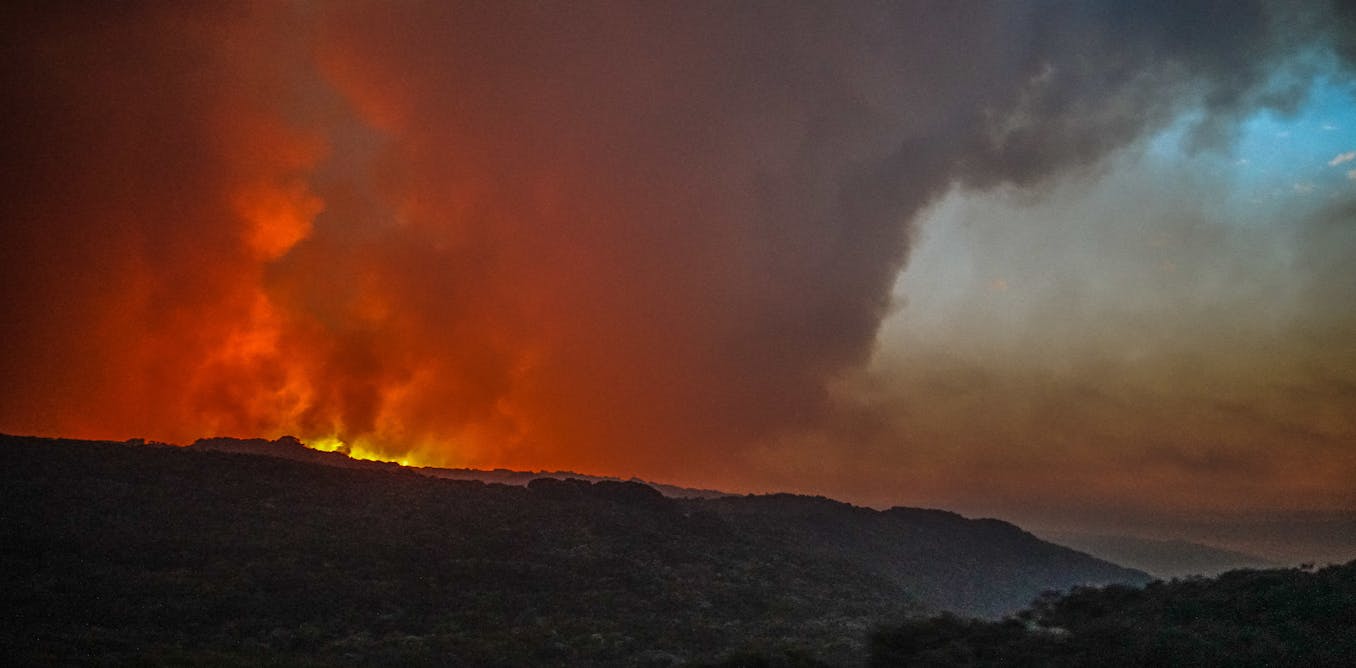
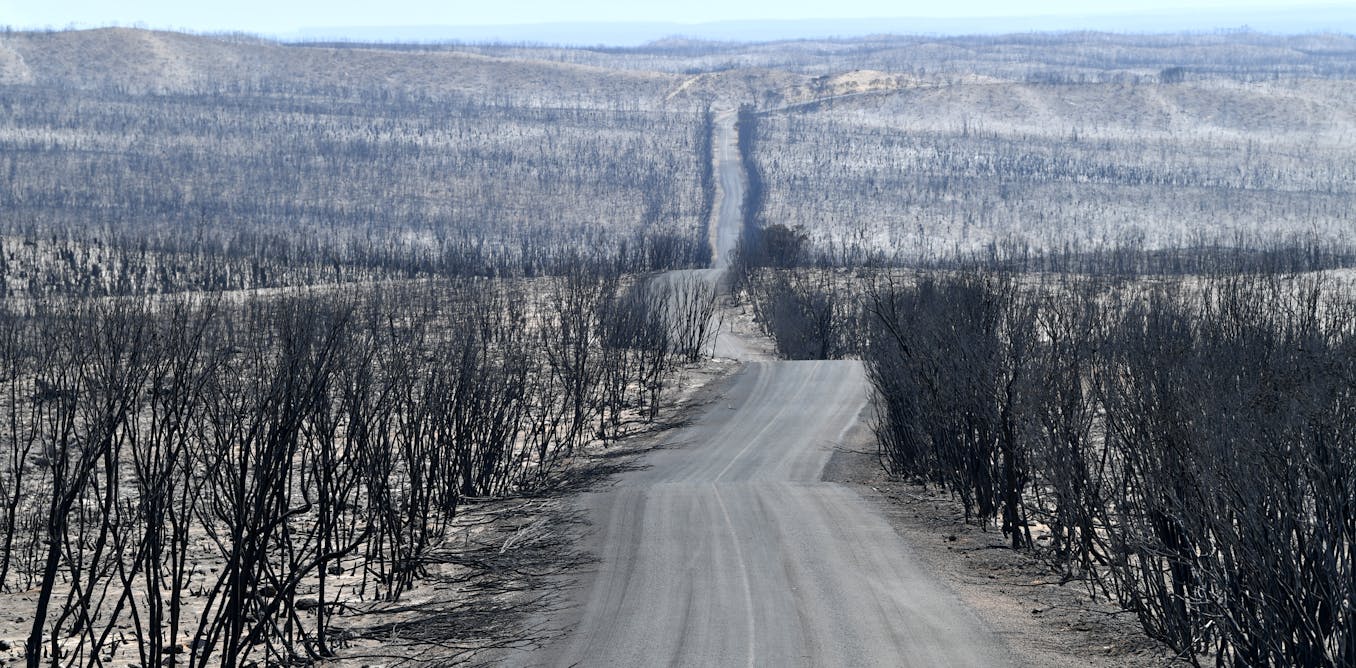
At 3:30 A.M. on January 9, 2018, half an inch of rain poured down on the charred slopes of the Santa Ynez Mountains in coastal southern California. The flames of the Thomas Fire—at the time the largest wildfire in state history—had swept through the previous month, leaving the soil and vegetation scorched and unable to soak up the onslaught of water. The destabilized ground gave way in a devastating landslide. Boulders crashed into houses in the town of Montecito, Calif., and a highway was buried under several feet of mud. The disaster killed 23 people and caused an estimate of around $200 million in damage.
Featured Image: This image from a rescue helicopter records the burn scar from the Thomas Fire, as well as the path of a deadly mudslide in Montecito, Calif., in January 2018. Credit: California National Guard, CC BY 2.0 / from No Relief from Rain: Climate Change Fuels Compound Disasters: Climate change is increasing the risk of fire-rain events, raising mudslide concerns in fire-prone communities. by Leah Campbell, 12/12/2021 in EOS.
Views expressed in this post are those of its author(s), not necessarily all Vote Climate One members.
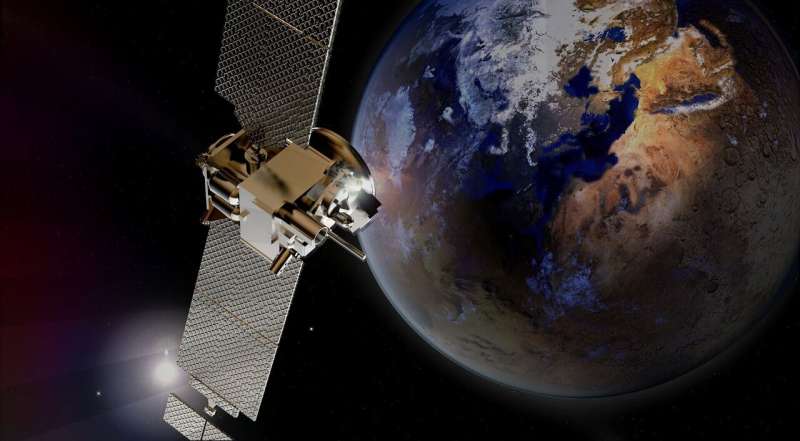
For the first time, researchers have spotted short-term, regional fluctuations in atmospheric carbon dioxide (CO2) around the globe due to emissions from human activities.
Using a combination of NASA satellites and atmospheric modeling, the scientists performed a first-of-its-kind detection of human CO2 emissions changes. The new study uses data from NASA’s Orbiting Carbon Observatory-2 (OCO-2) to measure drops in CO2 emissions during the COVID-19 pandemic from space. With daily and monthly data products now available to the public, this opens new possibilities for tracking the collective effects of human activities on CO2 concentrations in near real-time.
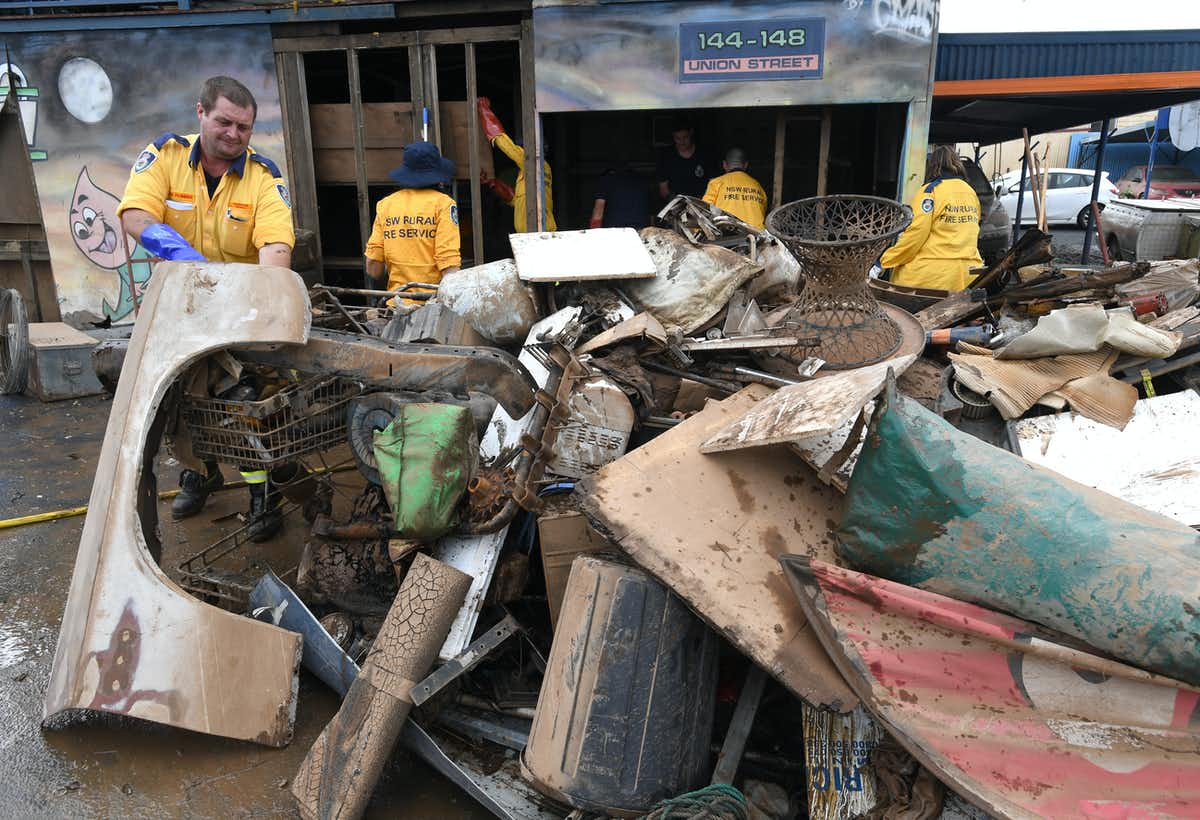
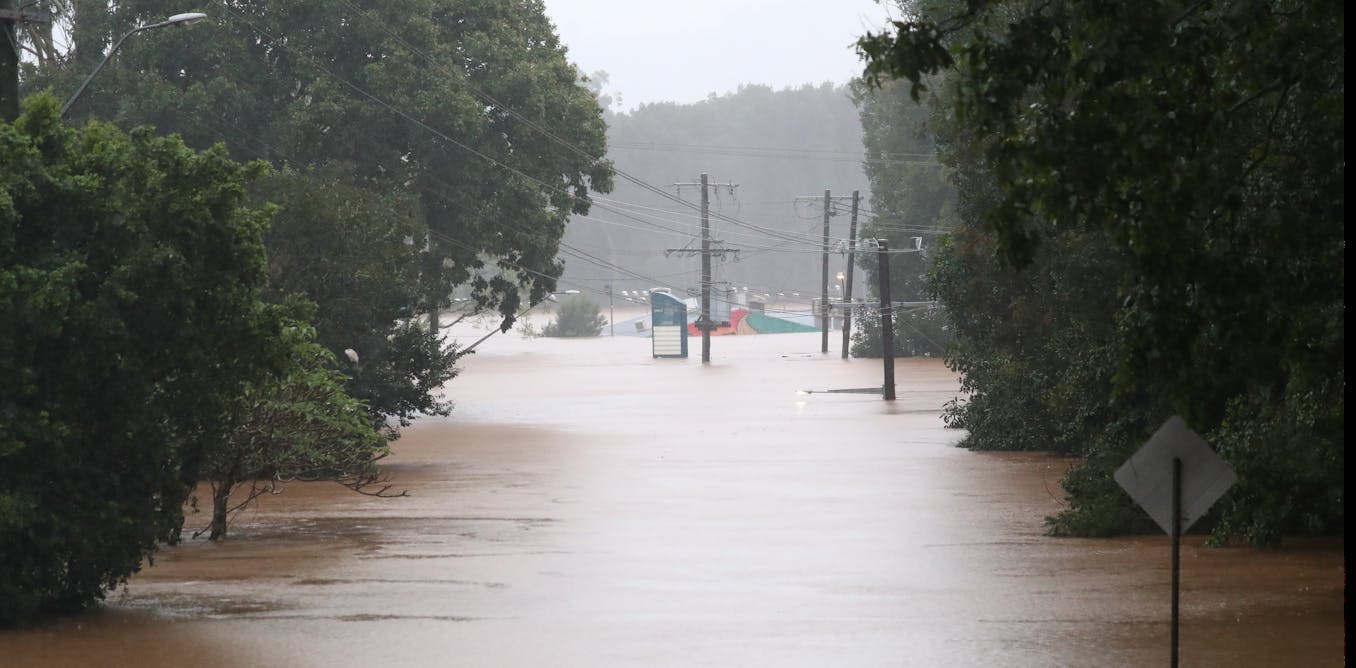
Right now, Lismore residents are going through their second major flood in a month.
On February 28th, the devastating first flood peaked at 14.4 metres, fully two metres higher than the previous record of 12.27 metres in 1954, and well above the town’s 10-metre-high levee wall, constructed in 2005. Four people died, with 2000 homes destroyed or unlivable of the city’s 19,000.
Even as Lismore and Northern Rivers residents struggle to recover from the first flood, the floods are coming again. On March 29th, more heavy rain began falling onto the soaked catchment feeding into Wilsons River.
Featured Image: Lismore locals are still cleaning up after February’s floods – now they are being hit again. Darren England/AAP Image / from the article.
Views expressed in this post are those of its author(s), not necessarily all Vote Climate One members.
The urgency of tackling climate change is even greater for Aboriginal and Torres Strait Islander people, and other First Nation peoples across the globe. First Nations people will be disproportionately affected and are already experiencing existential threats from climate change.
The unfolding disaster in the Northern Rivers regions of New South Wales is no exception, with Aboriginal communities completely inundated or cut off from essential supplies.
Aboriginal and Torres Strait Islander peoples have protected Country for millennia and have survived dramatic climatic shifts. We are intimately connected to Country, and our knowledge and cultural practices hold solutions to the climate crisis….
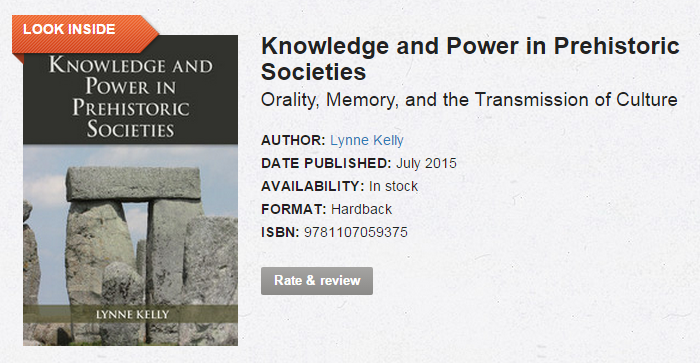
Castlemaine (Vic.) author Lynne Kelly explains how Aboriginal song lines and similar tools in other primary oral cultures accurately preserve and transmit survival knowledge down through hundreds of generations.
Views expressed in this post are those of its author(s), not necessarily all Vote Climate One members.
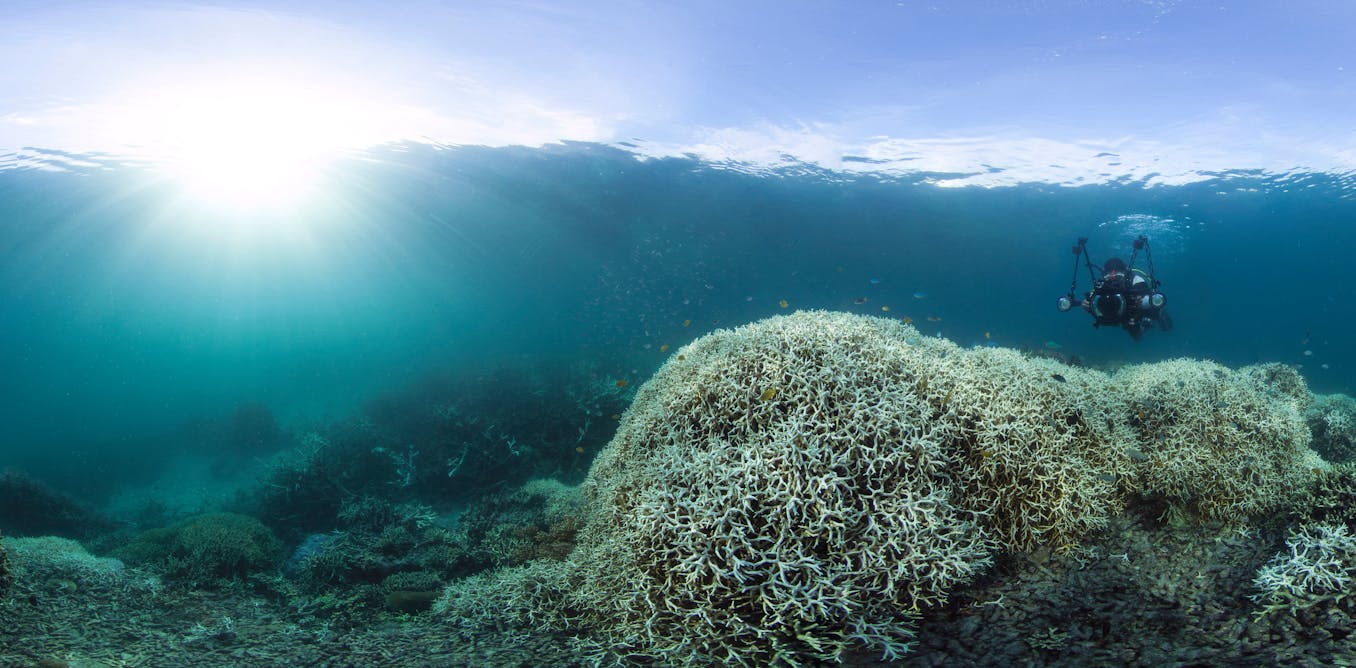
A 2016 article lays out where we were then compared to past extinctions. We are now closer to point of no return. Warming must be stopped!
Coral bleaching in March 2016. Rapid rises of greenhouse gases in the past have been linked to major extinctions in the oceans. XL Catlin Seaview Survey / via the article.
[G]reenhouse gases are rising faster than at any time since the demise of dinosaurs, and possibly even earlier. According to research published in Nature Geoscience this week, carbon dioxide (CO₂) is being added to the atmosphere at least ten times faster than during a major warming event about 50 million years ago.
With increasing CO₂ levels, temperatures and ocean acidification also rise, and it is an open question how ecosystems are going to cope under such rapid change.
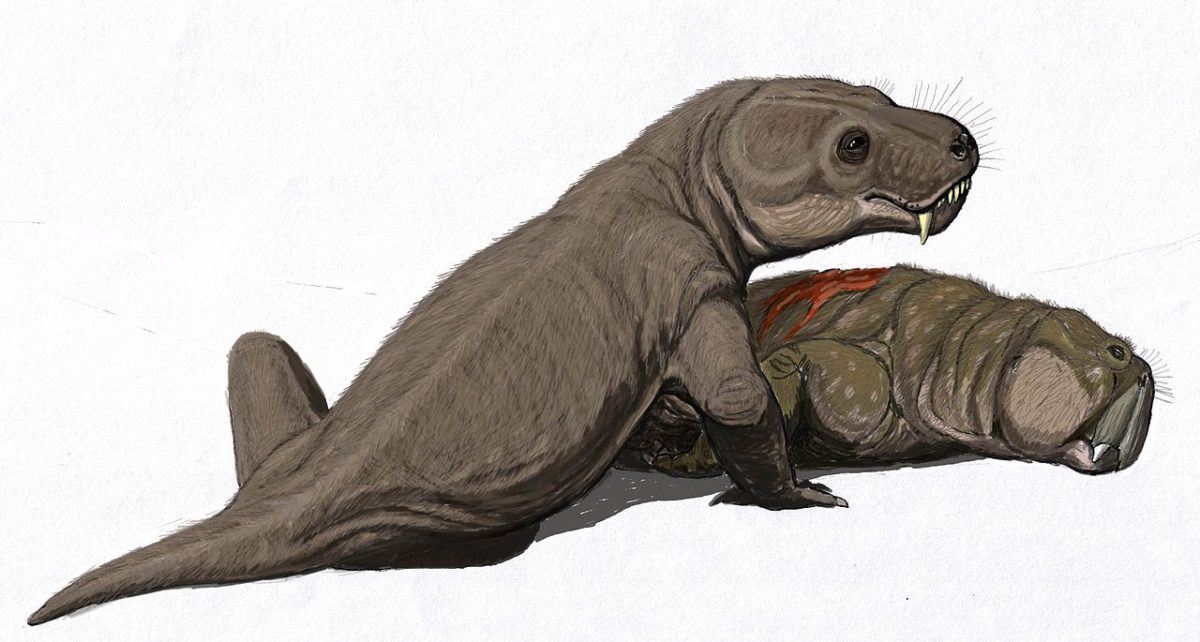
Featured image: Moschorhinus kitchingi with Lystrosaurus. Basal Triassic of South Africa. Lystrosurus was one of the few large animals that survived the Permian-Triassic global mass extinction event anywhere on the planet. Source: Creator:Dmitry Bogdanov / Permission is granted to copy, distribute and/or modify this document under the terms of the GNU Free Documentation License, Version 1.2 or any later version published by the Free Software Foundation; with no Invariant Sections, no Front-Cover Texts, and no Back-Cover Texts.
Views expressed in this post are those of its author(s), not necessarily all Vote Climate One members.
Anyone with even a passing interest in the global environment knows all is not well. But just how bad is the situation? Our new paper shows the outlook for life on Earth is more dire than is generally understood.
The research published today reviews more than 150 studies to produce a stark summary of the state of the natural world. We outline the likely future trends in biodiversity decline, mass extinction, climate disruption and planetary toxification. We clarify the gravity of the human predicament and provide a timely snapshot of the crises that must be addressed now.
The problems, all tied to human consumption and population growth, will almost certainly worsen over coming decades. The damage will be felt for centuries and threatens the survival of all species, including our own.
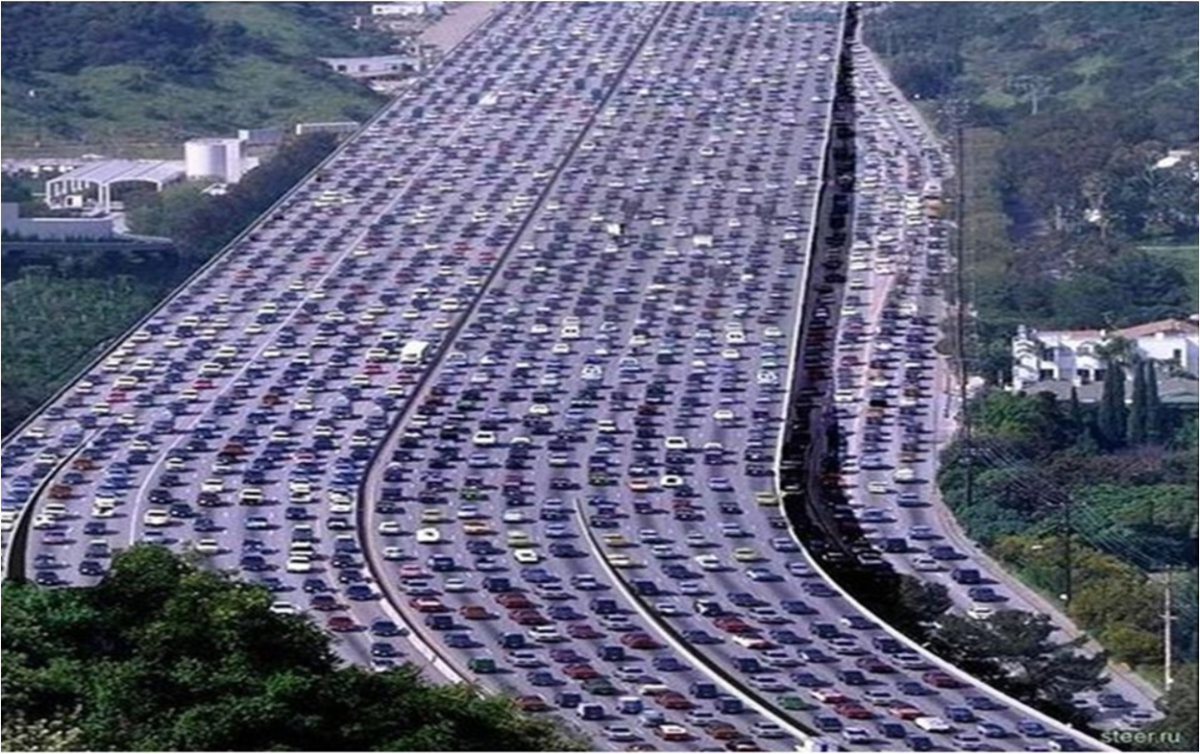
Featured image: Said to be the longest traffic jam in the world — in China (https://www.mirror.co.uk/news/world-news/worlds-worst-traffic-jam-drone-6594560): Source: unknown, but appearing in many places.
Views expressed in this post are those of its author(s), not necessarily all Vote Climate One members.
In 1992, 1,700 scientists warned that human beings and the natural world were “on a collision course”. Seventeen years later, scientists described planetary boundaries within which humans and other life could have a “safe space to operate”. These are environmental thresholds, such as the amount of carbon dioxide in the atmosphere and changes in land use.
Crossing such boundaries was considered a risk that would cause environmental changes so profound, they genuinely posed an existential threat to humanity.
This grave reality is what our major research paper, published today, confronts.
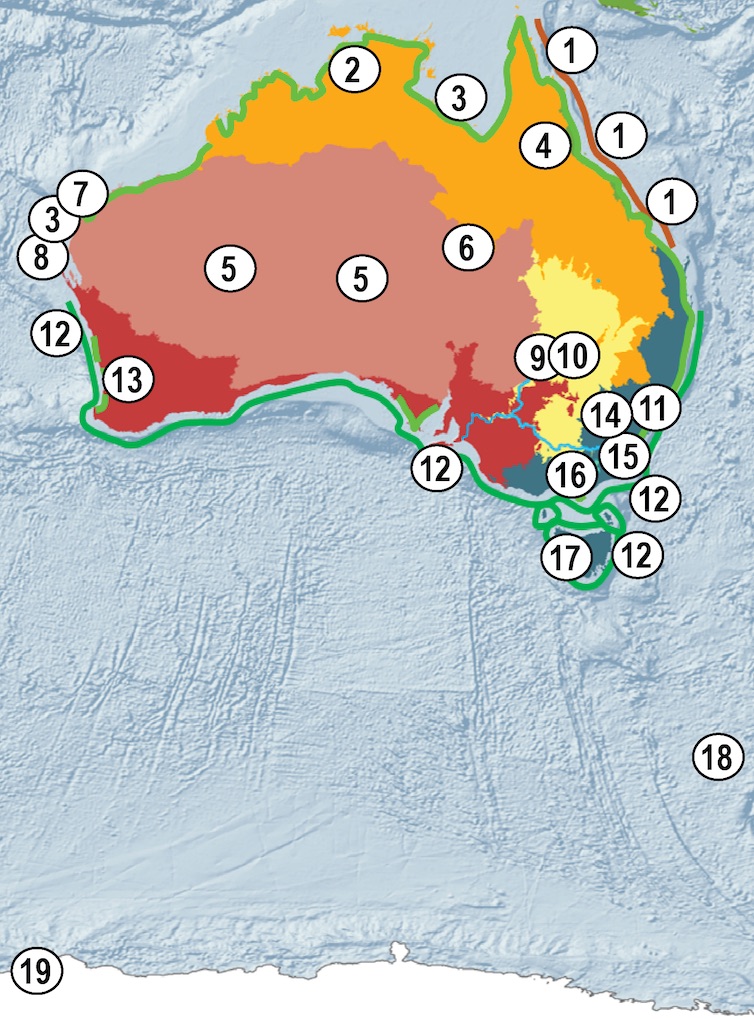
Featured image: 19 Australian ecosystems that are already collapsing.In the featured article, clicking on each of the 19 below the article will give a summary of what comprises the ecosystem, its status and the pressures causing its collapse.
Views expressed in this post are those of its author(s), not necessarily all Vote Climate One members.
The idea of a ‘tipping point’ is more than academic. Once you trip over it you are on a downhill slide towards Hell at the bottom of the hill
Fig. 2 from the research paper by Beringer et al., 22/03/2022 in Global Change Biology – Bridge to the future: Important lessons from 20 years of ecosystem observations made by the OzFlux network. Summary of the significant scientific and technical outcomes from the OzFlux network after two decades: Blue relates to discovery, information and knowledge outcomes; grey outcomes relate to assessments across site, regional and global scales; yellow refers to the capacity building outcomes for researchers and green indicates technical outcomes for observations and modelling.
by Caitlin Moore et al., 25/03/2022 in The Conversation
From rainforests to savannas, ecosystems on land absorb almost 30% of the carbon dioxide human activities release into the atmosphere. These ecosystems are critical to stop the planet warming beyond 1.5℃ this century – but climate change may be weakening their capacity to offset global emissions.
This is a key issue that OzFlux, a research network from Australia and Aotearoa New Zealand, has been investigating for the past 20 years….
The biggest absorbers of atmospheric carbon dioxide in Australia are savannas and temperate forests…. as effects of climate change intensify, ecosystems such as these are at risk of reaching tipping points of collapse.