WE Forum’s strategic intelligence on Climate Change

‘Strategic Intelligence’ app relating to all kinds of transformational issues, esp. Climate Change has been created by World Economic Forum


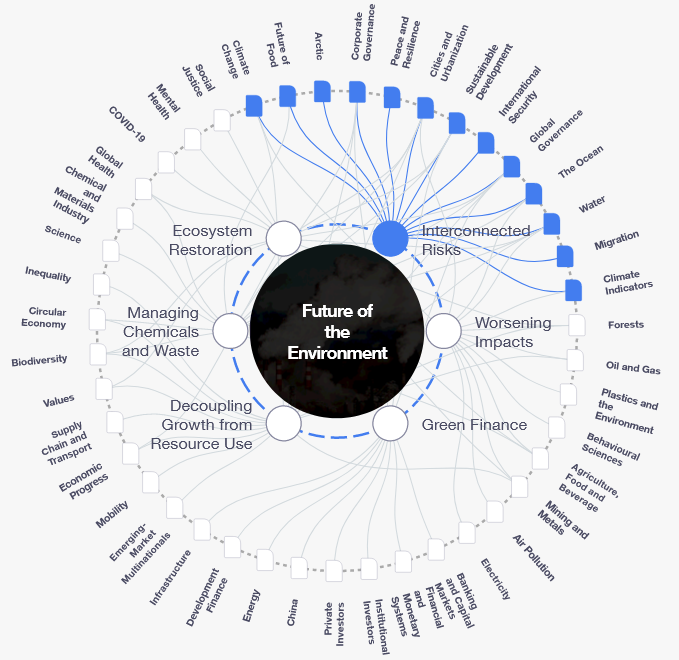
WE Forum’s Strategic Intelligence maps provide logical maps to the complex tangle of relationships among facts, risks, threats, issues, tools and actions involved in working out how to transform an existing problem area into some kind of a solution. The maps don’t claim to show you how to solve the problem, but at least they give a fair idea of where you need to look for solutions and what they might involve.

Transformation Maps can help you explore and make sense of the connections between different economies, industries and global issues. It is a dynamic way of exploring the transformational forces that relate to a topic, such as Climate Change or Artificial Intelligence, co-curated with leading universities and international organizations.

https://intelligence.weforum.org/

The featured image shows the major domain of interest in the middle, e.g., Future of the Environment surrounded by a wheel of grouped topics (e.g., relating to Risks) that in turn link to individual issues (e.g., Arctic) that takes you to the Arctic Domain. Note – for each domain the right side of the page explains what the current group topic or Domain is about. Registration for public access gives you a lot for free. There are also paid monthly subscriptions that allow you to use the system as your own tool for tracking complex interactions.

There is one bias in the World Economic Forum’s approach here that may concern some Climate Sentinel News followers. As stated in their video, their aim is to further sustainable development. Arguably, given the state of ecological overshoot we are in, we should be far more concerned to down-size our impacts on our limited planetary resources rather than engage in further development. Nevertheless, other than reminding all to ‘consider the source’ and recognize that it is not the last word, I would not hesitate to recommend it as a useful tool for navigating the complexity of transformation.

The video explains the concept:

WE Forum also provide access to a vast array of current documentation relating to specific areas of interest through their Discover function:
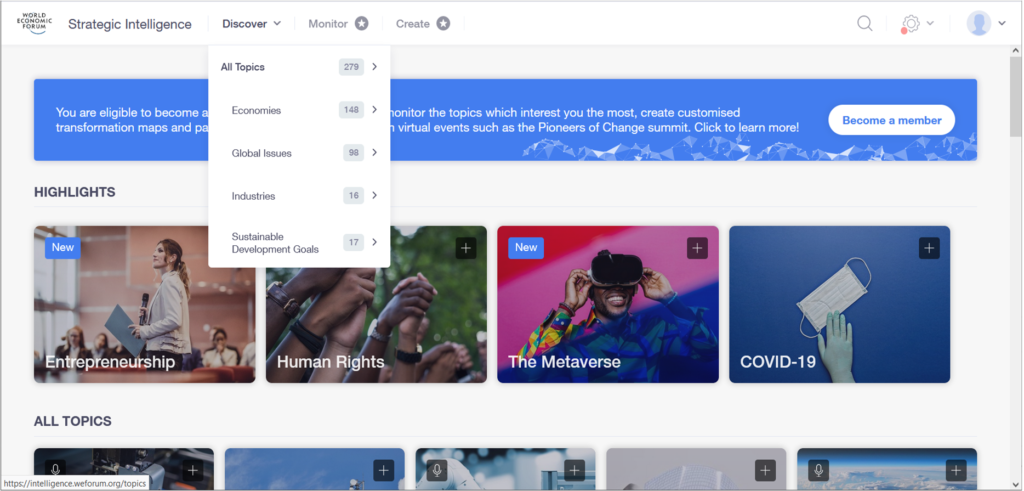
Topic areas for strategic intelligence
Try it and see: https://intelligence.weforum.org/topics

What does this mean for Australian Voters and candidates?

What this WE Forum application shows is how complex and complicated the tasks are that we face in trying to transform the current global climate emergency into a foreseeable future extending beyond near-term mass extinction. In our Climate Sentinel blog posts I think I the evidence presented overwhelmingly documents that our current LNP Government of fossil fuel puppets, fools and knaves will not and could not cope with the complexity of interacting issues that have to be dealt with if the climate emergency is to be solved.
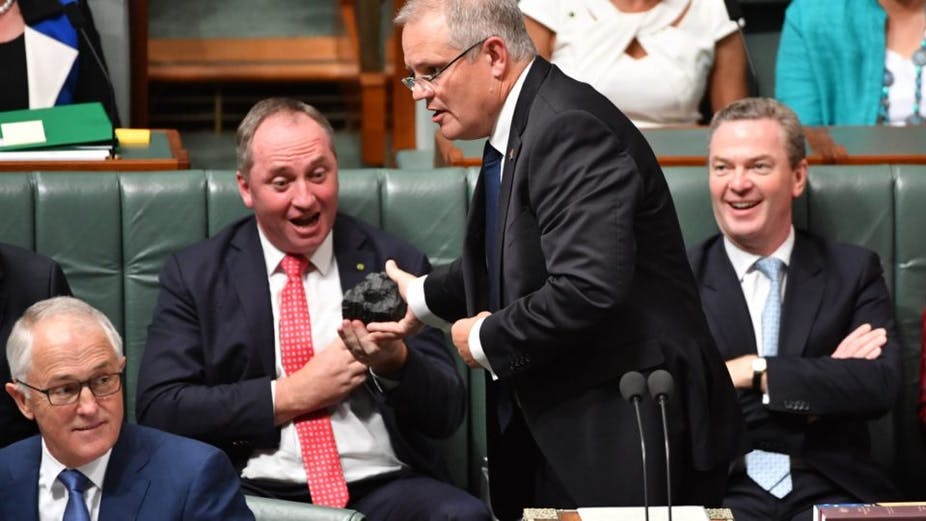
Puppets showing and telling wouldn't even know what strategic intelligence was.
Captain Humbug showing the parliamentary puppet troop what it is all about. ““Don’t be afraid, don’t be scared, it won’t hurt you. It’s coal.” With these words Australia’s Treasurer Scott Morrison taunted the Opposition, attempting to ridicule its commitment to renewable energy.” – The Conversation (15-02-2017)

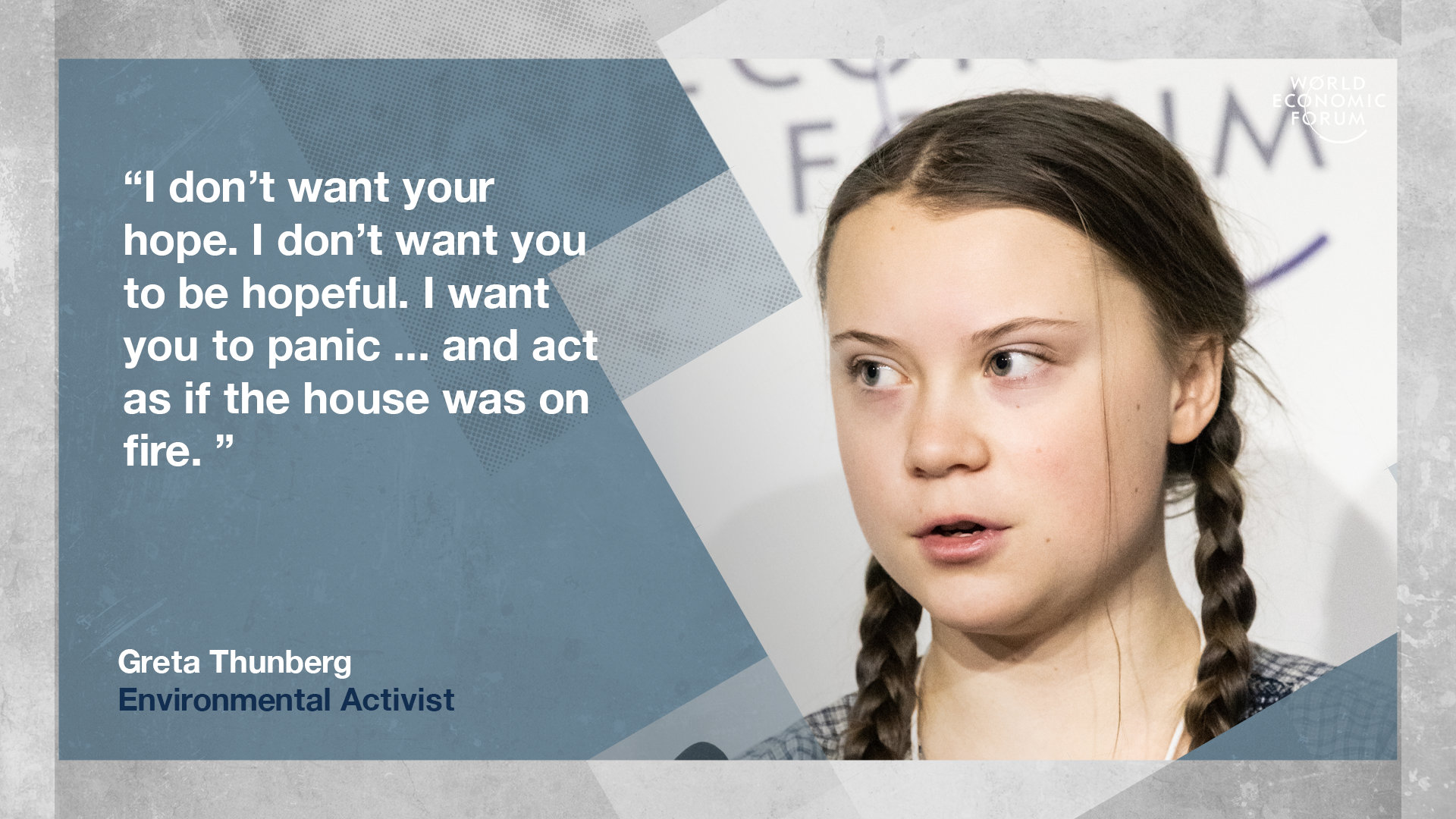
In the upcoming Federal Election we must take advantage of the possibility to replace this tragic comedy routines of the LNP with sensible intelligent people able and willing to put dealing with the complexities of the climate emergency at the top of their agendas if elected to Parliament. Our government needs to wake up, smell the smoke, and to have any hope of putting out the fire urgently mobilize whatever it takes to fight the emergency both locally and globally rather than working to protect the special interests feeding the fire. Even a child can see that doing anything else is rearranging the furniture as the house (our planet) is burning up.
greta-act-as-if-the-house-was-on-fire
Listen to Greta’s speech live at the World Economic forum in Davos 2019.. Except for her reliance on the IPCC’s overoptimistic emissions budget, everything she says is spot on that even she, as a child, can understand.

The type of candidates Vote Climate One hopes to see elected may actually want to use the WE Forum’s Strategic Intelligence app described here for help in working through the tangle mitigations and partial solutions that will be required to mitigate and put out the fires that are warming the globe. We have designed our Traffic Light Voting System to help you establish your preferences from first to last for the House and Senate candidates in your electorate based on how likely they are to help defeat the climate emergency. With good choices we may soon have at least an Australian government doing what it can to provide a path towards a bright future for our offspring rather than the end.
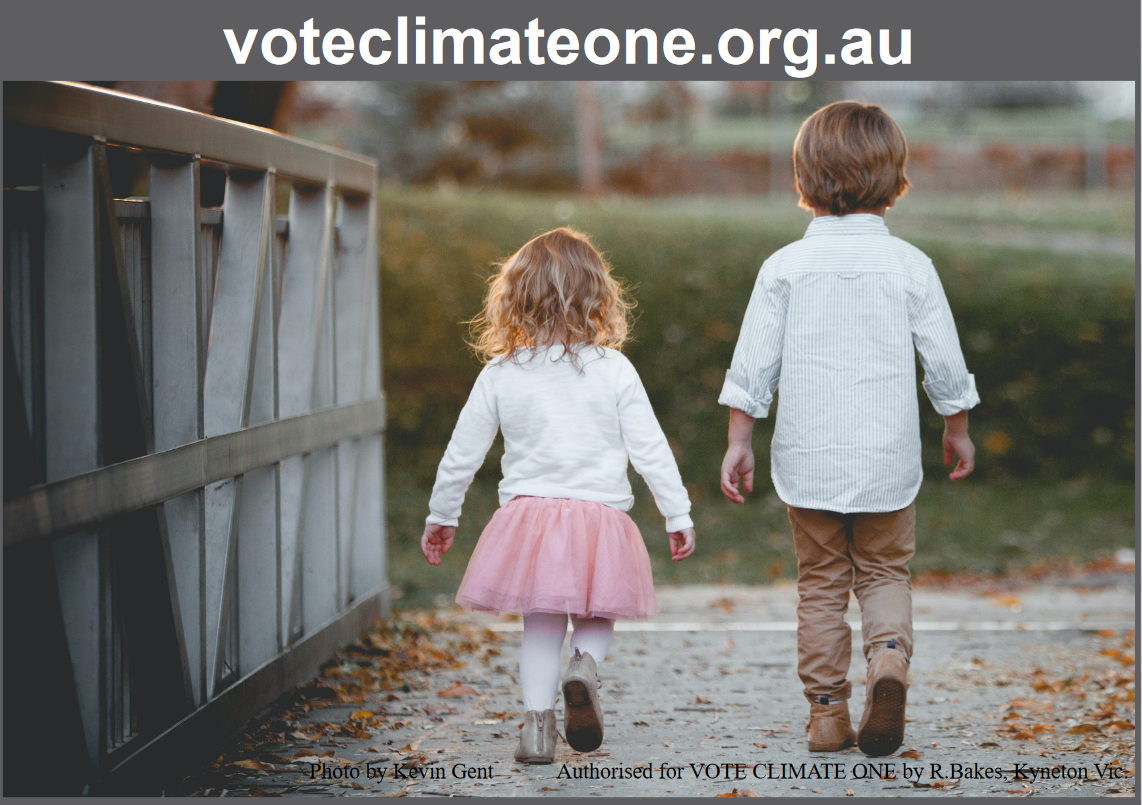
Our young ones walking an unknown future. Hopefully there will be something there for them to reach.

Views expressed in this post are those of its author(s), not necessarily all Vote Climate One members.

State of the Arctic in 2020: bad news for our future

Amer. Meteorological Society’s 2020 State of the Climate reports accelerating Arctic warming (Arctic amplification) that drives world climate

Zach Labe samples that data to show midwinter temperature over the Barents and Kara Seas has risen by more than 2 °C per decade!

Note: over the next few days I will be posting a comprehensive post on the full State of the Arctic article and the warnings we should be taking from it.

Views expressed in this post are those of its author(s), not necessarily all Vote Climate One members.

Vexed issue of harvesting flood-plane water not solved

NSW Senate blocks plan to allow agribusiness to harvest more than 5x flood plane water even than allowed for in Murray-Darling basin plan

by Anne Davies, 24/02/2022 in The Guardian
NSW parliament rejects flood plain harvesting laws for third time over sustainability concerns: Labor, the Greens and crossbenchers unite to disallow water capturing licences despite minister already moving to issue them

Views expressed in this post are those of its author(s), not necessarily all Vote Climate One members.

Great idea! photovoltaic covers for irrigation canals

Good for agriculture: Save scarce water from evaporation to pay for installing solar panel covers, supply energy, and generate profits

by Dan Gearino, 24/02/2022 in Inside Clean Energy
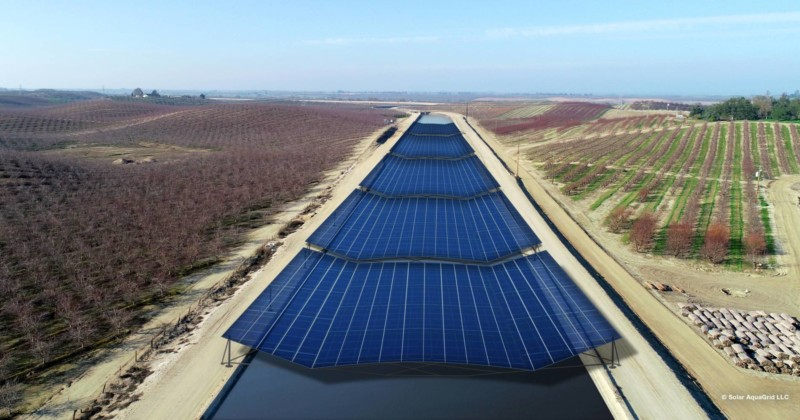
In Parched California, a Project Aims to Save Water and Produce Renewable Energy: Plan calls for building solar canopies over canals, and may be the first project of its kind in the United States [but not elsewhere]

Featured image: A conceptual rendering of solar canopies covering part of Turlock Irrigation District’s 110-foot-wide main canal, near Turlock, California. Credit: Turlock Irrigation District. From the article

Views expressed in this post are those of its author(s), not necessarily all Vote Climate One members.

White House fights climate denial and delayed action

Past denial & blocking of climate action is hurting society. How do we respond to accelerate effective action to deal with the emergency?

Maxine Joeslow, 24/02/2022 in The Washington Post Climate & Environment
White House science office to hold first event on countering climate change denial and delay: Leading climate scientists will meet with officials in the White House Office of Science and Technology Policy.

Views expressed in this post are those of its author(s), not necessarily all Vote Climate One members.

Antarctic sea ice reaches NB4 low extent this summer

Southern sea ice coverage fell below 2 million km² for first time since satellite records began in 1979, exposing more ocean to solar heating

For details see NSIDC.org

Views expressed in this post are those of its author(s), not necessarily all Vote Climate One members.

Gov’t gives fossil fuel free pass for excess emissions

A fifth of Australia’s fossil fuel facilities emit more more GHGs than approved – with no penalties/costs applied for excess emissions

by Adam Morton, 24/02/2022 in The Guardian
A fifth of Australia’s fossil fuel facilities emit more greenhouse gas than originally estimated, report says: Australian Conservation Foundation says blowouts show government’s safeguard mechanism is ‘failing’ to control industrial emissions.

Views expressed in this post are those of its author(s), not necessarily all Vote Climate One members.

Global warming intensifies droughts and floods

Global warming is shifting ocean evaporation towards poles, robbing rain from already drought stricken areas to dump it on already wet areas

by Taimoor Sohail & Jan Zika, 24/02/2022 in The Conversation
Climate change is warping our fresh water cycle – and much faster than we thought: Fresh water cycles from ocean to air to clouds to rivers and back to the oceans. This constant shuttling can give us the illusion of certainty. Fresh water will always come from the tap. Won’t it? — Unfortunately, that’s not guaranteed. Climate change is shifting where the water cycle deposits water on land, with drier areas becoming drier still, and wet areas becoming even wetter.

Views expressed in this post are those of its author(s), not necessarily all Vote Climate One members.

Look out! More and worse wildfires are coming for us

UN’s “Spreading like Wildfire: The Rising Threat of Extraordinary Landscape Fires” warns positive feedbacks will accelerate warming and impacts

by Bob Berwyn, 23/02/2022 in Inside Climate News
Global Wildfire Activity to Surge in Coming Years: A new U.N. report says communities need to prepare for the growing threat by refocusing on prevention, rather than just reacting to fires as they happen.

Views expressed in this post are those of its author(s), not necessarily all Vote Climate One members.

Read this! putting the climate emergency in context

This 50th Anniversary interview with a “Limits to Growth” author puts the work in context and shows more to do than just stopping warming

by Richard Heinberg & Dennis Meadows, 22/02/2022 in Resilience.org
Dennis Meadows on the 50th anniversary of the publication of The Limits to Growth: Only rarely does a book truly change the world. In the nineteenth century, such a book was Charles Darwin’s On the Origin of Species. For the twentieth century, it was The Limits to Growth. Not only did this best-selling 1972 publication help spur the environmental movement, but it showed that the underlying dynamics of the modern industrial world are unsustainable on the timescale of a couple of human lifetimes.

Views expressed in this post are those of its author(s), not necessarily all Vote Climate One members.