Climate emergency: using systems analysis and systems thinking to solve it


Systems thinking helps make sense of the complexity of the world by looking at it in terms of wholes and relationships. Mella thinks this will help us navigate through the complexity to working solutions
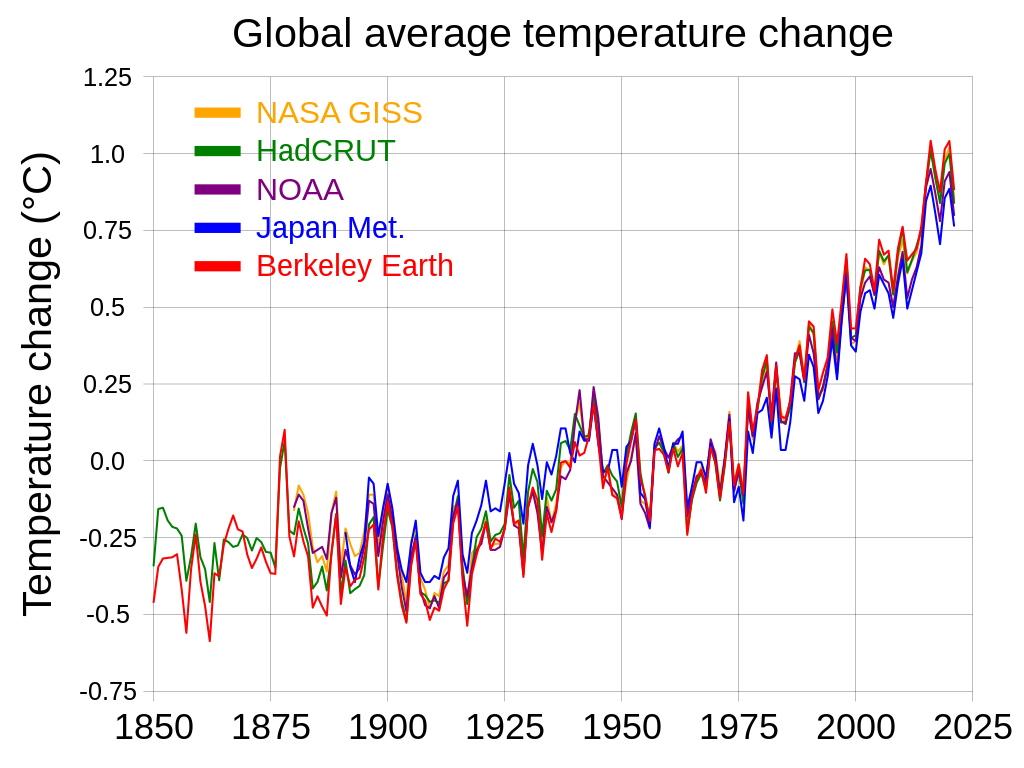
If the accelerating global warming continues for longer than a few more years, it is highly likely we will be trapped on a planet committed to runaway warming. The accumulating daily evidence on the accelerating rates of rising greenhouse gas concentrations paint an appalling picture. If the resulting warming cannot be stopped and reversed, this will lead to global mass extinction within two or three human generations (if not sooner). We will need systems thinking to help us find paths to solutions..
Australia has a large and potentially quite capable academic and institutional infrastructure for understanding and developing solutions for climate problems. However, given the unique and complex nature of Earth’s Climate System and the rapid changes that are taking place the usual reductionist approaches of normal science are unlikely to find a navigable pathway through the problems. A more holistic systems thinking approach helps to identify and map out the major areas and levels of organization where problems need to be solved. Systems engineers are a lot more comfortable working this way than are ‘normal’ scientists. Teams integrating both normal science and systems engineering should be able to navigate the rapidly changing shoals to bring escalating problem situations under control.
Unfortunately, Australia’s current LNP COALition Governments primary aim in power seems to be preventing any action on climate change that might impair their patrons in the fossil fuel and related industries. The resulting humbug, denial, disinformation, distraction and outright blocking and withdrawal of support for high level climate science has effectively stifled any significant progress towards solving the climate emergency. The fact that certain elements of the (mostly Murdoch) press also continue polluting the press and social media with all kinds of fake news, alternative facts and blather, works further to hide the lack of serious progress towards doing anything effective about the climate emergency.
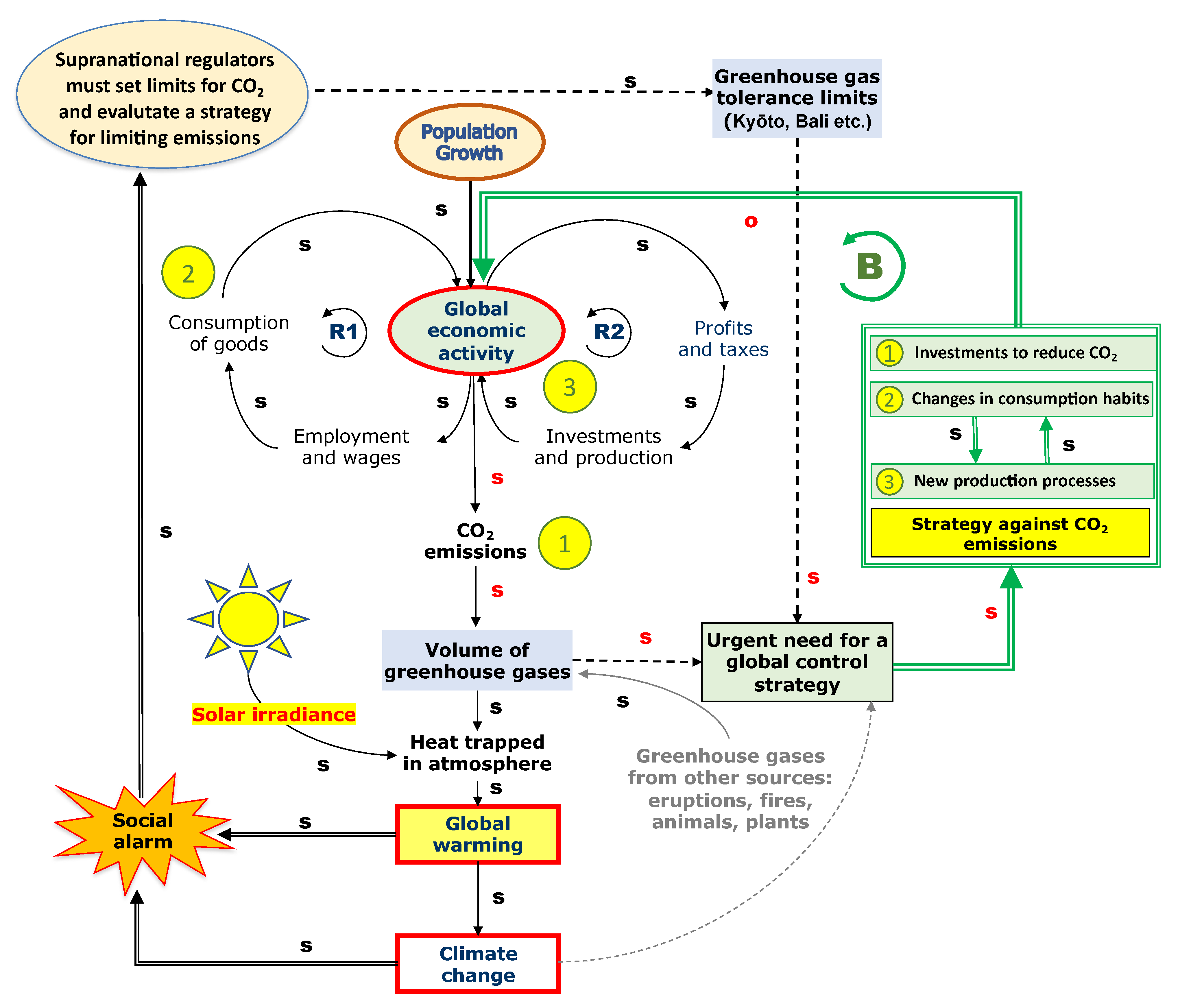
Global Warming: Is It (Im)Possible to Stop It? The Systems Thinking Approach
by Pierro Mella – Energies2022, 15(3), 705
Abstract: For some time, there has been a slow but gradual rise in the average temperature of the entire globe, a “global warming”, in fact, the result of human and natural processes that have been producing this phenomenon for decades. Since they are not directly perceived by individuals, these processes and their effects have been ignored for a long time, or at least not considered to be immediately harmful and dangerous.
Global warming does not depend so much on solar radiation as it does on the greenhouse effect deriving from the continuous emission, by human activities and natural events, of greenhouse gases that accumulate in the atmosphere and form a barrier to the dispersion of heat produced by solar radiation. A good number of models exists to explain how global warming is produced, which are technical in nature and consider the production of greenhouse gases as the most important cause; however, they do not always analyze and justify the reasons for such emissions.
Following the logic, language and methods of Senge’s systems thinking, the paper aims to present a general model, the GEAM—qualitative in nature, but rational and coherent—for highlighting the interacting factors that give rise to and maintain global warming. This model constitutes a reference framework to identify possible “strategic areas” within which to identify man-made “artificial” and “natural” factors that can control the phenomenon and to order the countless ideas and interventions that different nations carry out individually to control global warming.
Read the complete article….
What Mella outlines in his article should not be that difficult to implement – particularly if supported by a government that puts a high priority on acting on the climate emergency. Clearly, re-electing the LNP COALition will not provide that kind of support. If were are to leave a planet capable of providing a long-term future for our children and grandchildren we must replace the COALition fossil fuel industry puppets with trustworthy people who have committed themselves to put solving the climate emergency as their first order of business if elected.
To help you do this, the Vote Climate One group will provide Traffic Light Voting guides for every Federal Electorate that will help you preference candidates in an order that should avoid the risk that your most preferred candidates preferences will not flow to the fossil fuel puppets if they are not elected. We don’t tell you how to vote, but you will know that any candidate designated with a green light has convinced us that they will put action on the climate emergency as their first priority in Parliament. Amber light candidates might have other first priorities, but we think they can be counted on to cooperate with action on the emergency.